Power Begins With a Useful Range
Could stiffness be limiting your golf swing, and would checking your mobility show where to focus? Looking at how your hips, shoulders, and mid-back move can help identify restrictions that may affect your turn or lead your body to compensate. A mobility check is a starting point, not a verdict on your swing.
Power depends on more than range of motion. Golfers need to coordinate movement, stay stable, build strength, and apply force through the swing. Mobility may allow a useful range for turning, but being more flexible does not automatically mean hitting the ball farther. Golf-specific strength work is one part of developing power, as described in PGA.com’s guide to swing-speed exercises.
At Glenwood Chiropractic, non-invasive musculoskeletal care focuses on pain relief and restoring mobility. An assessment can help inform an individualized plan, but the assessment itself does not add power or guarantee more distance. Its value is in helping you and your care provider decide what to address, while respecting your comfort and physical limits.
What Golf Mobility Means
 Mobility is the controlled range of motion you can actively use at a joint. Flexibility, by contrast, describes how far muscles and other soft tissues can be stretched passively. For a golf swing, having range you can control matters more than simply being able to reach farther.
The neck, shoulders, thoracic spine, or mid-back, and hips all contribute to rotation. Golfers do not need extreme range once they can move comfortably and with control through the positions their swing requires. A golf mobility assessment can help clarify whether a movement limitation may be affecting that usable range.
If the mid-back or hips do not rotate easily, a golfer may seek motion elsewhere. Possible compensations include swaying, sliding, early extension, or twisting more through the lower back. These patterns can have different causes, so they are clues to investigate rather than diagnoses. At glenwoodchiro.com, non-invasive musculoskeletal care focuses on pain relief and mobility restoration, which can inform a patient-centered discussion of movement concerns.
A useful distinction is whether the movement is possible outside the swing. If you can perform it slowly, without a ball or pressure to hit, but struggle to use it during a shot, the challenge may involve coordination or swing skill rather than restricted mobility. That difference can help guide whether to focus on movement capacity, practice, or both.
Use Assessment as a Starting Point
A mobility screen can give a golfer a useful baseline and help identify movement areas to explore. It is not a definitive pass-or-fail verdict, and a result does not prove that gaining range will increase clubhead speed. At Glenwood Chiropractic, movement findings can be considered as part of non-invasive care focused on mobility and musculoskeletal comfort.
Golf-relevant checks often look at seated thoracic rotation, hip rotation, shoulder rotation or flexion, and neck rotation. These movements relate to positions used in the swing, but a single cutoff should not be treated as a universal clinical standard. An assessment can help a golfer and clinician decide what may deserve attention, rather than prescribe the same target to everyone. Learn how TPI screening findings can guide individual priorities.
Notice how a movement feels after warming up or repeating it gently. If range becomes easier to access, controlled practice may help make that motion more familiar. A persistent hard block, pinching, or pain calls for caution; do not force the joint farther to meet a test target.
Interpretation should account for comfort, movement control, strength, injury history, and the demands of the golfer’s swing. A qualified golf or health professional can help distinguish a changeable movement limitation from a concern that needs further assessment. The goal is an informed starting point for individualized next steps, not a promise of more distance.
Mobility Works Best With Strength
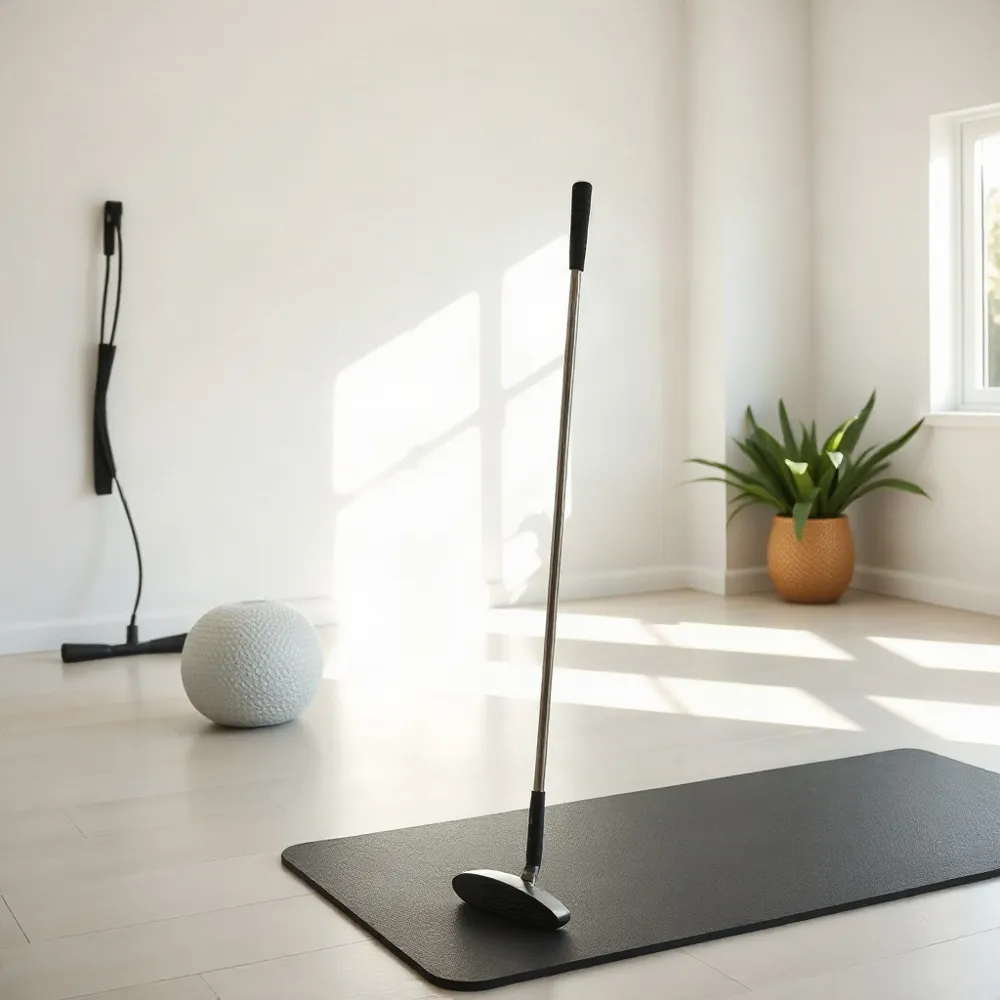 A useful golf-power program combines mobility, strength, and practice rather than relying on a single drill. At Glenwood Chiropractic, non-invasive musculoskeletal care focuses on pain relief and mobility restoration, which can help inform a plan suited to a golfer’s movement and comfort.
Start with controlled thoracic rotations or open-book movements, hip rotations such as 90/90 switches, and pelvic-control drills such as supine marching. These exercises let golfers practise moving through comfortable ranges while keeping the trunk and pelvis under control. The clinic’s TPI assessment approach can help connect observed movement limitations with an individualized training plan.
Build a strength base with squats, deadlifts, presses, and rows, adjusting the load and range to the golfer’s experience and ability to maintain good form. A qualified professional can help adapt exercises when pain, a previous injury, or restricted movement affects technique.
Add power work, such as jumps, medicine-ball throws, or fast push-ups, only after the relevant movements are safe and controlled. Begin with a modest amount and increase gradually. Golf-specific strength work can support power development, but it does not guarantee a change in distance or clubhead speed. The PGA’s swing-speed exercise guidance also emphasizes progressive resistance and practising fast swings.
Finally, practise controlled swings with a driver, increasing speed gradually and using feedback when available. Mobility work, strength training, power exercises, and golf-skill practice work together; no individual movement guarantees added speed. If a drill causes pain or a movement feels blocked, stop and seek guidance rather than forcing the range.
What Research Can Support
Usable rotation may give a golfer room to create a longer hand path and coordinate movement between body segments. That can provide an opportunity to apply force through the swing, but it does not mean that greater mobility automatically produces more power. This distinction is explored in research on mobility and swing changes.
Swing coordination and sequencing, effort, and the muscles’ ability to generate force all contribute to speed. Glenwood Springs golfers can discuss movement concerns with a chiropractor who provides non-invasive musculoskeletal treatment and mobility restoration. An assessment can help inform that discussion, not promise a change in distance.
Golf-specific strength and speed practice offers another part of the picture. PGA of America guidance describes strength exercises paired with fast swing practice, while advising golfers to begin with light resistance and progress safely. These are training suggestions, not a guarantee of added speed; individual needs and physical capacity should guide the approach.
Build a Sustainable Plan
 Short, regular practice is generally easier to maintain than occasional aggressive stretching. A brief dynamic warm-up before golf or a modest daily mobility routine can help you rehearse comfortable movement without forcing end ranges. For more ideas on preparing the spine for activity, see these chiropractic warm-up routines.
Adjust the routine to your symptoms and current capacity. If a movement is painful, a restriction persists, or you struggle to maintain swing posture, an individualized discussion with a musculoskeletal care provider can help clarify what to address. At glenwoodchiro.com, chiropractic adjustments and related therapies are part of non-invasive care focused on pain relief and mobility restoration.
An assessment may help identify movement limitations and inform a patient-centered plan, but it cannot promise more power. Clubhead speed depends on how usable mobility works alongside strength, control, and golf practice. Treat the assessment as a guide for where to focus, then build and reassess your training over time.
Assess, Train, Then Reassess
Use a mobility screen to identify movement worth exploring, then practice within a comfortable range and track changes in both physical control and your swing. An assessment can guide training, but it cannot promise more power or distance.
If movement causes persistent pain or meets a firm block that does not ease with gentle warm-up, do not force it. A clinician can help assess whether the limitation needs care and shape an approach suited to your needs. Glenwood Springs golfers can seek non-invasive musculoskeletal care through Glenwood Chiropractic, including chiropractic adjustments and therapies aimed at pain relief and mobility restoration.