
Start With the Headache Pattern
Before trying drug-free headache relief, take a moment to understand the pattern: when the pain starts, what it feels like, how long it lasts, and what else happens with it. A headache log can help reveal possible triggers and give a clinician useful details.
Headaches have many types and causes, and triggers differ from person to person. Sleep changes, skipped meals, stress, or posture may matter for some people, but a strategy that eases one person’s headache may not help another. Cleveland Clinic’s headache guide explains why care depends on the type and cause.
Home measures and chiropractic care may be considered as part of an individualized approach, but they do not replace medical assessment. Seek urgent care for a sudden, severe headache or one accompanied by concerning symptoms, and discuss headaches that are changing, persistent, or worsening with a healthcare professional.
Recognize Causes and Changing Patterns
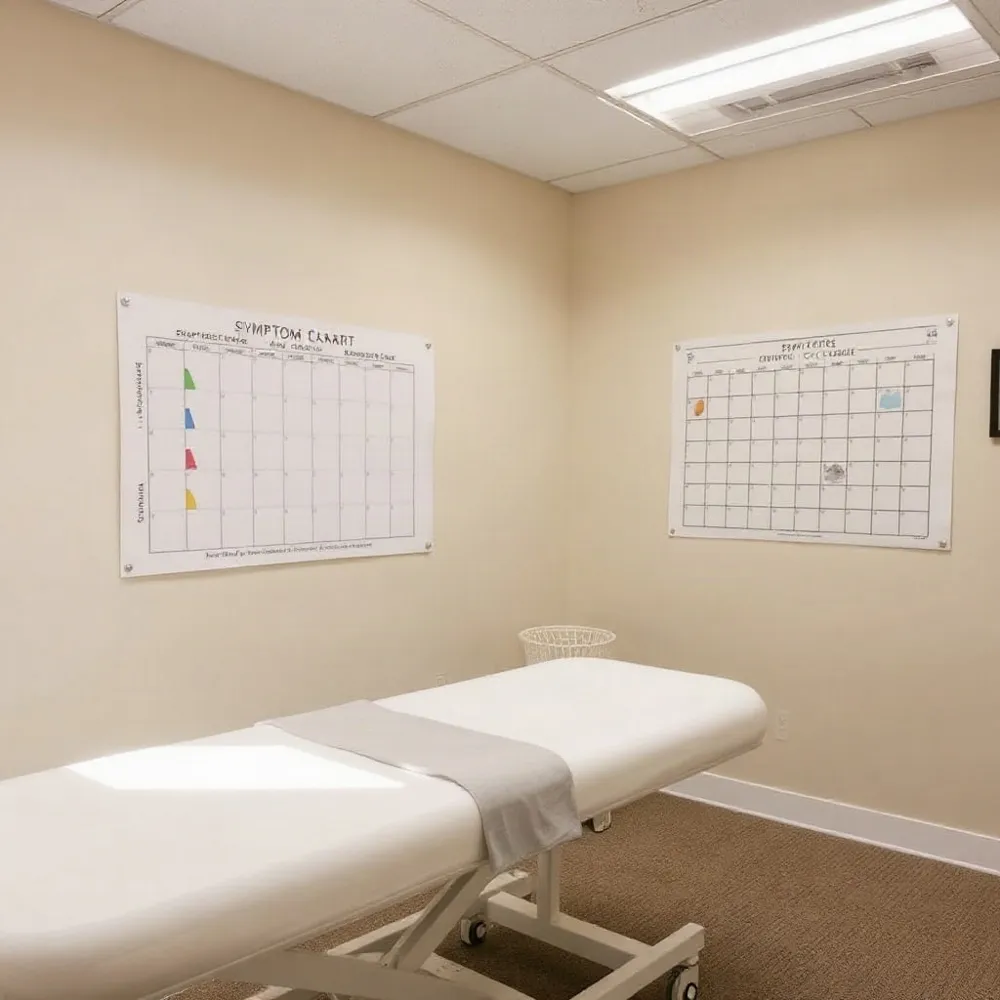 Headaches are generally grouped as primary, when the headache itself is the condition, or secondary, when pain results from another health problem. Migraine and tension-type headache are primary disorders, while dehydration or an underlying illness can contribute to secondary headaches. Because symptoms can overlap, a familiar pattern does not always reveal the cause. The Cleveland Clinic’s overview of headache types and causes explains why assessment may be needed.
Potential triggers include stress, irregular sleep, dehydration, skipped meals, alcohol, hormonal changes, poor posture, and prolonged screen use. Tension in the neck or shoulders may also occur alongside head pain. These factors do not affect everyone in the same way, and a trigger may be difficult to identify from memory alone. Readers can compare headache types and possible physical contributors in this guide to headache causes and patterns.
Headaches that become frequent or occur daily can reflect a changing migraine or tension-type pattern, shifts in sleep or stress, or frequent use of pain-relief medication. Medication overuse is one possibility, not an assumption; a clinician can review what is being taken and how often. Persistent, worsening, or disruptive headaches deserve medical assessment. Seek urgent care for a sudden, severe headache, particularly with weakness, confusion, fainting, fever, vision changes, or a stiff neck.
A headache diary can make a clinical conversation more useful. Record when pain starts, how long it lasts, its severity, accompanying symptoms, possible triggers, and medicines used. At Glenwood Springs, Glenwood Chiro provides non-invasive musculoskeletal care, including chiropractic adjustments and therapies for pain relief and mobility; a diary can help clarify whether neck or shoulder symptoms accompany headaches before discussing care.
Know When Medical Assessment Comes First
 Some headaches need urgent medical attention, not a trial of home care or hands-on treatment. Seek emergency care if pain becomes severe suddenly, or occurs with weakness, numbness, new vision or speech problems, confusion, fainting, fever with a stiff neck, or severe eye pain. These symptoms can signal a serious problem, and Cleveland Clinic guidance on headache warning signs advises urgent care for several of them.
Arrange prompt medical evaluation for a new headache during or after pregnancy, one that starts after age 50, or a pattern that is worsening or becoming more frequent. Head pain triggered by coughing, straining, or a change in position also warrants assessment. Contact a clinician sooner if you have a serious underlying illness or a weakened immune system. Persistent, recurring, or activity-limiting headaches deserve professional discussion even when no emergency signs are present.
A headache after a head injury should be assessed promptly because it may reflect a concussion or another injury. Go to emergency care for severe or worsening pain, repeated vomiting, confusion, unusual drowsiness, loss of consciousness, slurred speech, weakness, or difficulty walking. A clinician can review how the injury happened and assess alertness, memory, balance, and neurological function; findings help determine whether imaging is needed. Symptoms may emerge hours or days later, so monitor for changes and follow medical advice.
At Glenwood Chiropractic, care focuses on non-invasive musculoskeletal treatment, including adjustments and therapies for pain and mobility. That approach does not replace medical assessment after an injury or when urgent symptoms appear. Read more about when medical care is urgent before considering chiropractic neck treatment.
Consider Practical Drug-Free Strategies
 What approaches may help relieve a headache at home? For an occasional headache, drink water, eat a regular meal if you have skipped one, and rest in a quiet, dim room. A cold pack may feel helpful for some migraine headaches, while gentle warmth on the neck or shoulders may ease muscle tension. Place a cloth between your skin and any pack, and stop if it causes discomfort. Responses vary, so a remedy that helps one person may not suit another.
Light massage, slow breathing, and comfortable stretching may offer additional support, but they are not guaranteed treatments. Avoid forceful pressure, especially around the neck. These self-care approaches are among the options described by the Cleveland Clinic. For more practical ideas, see these drug-free headache strategies.
What drug-free approaches may help manage migraine? Keeping a headache diary and maintaining regular sleep and meal routines can help you notice patterns. Hydration, gentle movement, and stress-management practices may also support well-being. Relaxation training, biofeedback, and cognitive behavioral therapy are options to discuss with a qualified clinician. Some people consider acupuncture or physical therapy, particularly when neck or muscle tension is also present; suitability and evidence vary.
At Glenwood Springs, Glenwoodchiro.com provides non-invasive musculoskeletal care, including chiropractic adjustments and therapies for pain relief and mobility. A clinician can help assess whether care for neck or muscle concerns fits alongside other headache management, rather than assuming every headache has a musculoskeletal cause.
If you often need over-the-counter pain medicine, speak with a healthcare professional and follow label directions. Do not stop prescribed medication without clinical guidance. Drug-free strategies can complement medical care, but should not delay assessment of a new, worsening, or unusually severe headache.
Assess Whether Chiropractic Care Fits
Chiropractic care may be worth discussing for some tension-type headaches, particularly when neck discomfort or muscle tightness occurs alongside the head pain. A clinician may consider gentle mobilization or manipulation, soft-tissue techniques, exercises, and advice on posture or movement, based on your health history and preferences.
Headaches linked to neck structures are sometimes called cervicogenic headaches. Neck pain can be part of the picture, but it does not prove that the neck is causing a headache. Dizziness also has many possible causes, so it should be assessed rather than automatically attributed to the neck.
Evidence for spinal manipulation is mixed. A 2025 systematic review found very low certainty in the available research and concluded that it remains uncertain whether manipulation is more effective than comparison treatments. Relief is not guaranteed, and findings about one headache type or treatment should not be assumed to apply to everyone.
At Glenwood Springs, Glenwood Chiro provides non-invasive musculoskeletal care, including chiropractic adjustments and therapies intended to support pain relief and mobility. An individualized assessment can help determine whether conservative care fits, or whether referral or coordination with another healthcare professional is more appropriate. The National Headache Foundation’s headache guidance also describes how headache treatment depends on its type and cause.
Seek urgent medical attention for a sudden, severe headache, or one accompanied by new weakness, numbness, confusion, trouble speaking or walking, fainting, fever, or vision changes. Chiropractic care does not replace medical diagnosis, especially when symptoms are new or concerning.
Put Migraine Evidence in Context
Research on chiropractic spinal manipulation for migraine remains uncertain. A 2025 systematic review included eight randomized trials and did not combine their results in a meta-analysis. Some comparisons found fewer headache days or shorter episodes, while other assessed outcomes did not differ significantly.
The review rated the evidence very low in certainty and found that all included studies had a high or unclear risk of bias. Its authors concluded that it remains unclear whether spinal manipulation works better than sham treatment, a control condition, or deep friction massage. These findings neither establish benefit nor rule it out. The 2025 systematic review discusses these limits in detail.
A single 2011 case report described one person whose migraines improved during a course of chiropractic treatment, but a case like this cannot show that the treatment caused the change or that others are likely to respond similarly. It is a limited observation, not proof of general effectiveness. The case report also notes that its findings should not be generalized.
For people considering care in Glenwood Springs, chiropractic treatment may be discussed as a possible complement to migraine care, not a substitute for medical diagnosis or established treatment. A Glenwood Springs chiropractor can assess musculoskeletal concerns and discuss whether non-invasive care is appropriate, while a medical provider can guide migraine diagnosis and treatment.
Before starting, discuss your headache history, other health conditions, and any concerns about treatment risks with your medical provider and chiropractor. Coordinating care helps keep decisions grounded in your symptoms and the wider treatment plan, especially if headaches are changing, persistent, or severe.
Choose Relief With Safety in Mind
The safest next step depends on the headache pattern and any warning signs. Sudden, severe pain or new neurological symptoms warrant urgent assessment, while persistent or changing headaches deserve discussion with a healthcare professional. Cleveland Clinic guidance on headaches outlines symptoms that call for prompt care.
A headache diary can help show when pain occurs, how it changes, and what medicines or other approaches have been tried. Bring those notes to an appointment, along with questions about medication use and conservative care preferences.
Drug-free approaches, including chiropractic care, may suit some people but are not universal remedies. At glenwoodchiro.com, care includes non-invasive chiropractic adjustments and therapies aimed at pain relief and mobility, with choices considered in light of each person’s needs and medical assessment.