Why Posture Deserves a Closer Look
Back discomfort can build during ordinary routines, from sitting at a computer to lifting or carrying objects. These repeated tasks may create muscle tension and tightness, so noticing how you move and hold your body can be a useful place to start. Harvard Health Publishing describes posture as the way the body is held while standing, sitting, and doing everyday activities.
Posture is one factor that may contribute to back pain, but it does not explain every case or establish a diagnosis. Injury, health conditions, activity levels, and other individual factors can also matter. A review of spinal posture assessment and low back pain underscores the need to consider the relationship in context, rather than treating one position as a universal cause or cure. Research on posture and low back pain
A practical approach focuses on awareness, comfortable movement, and habits that can be sustained, not on holding a rigid “perfect” posture. At Glenwood Chiropractic in Glenwood Springs, care centers on non-invasive musculoskeletal treatment, including chiropractic adjustments and therapies aimed at pain relief and mobility restoration. An individualized assessment can help put posture concerns in context and guide next steps.
How Posture May Contribute to Pain
Prolonged sitting or standing, repeated slouching, and awkward positions can add strain to back muscles and other tissues. Rounded shoulders, a forward head, or leaning more heavily to one side can also shift how physical demands are distributed. Posture may be one factor among several, rather than a single explanation for back pain.
Can poor posture contribute to back pain, and how can you tell whether it may be a factor? Symptoms that build in a particular position or during a long spell of sitting or standing, then ease after you move or change position, may suggest a connection. These patterns do not establish a diagnosis, and pain itself can make comfortable movement or maintaining your usual posture more difficult. Harvard Health’s guidance on posture and back pain describes how everyday tasks and sustained positions may contribute to muscle tension.
Recognizing Posture Habits and Alignment
 Common signs of poor posture include rounded shoulders, a head that leans forward, and slouching while seated or standing. The shoulders or hips may also appear uneven. These observations can offer clues about alignment, but they do not diagnose the cause of discomfort.
The spine has a gentle inward curve in the neck, an outward curve through the upper back, and another inward curve in the lower back. Balanced posture supports these natural curves without forcing them flat or exaggerating them. MedlinePlus guidance on good posture describes the head as positioned above the shoulders, with the shoulders over the hips.
For a simple self-check, look in a mirror from the front and side. Notice whether your head is level, your shoulders and hips appear even, and your back position changes when you sit, stand, or walk. You can also review common signs of postural imbalance.
Everyday Adjustments That Reduce Sustained Strain
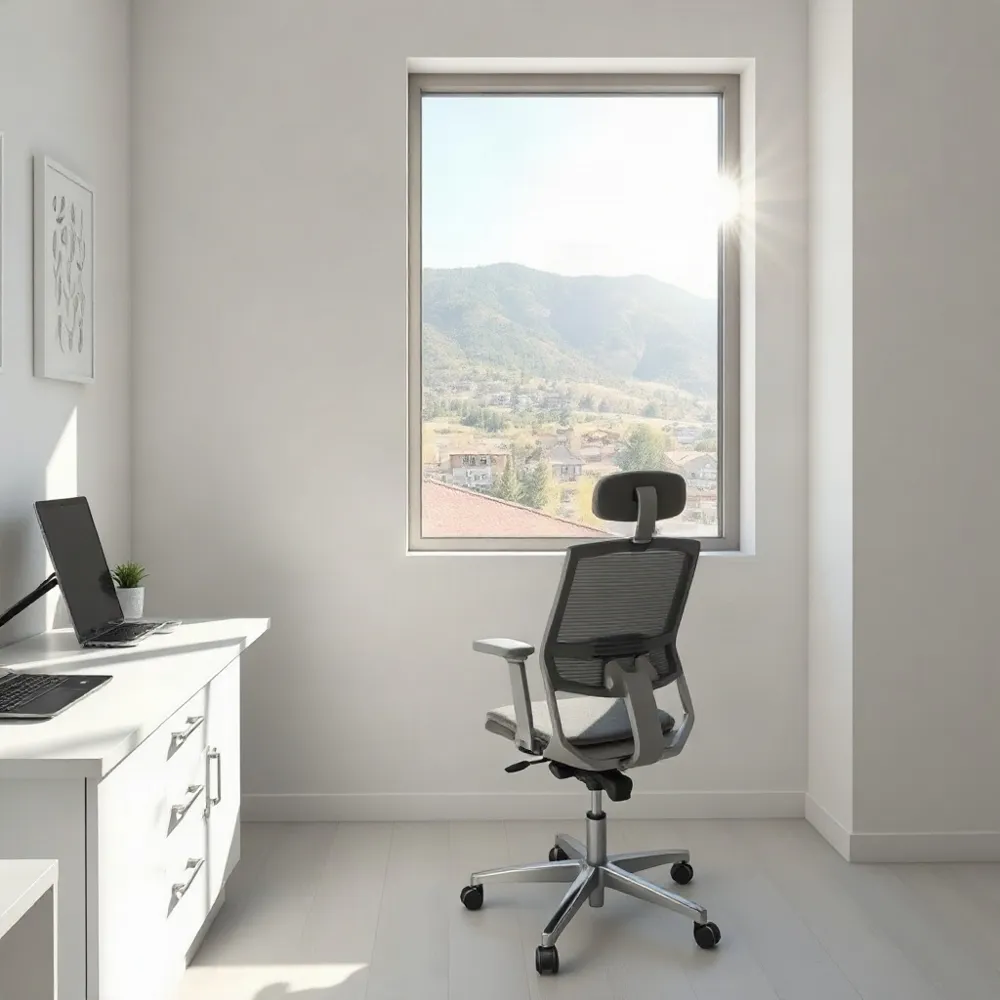 Small changes can make everyday positions more comfortable, but there is no single setup that suits everyone. When sitting, rest your back against the chair, support the natural curve of your lower back, keep your feet supported, and let your shoulders relax. A rolled towel may help if the chair lacks lower-back support. Adjust the screen to a comfortable height and arrange the chair and work surface so you can work without reaching or hunching. These are starting points, not rules for holding one fixed posture.
Staying in one position for too long can leave muscles feeling tired or tight. Harvard Health suggests changing position or getting up to move every 30 minutes to an hour; brief walks or gentle stretches can provide a change from desk work (Harvard Health’s posture guidance). Varying your position through the day is often more practical than trying to maintain a rigid pose.
If you stand for long periods, shift your weight occasionally. Resting one foot on a low support may feel more comfortable, and you can switch sides. Notice how you sit, stand, lift, and carry, especially when discomfort tends to arise. For more sitting ideas, see everyday adjustments for reducing sustained strain. At glenwoodchiro.com, chiropractic care and complementary therapies are non-invasive options that can be considered in a patient-centered assessment of pain and mobility.
Exercises for Strength, Flexibility, and Mobility
What exercises may help improve posture and ease posture-related back discomfort? Posture depends on more than holding the body upright. Strength, flexibility, joint mobility, and balance all play a part, and improvement usually takes regular practice. No single exercise suits everyone, so choose movements that feel manageable and adapt them to your comfort.
A few simple options can help you practice control and movement. For a shoulder-blade squeeze, sit tall, relax your shoulders, and draw the shoulder blades gently toward each other. For chin tucks, draw your chin slightly back while keeping your gaze level. A doorway or corner chest stretch can gently open the front of the shoulders. Harvard Health describes these movements as ways to practice posture and mobility, not as a substitute for individualized advice (Harvard Health’s posture exercises).
For the trunk and back, try a bird dog by extending one arm and the opposite leg from hands and knees while keeping your back steady. A bridge lifts the hips gently from a lying position with knees bent. Cat-cow movements, performed slowly on hands and knees, take the spine through a comfortable range of motion. These are examples, not a required routine. Glenwood Chiropractic’s non-invasive musculoskeletal care can include assessment of pain and mobility to help inform an approach suited to an individual.
Begin with a few comfortable repetitions and move slowly. Do not force a stretch or continue through sharp or worsening pain. If you are exercising because of ongoing back pain or after an injury, ask a qualified health professional which movements are appropriate; the Mayo Clinic’s back exercise guidance also advises seeking guidance in these situations.
Exercise works best alongside regular movement throughout the day. Break up prolonged sitting with brief walks or gentle stretches rather than relying on a workout to offset hours in one position. If pain persists, worsens, or limits activity, a clinician can assess your needs and help tailor a plan. Glenwood Chiropractic focuses on patient-centered, non-invasive care for pain relief and mobility restoration.
Personalized Care and Long-Term Improvement
Care for posture-related back pain is usually tailored to the person, since pain, strength, flexibility, and daily demands differ. A plan may combine regular movement, targeted strengthening and stretching, and practical changes to sitting, standing, and work habits. At Glenwood Chiropractic, care focuses on non-invasive musculoskeletal treatment, with adjustments and other therapies considered in light of a person’s symptoms and mobility.
A healthcare professional can assess symptoms and movement, then advise on suitable exercises or physical therapy. A chiropractor may discuss whether manual care is appropriate as one part of a wider plan, rather than treating posture as the only cause of pain. MedlinePlus guidance on posture emphasizes practice and everyday habits, not a single correction.
How can posture-related back pain be treated? Varying positions, taking movement breaks, and adjusting a workstation can reduce the strain of staying still for too long.
When Back Pain Needs Professional Assessment
 Good posture may reduce strain, but it cannot prevent every cause of back pain. A muscle or tendon strain, disc problem, arthritis, previous injury, repetitive lifting, limited activity, or another health condition may contribute. Pain can also persist when strength, flexibility, or other factors need attention. Alignment alone cannot identify the cause or determine what care is appropriate.
Seek professional care for severe, worsening, recurring, or persistent pain rather than trying to force your spine into a new position. Get prompt assessment after a significant injury or if back pain occurs with fever, unexplained weight loss, a history of cancer, or intense pain at rest or at night. New or worsening weakness or numbness in a leg, numbness around the groin or inner thighs, or new bowel or bladder problems call for urgent evaluation. The MedlinePlus guide to good posture also advises contacting a healthcare provider with health questions.
A Flexible Approach to Back Health
Posture can influence back discomfort, but it is only one part of a person’s health and daily circumstances. Changing how you sit or stand may help, but it cannot guarantee relief or address every cause of pain.
Notice whether symptoms shift with certain positions or activities, and make regular movement part of your routine. If pain persists or raises concern, a clinician can assess your needs and discuss options, including non-invasive chiropractic care and mobility support at Glenwood Chiropractic. Guidance from MedlinePlus also emphasizes that posture habits support health but do not replace professional care.