Opening Perspective
Degenerative disc disease (DDD) is a common age‑related degeneration of intervertebral discs, characterized by loss of hydration, elasticity, and disc height, which can provoke localized back or neck pain and, in some cases, nerve irritation. Up to 40% of adults over age 40 show radiographic signs of DDD, yet many remain asymptomatic. A non‑invasive care philosophy begins with a thorough assessment, patient education, and lifestyle optimization—weight management, ergonomic adjustments, and low‑impact aerobic activity. Evidence‑based chiropractic interventions—spinal manipulation, flexion‑distraction, and instrument‑assisted techniques—restore joint mechanics and reduce inflammation. Adjunctive modalities such as therapeutic ultrasound, soft‑wave therapy, and spinal decompression complement the plan, aiming to improve disc nutrition, alleviate pain, and preserve function without surgery.
Understanding Degenerative Disc Disease and Its Natural Course
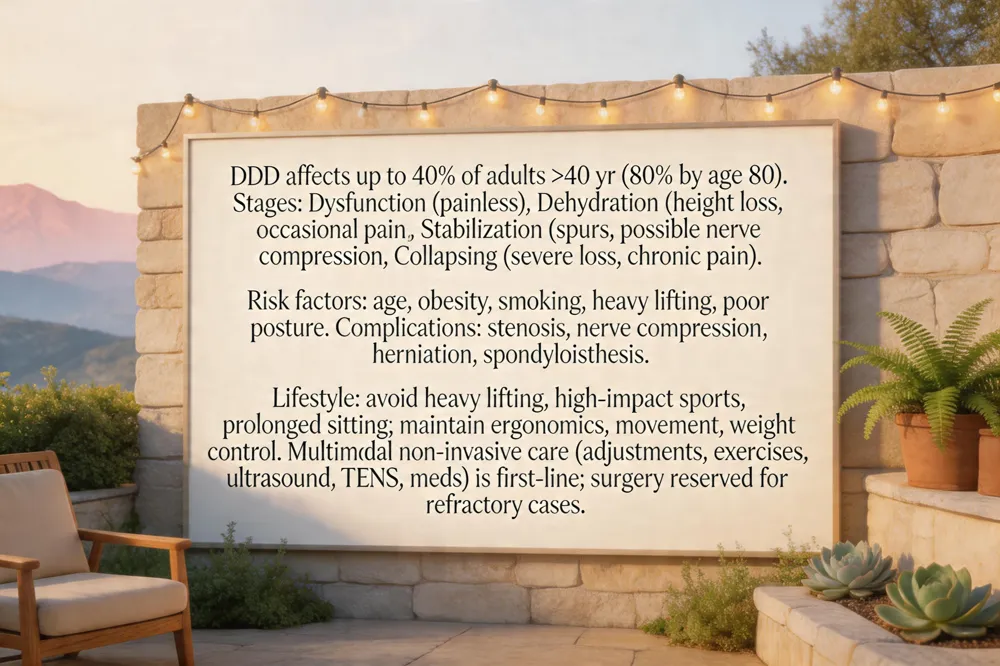 Degenerative disc disease (DDD) affects up to 40% of adults over 40 and rises to 80% by age 80, with [risk factors](https://my.clevelandclinic.org/health/diseases/16912-degenerative-disk-disease) that as aging, obesity, smoking, repetitive heavy lifting, and poor posture. The disease progresses through four stages: Dysfunction (early, painless changes), Dehydration (loss of disc water and modest height reduction with occasional pain), Stabilization (bone spurs and reduced mobility that may compress nerves), and Collapsing (severe height loss, extensive osteophytes, possible fusion, chronic pain and functional limitation). Potential complications include spinal stenosis, severe nerve compression, herniated discs, and spondylolisthesis, which can threaten neurological function. Lifestyle factors to avoid are heavy lifting, high‑impact sports, prolonged static sitting, smoking, and excess weight; instead, maintain ergonomic posture, regular movement, and weight control. DDD itself is not fatal, but untreated complications can become life‑threatening. For stage 4 DDD, multimodal non‑invasive care—[spinal adjustments](https://www.drannabernstein.com/), [therapeutic exercises](https://my.clevelandclinic.org/health/diseases/16912-degenerative-disk-disease), [ultrasound](https://www.trailheadchiro.com/), [TENS](https://backcountrychirocolorado.com/), and targeted medication—can provide relief, while surgery is reserved for refractory cases.
Chiropractic Care: Safety, Efficacy, and Complementary Options
 Is chiropractic safe for degenerative disc disease?
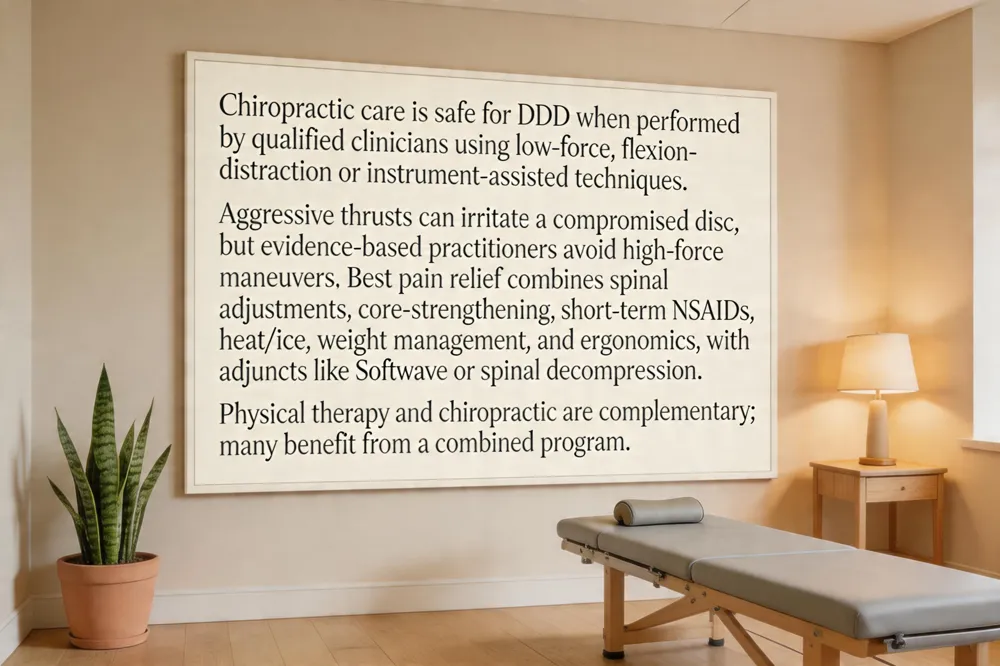
Yes. When performed by a qualified chiropractor who first assesses disc health, gentle adjustments, flexion‑distraction, or instrument‑assisted techniques are safe for early‑stage DDD. Advanced cases are treated with low‑force methods, soft‑tissue work, and supportive exercises.
Can a chiropractor make a herniated disc worse?
Improper, aggressive thrusts could irritate a compromised disc, but evidence‑based practitioners use low‑force, traction‑based methods and avoid stressing the annulus. The risk of worsening is minimal when protocols are followed.
What is the best pain relief for degenerative disc disease?
A multimodal plan: chiropractic spinal adjustments, targeted core‑strengthening, NSAIDs (short‑term), heat/ice, weight management, and ergonomic counseling. Adjunct modalities such as softwave or spinal decompression enhance relief.
Physical therapy or chiropractor for degenerative disc disease?
Both are effective; many patients benefit from a combined approach—Physical therapy for muscle support and chiropractic for joint alignment.
Glenwood Chiropractic Center reviews
Patients praise personalized care, noticeable pain reduction, and a 5‑star rating.
Chiropractor for degenerative disc disease near me
Glenwood Chiropractic Center (Glenwood Springs, CO) offers individualized, non‑invasive DDD management.
Trailhead chiropractic Glenwood Springs
Family‑run clinic providing neurologically based adjustments and Softwave therapy; open Mon‑Thu, 10 am‑12 pm/3 pm‑6 pm, Tue 8 am‑11 am.
Backcountry chiropractic Glenwood Springs
Located at 2425 Grand Ave, Suite 105; offers spinal adjustments, sport‑injury rehab, and accepts major insurers.
Acupuncture Glenwood Springs
Local licensed acupuncturists complement chiropractic care, offering 1‑4 sessions for back/neck pain and overall well‑being.
Exercise, Core Strengthening, and Lifestyle for Disc Health
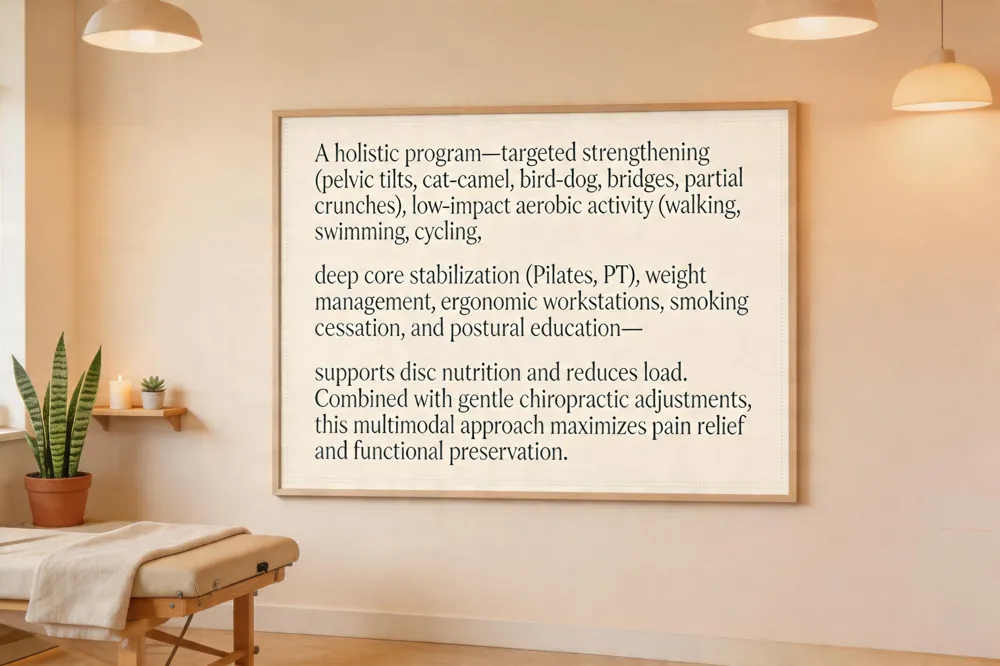 Targeted strengthening exercises, low‑impact aerobic activity, core stabilization, weight management, ergonomics, smoking cessation, and postural education together form a holistic, evidence‑based approach to supporting degenerative discs.
Targeted Strengthening Exercises – Simple, clinician‑approved movements such as pelvic tilts, cat‑camel stretches, bird‑dog extensions, bridges, partial crunches, and gentle hamstring stretches improve spinal mechanics and promote nutrient diffusion into the disc.
Low‑Impact Aerobic Activity – Walking, swimming, or stationary cycling increase circulation, aid disc re‑hydration, and reduce inflammation without over‑loading the spine.
Core Stabilization – Engaging the deep abdominal and lumbar musculature (e.g., through Pilates or core‑focused physical‑therapy programs) creates a stable support column that lessens abnormal vertebral motion and disc stress.
Weight Management and Ergonomics – Maintaining a healthy body weight reduces axial load; ergonomic adjustments at work and home (proper chair support, neutral spine posture, safe lifting techniques) further protect disc height and hydration.
Smoking Cessation – Smoking impairs blood flow and disc nutrition; quitting is a crucial lifestyle modification that can slow degeneration.
Postural Education – Regular counseling on standing, sitting, and movement patterns helps patients avoid prolonged positions that increase intradiscal pressure.
How to strengthen degenerative discs? A multidisciplinary program that combines the above exercises with spinal adjustments, spinal essential forained, activity and activity is‑ clinician compress‑backo regimen.
What is the best pain relief for degenerative disc disease? The most effective relief is a personalized, multimodal plan that begins with non‑invasive therapies—gentle chiropractic adjustments, targeted therapeutic exercises, NSAIDs or short‑term anti‑inflammatories, and heat/ice modulation—supported by weight control, ergonomics, and, when needed, brief courses of muscle relaxants or corticosteroid injections. The core strategy remains chiropractic care integrated with tailored physical therapy and lifestyle changes.
Emerging Minimally Invasive and Regenerative Therapies
 Who is a candidate for minimally invasive lumbar decompression?
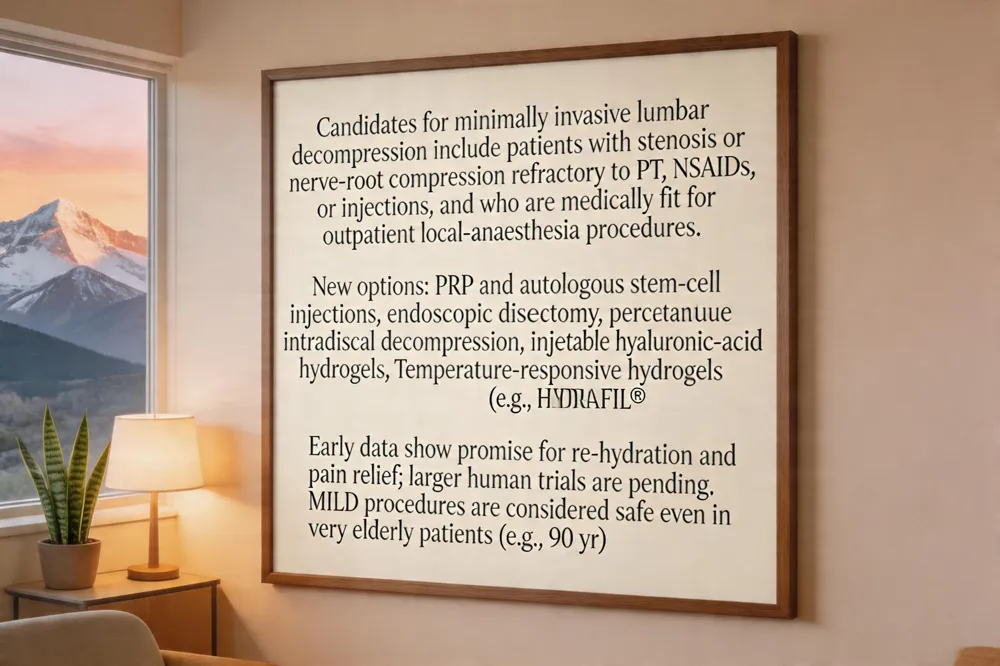
Patients with lumbar stenosis or nerve‑root compression who have persistent pain despite physical therapy, NSAIDs, or injections are typical candidates. They must be medically fit for an outpatient procedure under local anesthesia, have no prior surgery at the same level, and lack active infection. Older adults or those with comorbidities that make open surgery risky often benefit most.
Who is a candidate for minimally invasive lumbar decompression?
Patients with lumbar stenosis or nerve‑root compression who have persistent pain despite physical therapy, NSAIDs, or injections are typical candidates. They must be medically fit for an outpatient procedure under local anesthesia, have no prior surgery at the same level, and lack active infection. Older adults or those with comorbidities that make open surgery risky often benefit most.
New treatments for degenerative disc disease Current innovations focus on biologic repair and motion preservation. Platelet‑rich plasma and autologous stem‑cell injections aim to restore disc hydration and reduce inflammation. Endoscopic discectomy, percutaneous intradiscal decompression, and injectable hyaluronic‑acid hydrogels provide structural support with minimal tissue disruption. Radiofrequency neurotomy and image‑guided steroid injections complement these approaches.
Hyaluronic acid for degenerative disc disease Injectable HA hydrogels are being studied for their ability to re‑hydrate the nucleus pulposus, preserve disc height, and promote proteoglycan synthesis. Early animal data are promising, but large‑scale human trials are still pending.
Gel that can repair spinal discs Temperature‑responsive hydrogels (e.g., HYDRAFIL®) and granular HA gels are injected as liquids that solidify to mimic native disc biomechanics, offering pain relief and functional gains for up to a year in preliminary studies.
New treatment for herniated disc Endoscopic discectomy utilizes a sub‑centimeter incision and camera‑guided instruments to excise herniated material while preserving healthy tissue, allowing same‑day discharge and rapid return to activity. Regenerative biologics are increasingly combined with this technique.
Is it safe to do MILD on a 90‑year‑old? Evidence suggests that minimally invasive lumbar decompression carries a risk profile comparable to other outpatient orthopedic procedures in the very elderly, offering meaningful pain relief without the morbidity of open surgery.
When Surgery Becomes Necessary: Options, Success Rates, and Recovery
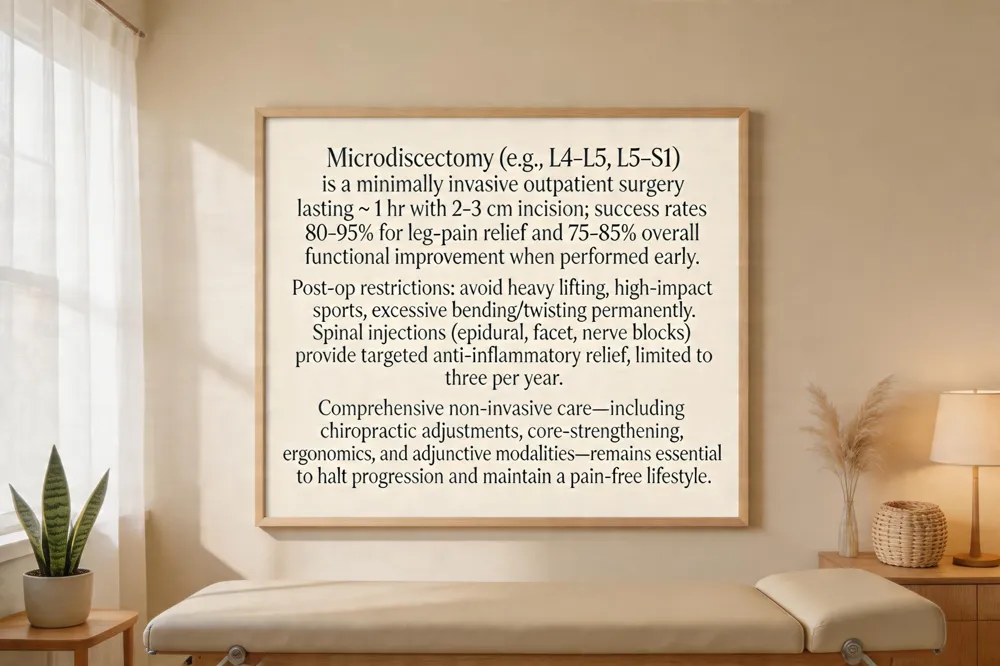 Microdiscectomy for a lumbar herniated disc is a concise, minimally invasive operation. A typical L4‑L5 microdiscectomy lasts about one hour under general anesthesia, using a 2‑3 cm incision and microscope‑assisted instruments; most patients are observed for a few hours and may stay one to two days in the hospital. Success rates are high: L4‑L5 procedures achieve 80‑90 % pain relief and functional improvement, while L5‑S1 microdiscectomy reports 80‑95 % leg‑pain relief and 75‑85 % overall success, especially when performed within six months of symptom onset and followed by structured rehabilitation. After surgery, heavy lifting, high‑impact sports, and excessive bending or twisting should be avoided permanently. For degenerative disc disease, spinal injections—epidural steroids, facet‑joint steroids, nerve blocks, and trigger‑point injections provide targeted anti‑inflammatory relief under fluoroscopic guidance, typically limited to three per year. Although disc degeneration cannot be fully reversed, comprehensive non‑invasive care—including chiropractic adjustments, core‑strengthening exercises, ergonomic counseling, and adjunctive modalities—can halt progression, relieve pain, and restore an active, pain‑free lifestyle.
Takeaway
Key Points Summary
- Degenerative disc disease (DDD) is common after age 40 and often managed successfully with non‑invasive, patient‑centered care.
- Evidence‑based chiropractic spinal manipulation, flexion‑distraction, and spinal decompression can reduce pain, improve joint mobility, and promote disc nutrition without surgery.
- Adjunctive modalities such as therapeutic ultrasound, low‑intensity extracorporeal shockwave (Softwave), TENS, and targeted exercise programs enhance inflammation control and core stability.
- Lifestyle modifications—weight management, ergonomic education, smoking cessation, and low‑impact aerobic activity—slow progression and support long‑term spinal health.
Next Steps for Patients
- Schedule a comprehensive evaluation (history, physical exam, imaging) to confirm DDD and rule out severe instability.
- Begin a structured, multimodal plan that includes chiropractic adjustments, spinal decompression, and a personalized therapeutic‑exercise regimen.
- Incorporate adjunct therapies (e.g., Softwave, ultrasound) and adopt ergonomic and nutrition guidance.
- Reassess pain and function every 4–6 weeks; adjust the plan as needed and consider minimally invasive procedures (e.g., basivertebral nerve ablation) only if conservative care fails.
- Maintain regular follow‑up to monitor disc health and prevent recurrence.