Understanding Degenerative Disc Disease and Non‑Surgical Care
Degenerative disc disease (DDD) is a progressive condition in which intervertebral discs lose hydration, elasticity and height, reducing their ability to absorb shock. Aging is the primary driver, but genetics, repetitive spinal loading, obesity, smoking and prior injury accelerate the breakdown of disc matrix proteins such as proteoglycans. As the disc thins, nerve roots become irritated, producing chronic neck or low‑back pain, stiffness and occasional radiating sensations.
Because DDD rarely threatens structural stability, most clinicians begin with non‑surgical care. Evidence shows that medications, targeted exercise, chiropractic adjustments, acupuncture and lifestyle modifications can achieve comparable pain relief to surgery while avoiding the risks of anesthesia, infection and prolonged rehabilitation. A patient‑centered, multidisciplinary approach is therefore the first line of treatment.
The overarching goal of conservative management is to control inflammation, reduce nerve irritation, restore functional mobility and slow further degeneration. This is achieved through core‑strengthening programs, ergonomic counseling, weight‑management, spinal decompression, manual therapies and, when appropriate, short‑course anti‑inflammatories or oral corticosteroids. By addressing the whole person—physical, biomechanical and psychosocial factors—non‑surgical strategies aim for long‑term symptom improvement and enhanced quality of life.
Medication, Lifestyle, and Physical Therapy Foundations
 Non‑surgical management of degenerative disc disease (DDD) begins with a multimodal plan that targets pain, inflammation, and mechanical stress.
NSAIDs and prescription pain relievers – Over‑the‑counter Nonsteroidal anti‑inflammatory drugs (NSAIDs) such as ibuprofen, naproxen, and aspirin reduce inflammation and pain in the spine are first‑line agents for reducing disc‑related inflammation and pain. When OTC options are insufficient, Prescription pain relievers may be prescribed for a short course (typically up to one week) when over‑the‑counter medications are insufficient can be added to bridge the gap while other therapies take effect.
Muscle relaxants and oral corticosteroids – Muscle relaxants are used for a week or two to calm painful muscle spasms caused by nerve irritation from a degenerated disc. Oral corticosteroids are prescribed for 7 to 10 days to reduce inflammation near the damaged disc and relieve nerve pressure when NSAIDs alone do not provide adequate relief.
Weight management and smoking cessation – Weight loss lessens the anterior pull on the spine, helps maintain proper alignment, and can reduce nerve irritation and pain. A modest weight‑loss program, combined with smoking cessation (which impairs disc nutrition), lessens mechanical stress and slows degeneration.
Core‑strengthening physical therapy – Physical therapy focuses on core strengthening (back, abdomen, upper thighs, and buttocks), posture correction, stretching, and may include heat, ice, and massage. Improved core stability unloads the intervertebral discs, enhances posture, and reduces pain. Therapists often incorporate stretching, low‑impact aerobic conditioning, and modalities such as heat, ice, and therapeutic ultrasound to promote flexibility and tissue healing.
Acupuncture, heat/ice, massage, and ergonomic advice – Acupuncture involves inserting thin needles at specific meridian points to increase blood flow and stimulate endorphin release, providing natural pain relief. Alternating heat and ice helps modulate inflammation and muscle spasm. Therapeutic massage further improves circulation and muscle tone. Finally, ergonomic counseling—adjusting workstation height, using lumbar‑support chairs, and practicing proper lifting techniques—helps maintain neutral spinal alignment throughout daily activities.
Together, these evidence‑based interventions create a comprehensive, patient‑centered framework that often yields significant pain reduction and functional improvement without the need for surgery.
Leading Spine Experts in Colorado
Best spine doctors in Denver
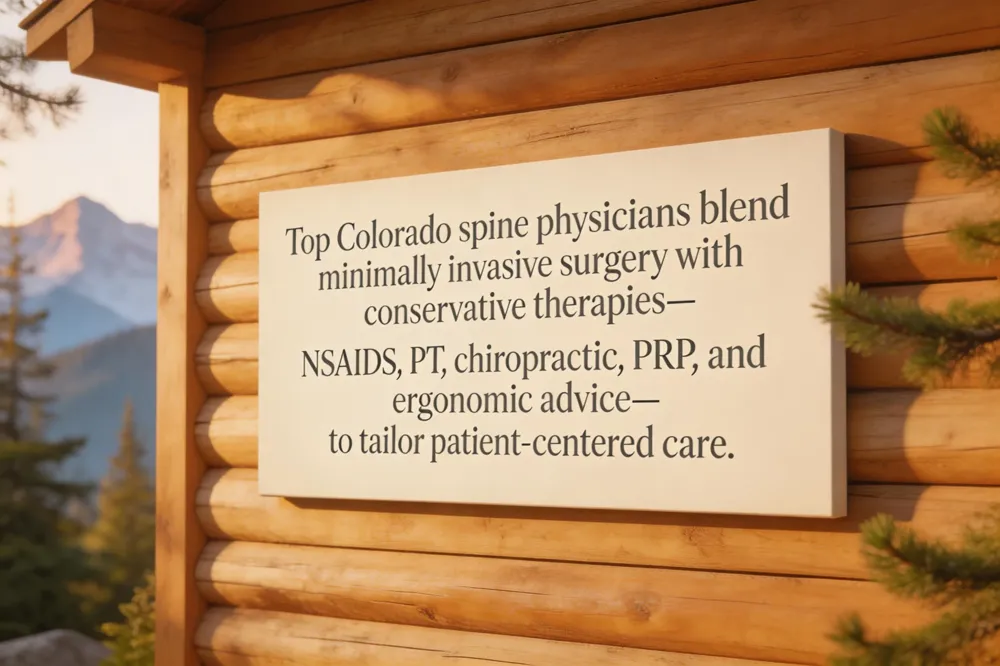
Denver’s top spine specialists blend cutting‑edge surgical expertise with a strong emphasis on non‑surgical, patient‑centered care. Dr. Sanjay Jatana, a board‑certified orthopedic spine surgeon, is renowned for minimally invasive techniques and for recommending conservative options—such as core‑strengthening physical therapy, acupuncture, and chiropractic adjustments—before considering surgery. The Colorado Spine Partners team (Dr. David Wong, Dr. Gary Ghiselli, Dr. Chris Johnson) offers comprehensive pain‑management programs that include NSAIDs, muscle relaxants, epidural steroid injections, and regenerative therapies like PRP, while also providing spinal decompression and therapeutic massage. Dr. Sean Baran, an orthopedic sports‑medicine surgeon, integrates sports‑specific rehabilitation and ergonomic counseling to keep active patients pain‑free.
Top spine surgeons in Colorado
Colorado’s leading spine surgeons operate within multidisciplinary teams that prioritize evidence‑based, nonsurgical interventions. The University of Colorado Hospital’s Adult Spine Division combines orthopedic and neurosurgical expertise with adjunctive modalities such as chiropractic spinal adjustments, flexion‑distraction, and low‑impact aerobic conditioning. Colorado Spine Partners’ fellowship‑trained surgeons—Dr. Gary Ghiselli, Dr. Sanjay Jatana, Dr. Chris Johnson, and Dr. David Wong—utilize minimally invasive procedures like artificial‑disc replacement only after patients have engaged in weight‑management, core‑stabilization programs, and complementary therapies (massage, acupuncture, TENS). Their approach reflects the latest guidelines that recommend a stepwise progression from lifestyle modification to advanced injection therapies.
Colorado spine specialists
Across the state, specialists such as the Colorado Comprehensive Spine Institute and HCA HealthONE Physicians integrate chiropractic care, therapeutic exercise, and regenerative medicine into individualized treatment plans. Patients benefit from coordinated care that includes ergonomic education, smoking cessation, and mind‑body strategies (yoga, CBT) alongside medical options, ensuring a holistic pathway to pain relief and functional improvement for degenerative disc disease.
Minimally Invasive Surgical Options and Collaborative Centers
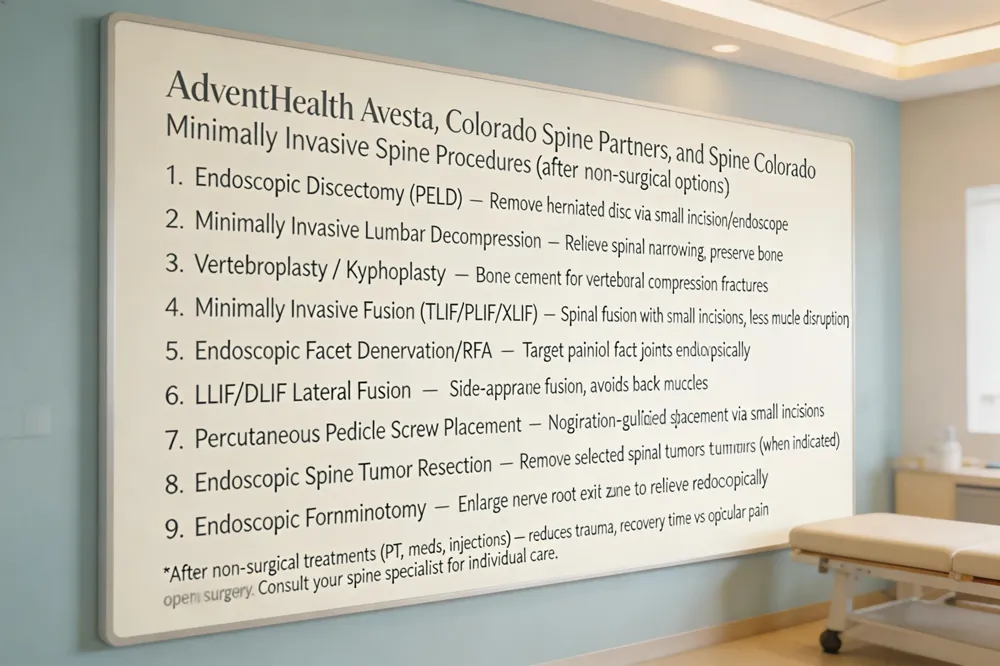 Endoscopic spine surgery in Colorado represents a cutting‑edge, minimally invasive approach that treats herniated discs, nerve compression and other spinal pathologies through a sub‑centimeter, camera‑guided incision. Pioneered at AdventHealth Avista by Dr. Chris Talbot and now offered by specialists such as Dr. Sanjay Jatana in Denver, the technique preserves muscles, ligaments and tendons, resulting in up to 50 % less postoperative pain and a rapid return to daily activities—often as an outpatient or after a single overnight stay.
Colorado Spine Partners, located at 145 Inverness Drive E, Suite 100, Englewood, CO 80112 (phone (303) 697‑7463), embodies a multidisciplinary philosophy that prioritizes exhaustive non‑surgical care before surgery. The team of four fellowship‑trained, board‑certified spine surgeons—including Dr. Gary Ghiselli and Dr. Sanjay Jatana—integrates chiropractic adjustments, physical therapy, weight‑management counseling and regenerative options such as PRP or stem‑cell injections. When surgery becomes necessary, they employ minimally invasive techniques (ALIF, TLIF, PLIF, artificial‑disc replacement) to preserve motion and shorten recovery.
Spine Colorado, operating in Durango and Montrose, follows a similar patient‑centered model. Its multidisciplinary staff—orthopedic surgeons, physiatrists and chiropractors—offers chiropractic‑style adjustments, soft‑tissue therapy, diagnostic imaging, interventional injections and minimally invasive surgery. Reported outcomes show roughly 90 % of patients achieve meaningful pain relief. Across all three centers, the synergy of evidence‑based chiropractic care, complementary therapies and advanced endoscopic surgery provides a holistic pathway to functional restoration for individuals with degenerative disc disease.
Regional Surgical Centers and Referral Options
 The Denver Spine Center, located at 1721 E. 19th Ave., Suite 500, Denver, CO 80218, serves as a regional hub for both non‑surgical and surgical spine care. Its services include advanced imaging (MRI, CT, X‑ray) and a full suite of surgical interventions such as spinal fusion, decompression, endoscopic procedures, and minimally invasive techniques performed by board‑certified orthopedic surgeons and neurosurgeons like Dr. Timothy R. Kuklo and Dr. Jens‑Peter Witt. Patients can schedule an evaluation by calling (303) 762‑3472. While the center excels in offering high‑tech diagnostics and operative options, it does not provide the chiropractic‑focused, hands‑on therapies (adjustments, flexion‑distraction, therapeutic massage, acupuncture) that are the cornerstone of care at Glenwood Chiro in Glenwood Springs. Consequently, the Denver Spine Center fits into a conservative‑to‑surgical pathway as the referral destination when conservative management—core strengthening, weight‑management, chiropractic adjustments, and complementary modalities—fails to achieve lasting relief or when imaging reveals structural issues requiring operative correction.
Chiropractic Care for Degenerative Disc Disease
 Glenwood Springs offers several evidence‑based chiropractic clinics that specialize in non‑invasive management of degenerative disc disease (DDD). A typical practice combines spinal decompression therapy, which gently stretches the spine to lower intradiscal pressure and promote re‑hydration, with precise chiropractic adjustments that restore joint motion and reduce inflammation. Flexion‑distraction(https://coloradospinepartners.com/t_nonsurg.html), a low‑force technique, is frequently used for patients with mild‑to‑moderate disc degeneration, while instrument‑assisted manipulation and soft‑tissue work such as massage or trigger‑point therapy address muscular tension and improve circulation.
Scientific and clinical reports from NYU Langone, Colorado Spine Partners, and HealthCentral indicate that these modalities can lessen pain scores, improve functional mobility, and delay the need for surgery when applied early and under proper medical clearance. Safety considerations include confirming the absence of severe herniation, major nerve compression, or advanced disc collapse before manipulation.
Chiropractic care is most effective when integrated with other conservative therapies: a structured physical‑therapy program for core strengthening, weight‑management counseling, ergonomic education, and adjunctive treatments such as acupuncture or therapeutic ultrasound. This multidisciplinary approach maximizes disc nutrition, stabilizes the spine, and supports long‑term symptom relief.
Chiropractor for degenerative disc disease near me – If you’re searching for a chiropractor who treats degenerative disc disease near Glenwood Springs, our clinic offers non‑invasive, evidence‑based care designed to relieve pain and restore mobility. We combine gentle spinal decompression therapy with precise adjustments, targeted exercises, massage, and modalities such as heat or ultrasound. Most patients notice significant improvement after a few sessions, and each program is tailored to individual symptoms and goals. Call today to schedule a consultation and start your path toward a pain‑free life.
Is a chiropractor good for degenerative disc disease? – Yes—when DDD is in its early or moderate stages, a chiropractor can be a very effective part of a non‑invasive treatment plan. Gentle adjustments, Flexion‑distraction(https://coloradospinepartners.com/t_nonsurg.html), instrument‑assisted techniques, and soft‑tissue therapies restore joint mechanics, reduce inflammation, and improve mobility, often easing pain and stiffness. These approaches are generally safe with appropriate medical clearance and no severe disc herniation or major nerve compression. For advanced DDD, chiropractic care may be combined with other medical interventions. Overall, a skilled chiropractor can provide substantial relief and functional improvement for most people living with DDD.
Putting It All Together for Long‑Term Spine Health
A durable solution for degenerative disc disease (DDD) rests on a multidisciplinary, patient‑centered model that blends evidence‑based chiropractic care with complementary therapies. First, physicians address inflammation and pain with NSAIDs, short‑course oral corticosteroids, or muscle relaxants, while weight‑management and ergonomic counseling reduce mechanical load on the spine. Physical therapists then prescribe core‑strengthening, posture‑correction, and low‑impact aerobic programs that stabilize the vertebral segment and improve disc nutrition. Adjunctive modalities—acupuncture, therapeutic massage, heat/ice, and spinal decompression—further modulate pain pathways and enhance circulation. When conservative measures fail to yield meaningful relief after several weeks to months, or when red‑flag signs such as progressive neurologic deficit, severe radiculopathy, or incontinence appear, a timely surgical evaluation becomes appropriate.
Glenwood Chiro exemplifies how a local chiropractic clinic integrates into Colorado’s broader spine‑care ecosystem. By offering spinal adjustments, flexion‑distraction, instrument‑assisted soft‑tissue work, and referrals for regenerative injections or imaging, the practice collaborates with physiatry, pain‑management, and orthopedic teams across the state. This coordinated network ensures that each patient receives the right combination of non‑invasive therapies before surgery is considered, promoting long‑term function and quality of life.