Why Mobility Matters in Glenwood Springs
A full, pain ROM range of motion underpins everyday tasks—reaching for a coffee mug, dressing, gardening, or climbing stairs—by allowing joints to move without pain or compensatory strain. Glenwood Springs’ residents and visitors are unusually active; hiking the Canyon Trail, mountain‑biking the Colorado Trail, skiing at Sunlight, or simply enjoying the hot springs demand flexible hips, knees, shoulders, and spine. When ROM declines, these beloved pursuits become difficult and injury risk rises. Non‑invasive, evidence‑based modalities such as therapeutic massage and chiropractic care address the root causes of stiffness: massage restores soft‑tissue glide, reduces adhesions, and improves circulation, while chiropractic adjustments realign joints and modulate neural tone. Together they create a holistic, patient‑centered strategy that preserves mobility, eases pain, and keeps the Glenwood Springs community moving confidently year‑round.
How Targeted Pressure Enhances Joint Physiology
 Targeted pressure massage boosts local blood flow, flooding joint tissues with oxygen and nutrients while flushing metabolic waste. This heightened perfusion supports cartilage health and accelerates healing of peri‑articular structures. Myofascial release and trigger‑point therapy apply sustained pressure that mechanically separates adhesions and scar tissue, restoring the glide of the joint capsule and surrounding fascia. By stimulating mechanoreceptors such as Golgi tendon organs and muscle spindles, massage triggers a reflex relaxation of guarding muscles, allowing a smoother, less painful joint excursion. Inflammatory mediators, notably IL‑6 and TNF‑α, are reduced after regular sessions, diminishing swelling and the nociceptive input that reinforces protective muscle tension. The combined effect—improved circulation, tissue pliability, neuromuscular relaxation, and lowered inflammation—creates a physiological environment conducive to increased range of motion and functional mobility.
Clinical Evidence Supporting Massage for ROM
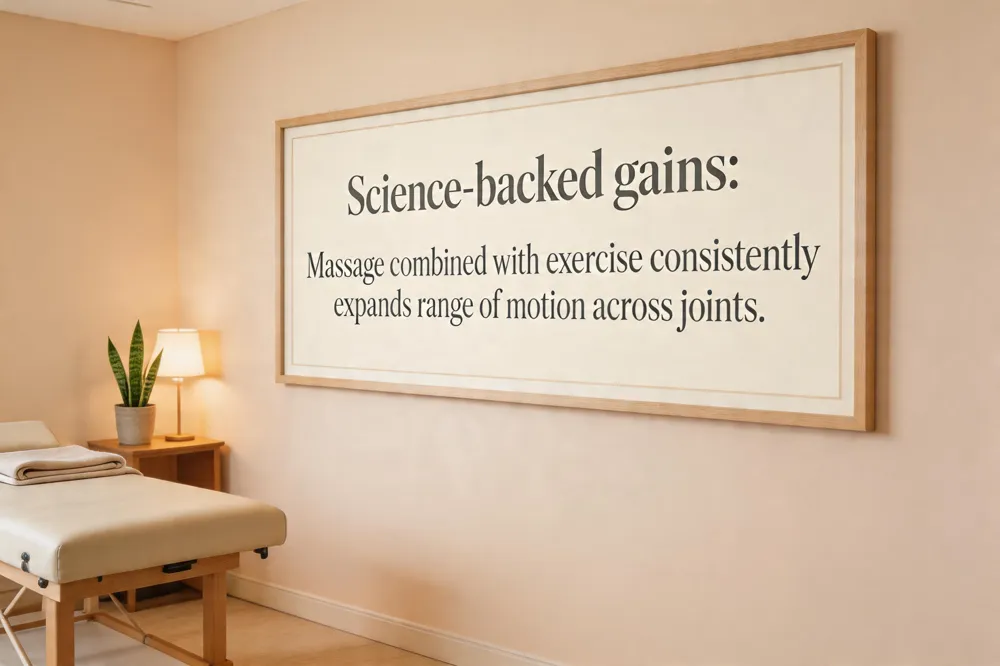 A robust body of evidence demonstrates that adding targeted massage to exercise regimens yields superior outcomes for joint mobility. In knee osteoarthritis, manual therapy combined with therapeutic exercise produced greater improvements in range of motion than exercise alone, highlighting the synergistic effect of soft‑tissue work. Shoulder research, a single 30‑minute massage session increased external rotation by approximately 10°, confirming that brief, focused pressure can instantly enhance joint glide. Low‑back pain programs that incorporated weekly therapeutic massage reported a 30‑40% increase in lumbar flexion after just four weeks, suggesting that regular sessions effectively reverse stiffness. Systematic reviews across multiple joints—cervical spine, shoulder, knee, and ankle—consistently report statistically significant ROM gains when massage is included, reinforcing its role as an evidence‑based intervention for restoring functional movement.
Synergy Between Massage and Chiropractic Care
 Massage prepares the muscles for safer, more effective spinal adjustments by loosening tight fibers, reducing myofascial adhesions, and increasing local blood flow. This pre‑adjustment soft‑tissue work lowers muscle guarding, allowing the chiropractor to achieve the desired joint glide with less force and a lower risk of tissue irritation. When massage and chiropractic treatment are combined, pain reduction occurs more rapidly than with either modality alone; clinical trials have documented greater declines in pain scores and quicker functional improvement when manual therapy is paired with spinal manipulation. After an adjustment, a brief massage session helps maintain the newly aligned joint by relaxing the surrounding musculature, preventing immediate post‑adjustment rebound tension that could undo the correction. The American Physical Therapy Association (APTA) and multiple randomized controlled trials endorse this integrated approach, highlighting that coordinated manual therapy enhances range of motion, improves neuromuscular control, and supports long‑term joint health. In practice, a coordinated plan—massage to prime tissues, chiropractic adjustment to restore joint mechanics, and post‑adjustment massage to stabilize the result—delivers a holistic, patient‑centered pathway to faster pain relief and sustained mobility.
Local Benefits for Glenwood Springs Residents
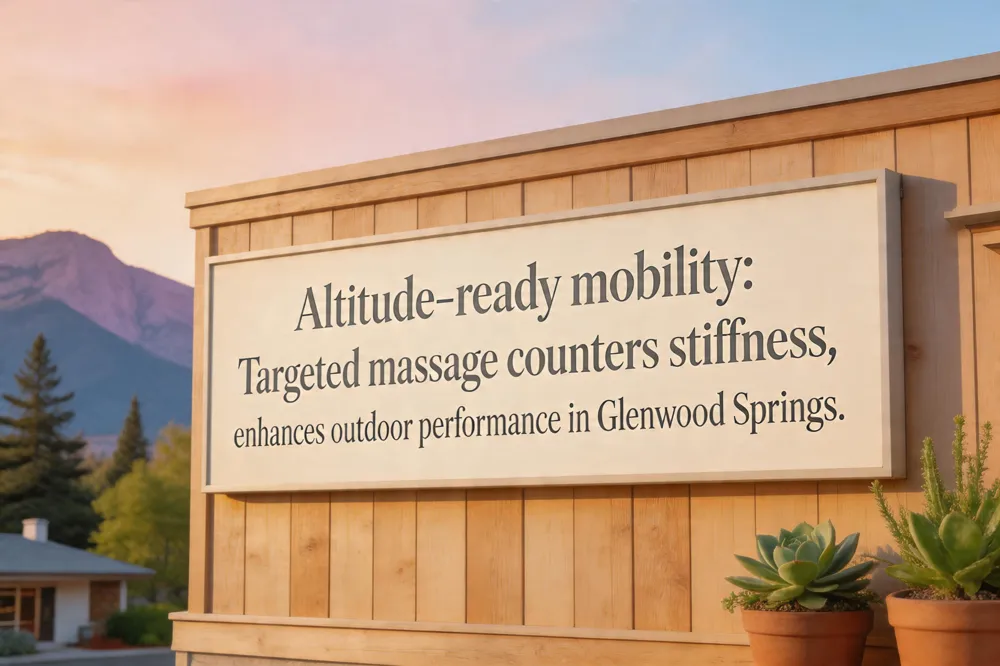 Glenwood Springs’ high‑altitude setting (≈5,761 ft) can increase muscle stiffness and reduce circulation, making joint mobility a common concern for locals and visitors. Targeted massage therapies—such as the Mobility Massage program and Barefoot Bodyworks’ barefoot technique—counteract these effects by boosting local blood flow, delivering oxygen‑rich nutrients, and facilitating the removal of metabolic waste, which together improve tissue elasticity and joint glide. The region’s outdoor lifestyle—hiking the Glenwood Canyon Trail, mountain biking on the Colorado Trail, and skiing at nearby resorts—places high demands on shoulder, hip, knee, and ankle ROM; regular soft‑tissue mobilization and myofascial release have been shown to increase joint range by 5‑15° and reduce protective muscle guarding, allowing smoother movement during these activities. Additionally, the world‑renowned natural hot springs provide hydrotherapy that enhances synovial fluid circulation, further lubricating joint surfaces and augmenting the benefits of massage. Together, these evidence‑based non‑invasive interventions support optimal mobility, pain reduction, and a more active, healthy lifestyle for Glenwood Springs residents.
Answers to Common Reader Questions
 QC Kinetix Colorado Springs reviews: The clinic shows mixed online feedback. While the website touts over 4,000 five‑star reviews, local Yelp lists only two low‑scoring ones, with one calling the service a “non‑medical rip‑off.” Many patients praise PRP and stem‑cell injections for pain relief and mobility, but pricing concerns are noted. Prospective users should read a range of reviews and discuss costs.
Boulder Orthopedics overview: Boulder’s orthopedic services include BoulderCentre for Orthopedics & Spine and Boulder Medical Center, offering non‑surgical and surgical care, advanced imaging, same‑day appointments, and sports‑medicine rehab. Multidisciplinary teams create personalized plans to restore function and reduce pain.
Stem cell treatment options in Colorado: Regenerative clinics (e.g., ThriveMD, Colorado Stem Cell Center) provide autologous stem‑cell injections for joint pain, arthritis, disc issues, and sports injuries. Treatments are minimally invasive, performed by physicians, and can complement chiropractic care.
Best orthopedic surgeons in Boulder, CO: Notable surgeons include Dr. Joseph Hsin, Dr. Brian Davis, Dr. Dominik Rog, Dr. Michael Repine, and Dr. Eric McCarty, all recognized for expertise in minimally invasive and sports‑medicine procedures.
Address of 1185 State Highway 7 Broomfield CO 80023: This is the BoulderCentre for Orthopedics & Spine Broomfield location, offering imaging, ambulatory surgery, and therapy.
Can patients order imaging in Colorado? Yes. Licensed physical therapists may order diagnostic imaging when clinically indicated, but patients need a qualified provider to place the order.
Putting It All Together
Targeted pressure massage loosens tight muscles, breaks adhesions and stimulates synovial fluid, consistently adding 5‑15° to joint range of motion. Combine weekly massage with active‑assisted stretches, strengthening drills, and home‑care tools such as foam‑rolling to maintain gains. Glenwood Chiropractic in Glenwood Springs offers a personalized, evidence‑based program that blends manual therapy, chiropractic adjustments and functional exercise. Call (970) 555‑1234 or visit www.glenwoodchiro.com to schedule your initial assessment and start improving mobility today.