Understanding Degenerative Disc Disease
Degenerative Disc Disease (DDD) is an age‑related condition in which intervertebral discs lose water, elasticity and height, diminishing their shock‑absorbing capacity. Dehydrated discs increase mechanical stress on vertebrae, can irritate nerve roots, and often present as back or neck pain, stiffness, and radiating numbness. Because discs are avascular, they rely on diffusion of nutrients from surrounding tissues; reduced movement, poor hydration, and systemic inflammation accelerate disc desiccation and degeneration.
A holistic lifestyle plan is essential for slowing DDD progression and reducing pain. Anti‑inflammatory nutrition—omega‑3‑rich fish, leafy greens, berries, whole grains, and adequate protein—supports disc matrix synthesis and mitigates oxidative stress. Maintaining a healthy weight lessens axial load, while regular low‑impact aerobic activity (walking, swimming, cycling) and core‑strengthening exercises (bird‑dog, pelvic tilt, planks) improve spinal stability and nutrient delivery. Non‑invasive chiropractic care, ergonomic adjustments, and stress‑management techniques (mindfulness, deep breathing) further reduce inflammation and improve functional outcomes, offering a patient‑centered, evidence‑based alternative to surgery.
Nutrition & Targeted Supplementation
 A diet that tames systemic inflammation is a cornerstone of non‑surgical DDD management. Anti‑inflammatory foods such as leafy greens (spinach, kale), berries (blueberries, pomegranate), fatty fish (salmon, mackerel), nuts, seeds and olive oil supply antioxidants, vitamin C, vitamin K and Omega‑3 fatty acids that protect disc cells from oxidative stress. Key nutrients for spine health include calcium and vitamin D for vertebral bone density, magnesium for muscle relaxation, and high‑quality protein to support the connective‑tissue matrix.
Supplements that support disc integrity:
- Omega‑3 fatty acids (fish oil, flaxseed oil) – reduce inflammation and improve nutrient diffusion.
- Glucosamine + chondroitin sulfate – may enhance disc hydration and extracellular‑matrix repair.
- Turmeric/curcumin – a potent anti‑inflammatory botanical.
- Calcium + vitamin D – essential for bone strength; magnesium assists nerve function.
Foods that may worsen inflammation: refined sugars and sugary drinks, trans‑fat‑laden fried foods, white‑flour products, red and processed meats, high‑sodium snacks, excessive alcohol and, for some, dairy that can dehydrate disc tissue.
Best supplements for degenerative disc disease: calcium, vitamin D, magnesium, Omega‑3 fatty acids, glucosamine, chondroitin, and turmeric, taken under a chiropractor’s guidance.
Natural supplements: the same nutrients sourced from whole foods—fatty fish, leafy greens, nuts, seeds, and fortified plant milks—provide a holistic approach.
Anti‑inflammatory diet: emphasize whole grains, colorful produce, lean proteins, healthy fats, and stay well‑hydrated (8‑10 glasses water/day). Avoid processed foods, trans fats, and excess alcohol to reduce pain flare‑ups and support disc health.
Exercise Fundamentals for Spine Health
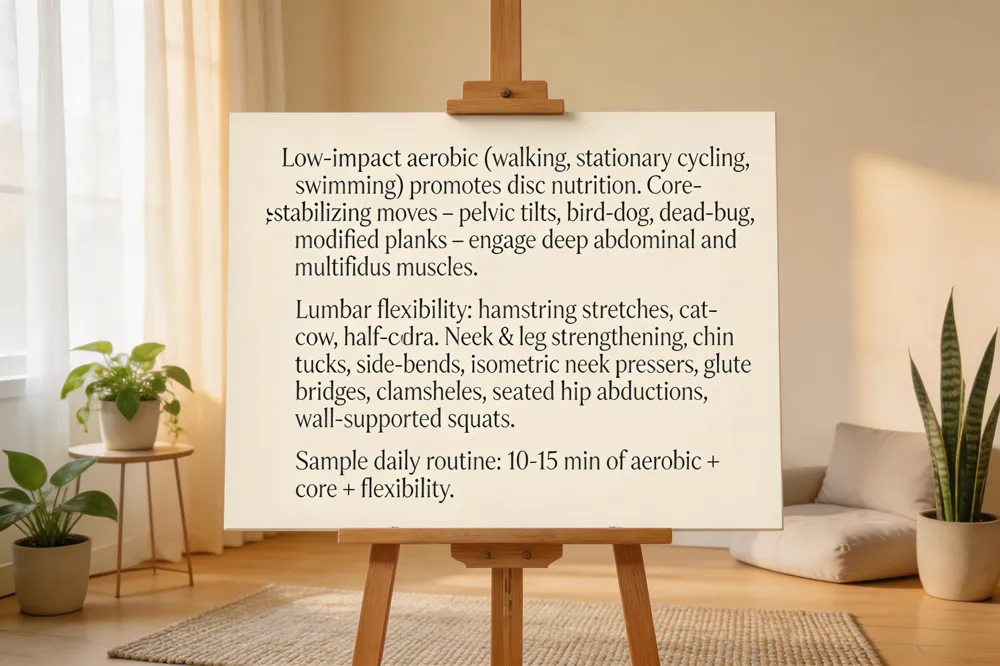 Low‑impact aerobic activities such as walking, stationary cycling, or swimming keep the lumbar muscles active while delivering blood flow and nutrients to the avascular discs. Core‑stabilizing moves—pelvic tilts , bird‑dog , dead‑bugs , and modified planks—engage the deep abdominal and multifidus muscles, creating a solid foundation that reduces disc compression. Lumbar‑specific movements like gentle hamstring stretches (passive or assisted), cat‑cow spinal mobilizations , and low‑intensity back‑extension (half‑cobra) improve segmental flexibility and maintain disc height. Neck and leg strengthening routines round out the program: chin tucks , side‑bends, and isometric neck presses support cervical discs, while glute bridges , clamshells , seated hip abductions, and wall‑supported squats reinforce the posterior chain without loading the spine.
Best exercises for degenerative disc disease in lower back
Walking or stationary‑bike sessions, passive hamstring stretches, bird‑dog, knee‑to‑chest, and cat‑cow mobilizations performed 10‑15 minutes daily promote mobility and pain relief.
Best weight‑lifting exercises for degenerative disc disease – Hip‑thrusts, glute bridges, trap‑bar or Romanian deadlifts with limited range, supported single‑leg leg presses, and weighted bird‑dogs keep the spine neutral while strengthening the posterior chain.
Strength exercises for degenerative disc disease – Pelvic tilt, bird‑dog, dead‑bug, glute bridges, and low‑impact aerobic work performed 3‑4 times weekly.
Exercises for degenerative disc disease L5‑S1 – Walking, seated hamstring stretch, prone press‑ups, bird‑dog, glute bridges, cat‑cow, and single knee‑to‑chest.
Leg exercises for degenerative disc disease – Passive hamstring stretch, side‑lying clamshells, bridges, seated single‑leg raises, wall‑supported squats.
Exercises for degenerative disc disease in neck – Chin tucks, side‑bends, rotations, neck glide/extension, and hand‑press isometrics.
Best exercise for degenerative disc disease – A towel hamstring stretch combined with low‑impact aerobic activity, core‑strengthening (pelvic tilt, bird‑dog, modified plank), and gentle yoga stretching, all performed under chiropractic guidance to ensure proper form and progression.
Non‑Invasive Therapeutic Strategies
 Chiropractic adjustments, therapeutic modalities, and emerging minimally invasive options form a patient‑centered, evidence‑based approach to back pain.
Chiropractic adjustments – Gentle lumbar realignment reduces joint tension, improves nerve flow, and restores normal biomechanics without surgery. Practitioners also teach posture, ergonomics, and daily movement breaks to protect discs.
Therapeutic modalities – Soft‑tissue therapy, therapeutic ultrasound, electrical stimulation, and targeted heat/ice protocols enhance circulation, relieve muscle spasm, and promote disc nutrition. Core‑strengthening programs (pelvic tilts, bird‑dog, bridges) and low‑impact aerobic activity (walking, swimming) support spinal stability.
Pain‑relief strategies – OTC NSAIDs or acetaminophen provide short‑term inflammation control; mindfulness, breathing, and mindfulness techniques lower cortisol‑driven muscle tension. Adequate hydration and an anti‑inflammatory diet rich in omega‑3s, leafy greens, and antioxidant berries further reduce systemic inflammation.
Emerging minimally invasive options – Image‑guided epidural steroid injections, radiofrequency neurotomy, and regenerative therapies such as PRP or stem‑cell injections target disc pathology while preserving motion.
FAQs
- Female lower back pain: combines gentle adjustments, soft‑tissue work, core rehab, posture education, and anti‑inflammatory nutrition.
- Chronic back pain: uses targeted adjustments, core‑strengthening, lifestyle changes, and, when needed, adjunct injections.
- Best relief for DDD: starts with NSAIDs, followed by adjustments, core work, weight management, and personalized chiropractic care.
- New DDD treatments: focus on regenerative biologics and minimally invasive spine procedures alongside rehabilitation.
- Fast home relief: gentle stretches, alternating heat/ice, low‑impact walking, posture correction, and optional OTC NSAID.
These strategies empower patients to achieve lasting pain reduction and functional improvement without resorting to surgery.
Lifestyle Modifications & Risk Management
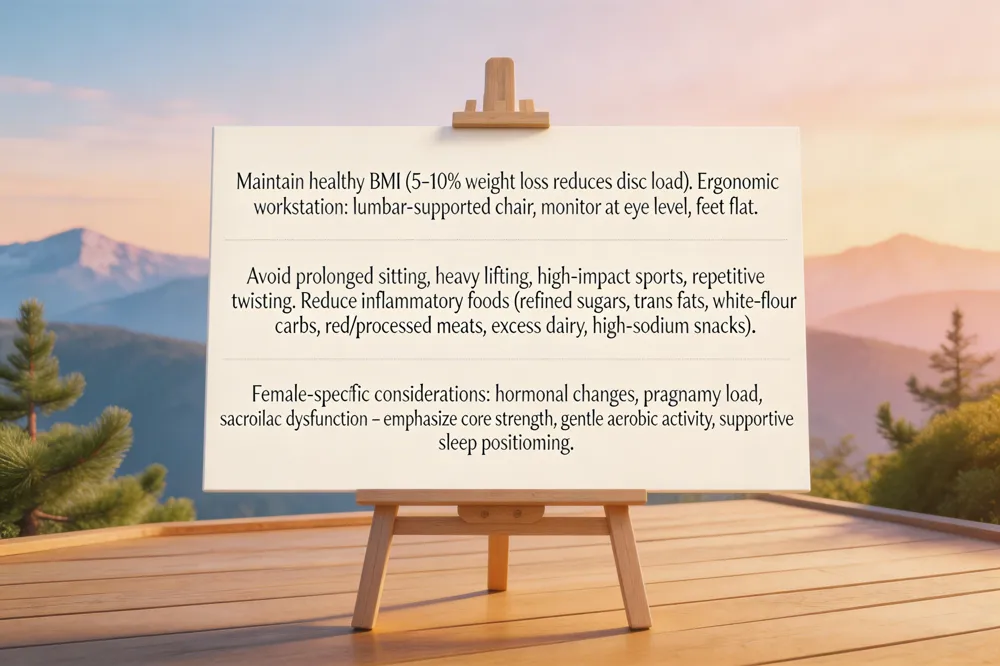 Effective DDD care starts with weight management and Ergonomic workstations. Maintaining a healthy BMI reduces mechanical load on lumbar discs; even a modest 5‑10 % loss can markedly lower pain. Ergonomic workstations—lumbar‑supported chairs, monitor at eye level, feet flat—keep the spine in neutral alignment and prevent prolonged static loading.
Avoid harmful habits that aggravate disc degeneration. Prolonged sitting, heavy lifting, high‑impact sports, and repetitive twisting overload the annulus and accelerate wear. Inflammatory foods—refined sugars, trans fats, white‑flour carbs, red/processed meats, excess dairy, high‑sodium snacks—raise systemic inflammation and exacerbate pain. refined sugars, trans fats and excessive caffeine dehydrate discs and impair circulation; cessation and moderation are essential.
Understanding flare‑up triggers helps patients intervene early. Inflammation from micro‑motion instability, loss of disc height, and end‑plate erosion cause muscle spasms and nerve irritation, creating a pain cycle. Reducing inflammatory spikes through diet, movement breaks, and stress‑management can blunt these episodes.
Female‑specific considerations include hormonal changes, pregnancy‑related load, and a higher prevalence of sacroiliac dysfunction. Core‑strengthening, regular stretching, posture awareness, and supportive sleep positioning are especially beneficial. Tailored chiropractic adjustments and gentle aerobic activity further protect spinal health for women.
Overall, a holistic plan—balanced anti‑inflammatory nutrition, controlled weight, ergonomic habits, and targeted exercise—offers the best non‑surgical outcomes for DDD.
Putting It All Together – A Personalized Plan
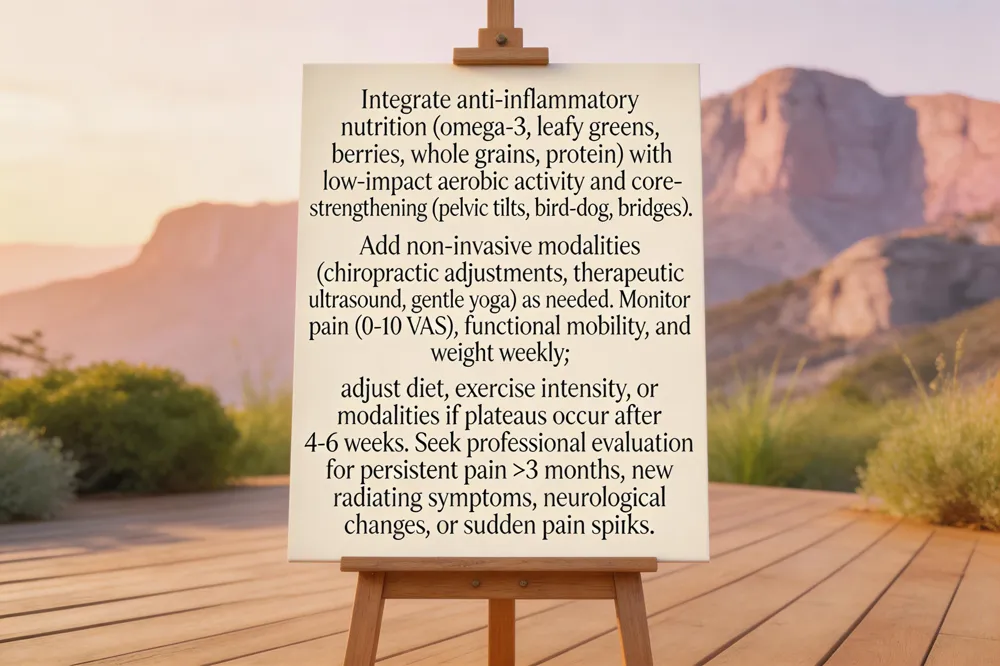 A successful degenerative disc disease (DDD) strategy blends anti‑inflammatory nutrition, spine‑safe exercise, and non‑invasive therapies into a single, patient‑centered roadmap.
Integrating nutrition, exercise, and non‑invasive care – A diet rich in omega‑3 fatty acids (salmon, walnuts, flaxseed), leafy greens (spinach, kale), vitamin‑C‑dense berries, whole grains, and adequate protein supplies the micronutrients needed for disc matrix synthesis, reduces systemic inflammation, and supports bone density. Pair this with low‑impact aerobic activity (walking, swimming, cycling) to improve blood flow to the avascular disc nucleus, and core‑strengthening moves such as pelvic tilts, bird‑dogs, and bridges to stabilize the spine and unload degenerated discs. Non‑invasive modalities—chiropractic adjustments, manual mobilization, therapeutic ultrasound, or gentle yoga—further improve joint mechanics, relieve nerve irritation, and promote natural healing without surgical risk.
Monitoring progress and adjusting the plan – Track pain levels, functional mobility (e.g., distance walked, ability to perform daily tasks), and body‑weight changes weekly. Use a simple visual analog scale (0‑10) for pain and a functional questionnaire (e.g., Oswestry Disability Index) to gauge improvement. If pain plateaus or functional gains stall after 4–6 weeks, revisit the nutrition profile (increase anti‑inflammatory foods, ensure 2‑3 L of water daily), modify exercise intensity (add gentle flexibility work or reduce load), and consider adjunctive modalities such as therapeutic laser or targeted soft‑tissue release.
When to seek professional evaluation – Persistent pain > 3 months, new radiating leg or arm weakness, numbness, bowel or bladder changes, or a sudden increase in pain intensity warrants prompt assessment by a spine specialist, chiropractor, or physical therapist. Early imaging, neurologic screening, and a comprehensive ergonomic review can identify red‑flag conditions and guide timely, evidence‑based interventions before surgical options become necessary.
Your Path to a Pain‑Free Spine
Degenerative disc disease thrives on inflammation, poor nutrition, excess weight, and inactivity. The most effective, evidence‑based lifestyle pillars are: (1) Anti‑inflammatory nutrition – prioritize omega‑3‑rich fish, leafy greens, berries, whole grains, lean protein, and stay well hydrated; (2) Weight management – modest weight loss (5‑10 %) eases mechanical load on discs; (3) Low‑impact aerobic activity – walking, swimming, or cycling 3‑5 times weekly boosts blood flow and disc nutrition; (4) Core‑strengthening and flexibility – exercises such as bird‑dog, pelvic tilts, hamstring stretches, and yoga improve spinal stability; (5) Ergonomic posture and micro‑breaks – use lumbar‑support chairs, keep monitors at eye level, and move every hour; (6) Stress reduction – mindfulness, deep‑breathing, and adequate sleep lower cortisol and muscle tension; (7) Non‑invasive spinal care – regular chiropractic adjustments and manual therapy restore joint mechanics without surgery.
Start today: pick one pillar—perhaps a 10‑minute walk after lunch—and add a serving of leafy greens to dinner. Small, consistent changes compound quickly, setting you on a patient to a stronger, pain‑free spine.