What Cold Laser Therapy Is and Why It Matters
Cold laser therapy, also called low‑level laser therapy (LLLT) or photobiomodulation, uses low‑intensity red or near‑infrared light (600‑950 nm) that penetrates skin without heating tissue. The photons are absorbed by mitochondrial chromophores, boosting ATP production, improving microcirculation and reducing inflammation, which accelerates cellular repair. The U.S. Food and Drug Administration has cleared LLLT for numerous musculoskeletal indications such as tendonitis, plantar fasciitis and low back pain, confirming a strong safety profile when administered by trained professionals. Sessions are brief—typically 5‑20 minutes per treatment area—and feel like a gentle warmth or tingling, with no pain, incisions or downtime.
Understanding the Science and Safety of Cold Laser Therapy
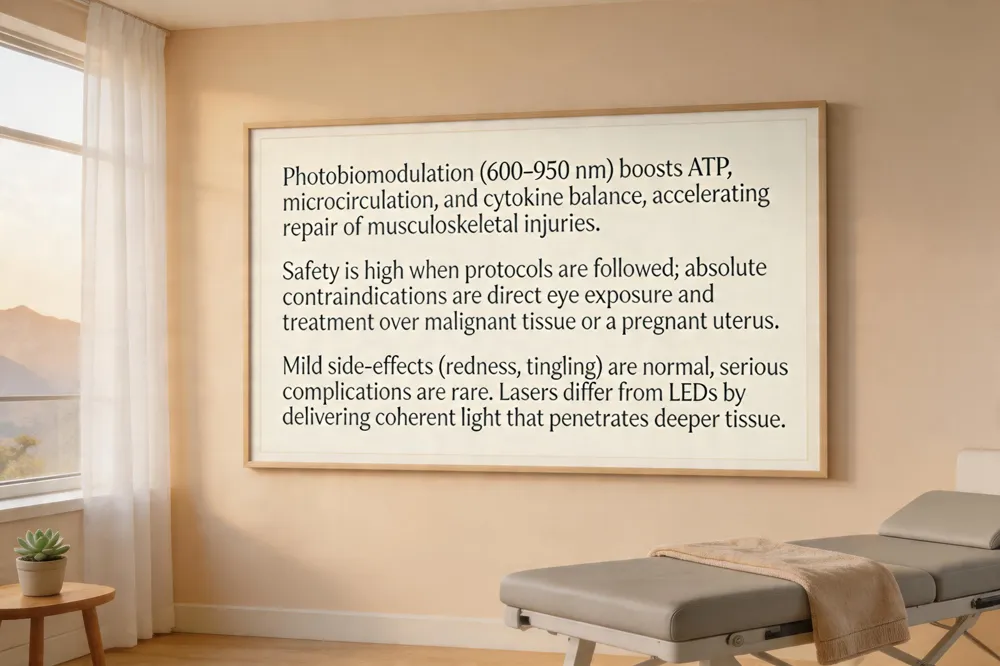 Cold laser therapy, or low‑level laser therapy (LLLT), works through photobiomodulation: photons in the 600‑950 nm range are absorbed by mitochondrial chromophores, boosting ATP production, improving microcirculation, and modulating inflammatory cytokines. This cellular surge accelerates repair of sprains, strains, tendonitis, arthritis and post‑surgical tissue, which is why LLLT is FDA‑cleared for acute and chronic musculoskeletal pain. Clinical trials consistently show 30‑50 % pain‑score reductions after 4‑6 weekly sessions, though benefits accumulate over multiple visits.
Safety is high when trained professionals follow protocols. The two absolute contraindications are direct eye exposure and treatment over malignant tissue or a pregnant uterus; protective eyewear and thorough screening prevent these risks. Mild side‑effects—transient redness, tingling, or brief warmth—are the norm; serious complications are virtually nonexistent. Rare events such as superficial burns or temporary erythema resolve without intervention.
Cold laser therapy differs from red‑light (LED) therapy: lasers emit coherent light that penetrates several centimeters, while LEDs are non‑coherent and affect only superficial skin layers. When integrated with chiropractic adjustments, exercise, and soft‑tissue work, LLLT provides a drug‑free, non‑invasive adjunct that enhances pain relief and functional recovery.
Common Misconceptions and Myths About Cold Laser Therapy
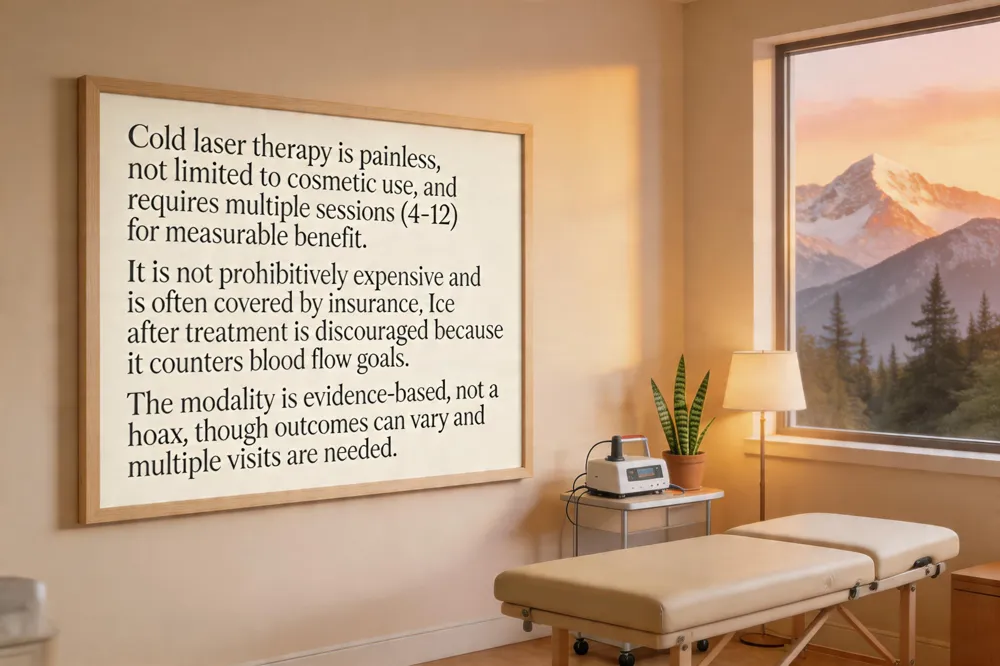 Cold laser (low‑level laser) therapy is often misunderstood. First, patients sometimes expect a painful or uncomfortable sensation; in fact, the procedure is non‑invasive and painless, delivering only a mild warmth or tingling that fades quickly. Second, the modality is not limited to cosmetic use—FDA‑cleared evidence supports its role in treating tendonitis, plantar fasciitis, low‑back pain, osteoarthritis, and post‑surgical recovery. Third, results are cumulative, not instant; most protocols require 4‑12 weekly sessions before measurable pain reduction and range‑of‑motion gains appear. Finally, the cost is moderate and often covered by insurance for medically indicated musculoskeletal disorders, contrary to the “prohibitively expensive” label.
Q: Should you ice after cold laser therapy? A: No. Ice induces vasoconstriction, counteracting the laser’s goal of increasing blood flow and lymphatic drainage. If swelling is a concern, wait 30‑60 minutes before applying a brief cold compress.
Q: Is cold laser therapy a hoax? A: No. Decades of peer‑reviewed research demonstrate safety and modest efficacy for pain relief and tissue repair when administered by trained professionals.
Q: What are two drawbacks of laser therapy? A: (1) Multiple sessions (often 6‑12) are needed for significant benefit, increasing time commitment and total cost. (2) Patient response varies; some individuals experience little or no improvement, making outcomes less predictable.
Insurance Coverage, Cost, and Choosing the Right Device
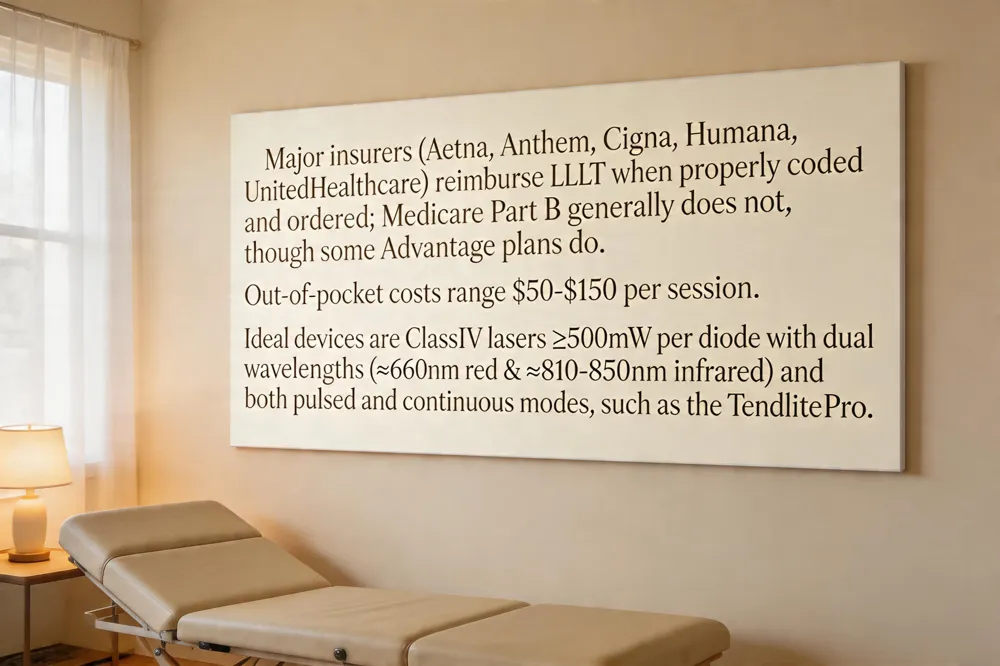 Cold‑laser therapy (LLLT) is widely accepted in chiropractic clinics as a drug‑free, non‑invasive option for musculoskeletal pain, but its financial pathway varies. Most commercial insurers—including Aetna, Anthem, Cigna, Humana, and UnitedHealthcare—reimburse LLLT when it is coded as an evidence‑based treatment for conditions such as tendonitis, low‑back pain, or osteoarthritis, typically requiring a physician’s order and the appropriate CPT/HCPCS code. Medicare Part B generally does not cover the service, although some Medicare Advantage plans, workers’ compensation, VA benefits, and certain Medicaid programs will reimburse with proper documentation.
Out‑of‑pocket costs per session in the United States range from $50 to $150, depending on clinic location, device sophistication, and treatment length (5–15 minutes). Many offices offer multi‑session packages or payment plans to reduce the per‑visit expense, keeping the overall price lower than surgery or long‑term medication regimens.
Choosing the right clinical device is critical. The most effective systems are Class IV lasers delivering ≥500 mW per diode, with dual wavelengths (≈660 nm red and ≈810‑850 nm infrared) and both pulsed and continuous‑wave modes. Devices such as the Tendlite Pro (660 nm + 850 nm, 500 mW+) are FDA‑registered for pain reduction and inflammation control, feature magnetic protective covers, and allow adjustable pulse frequencies to tailor therapy to each patient’s needs.
Who Can Benefit and Who Should Avoid Cold Laser Therapy
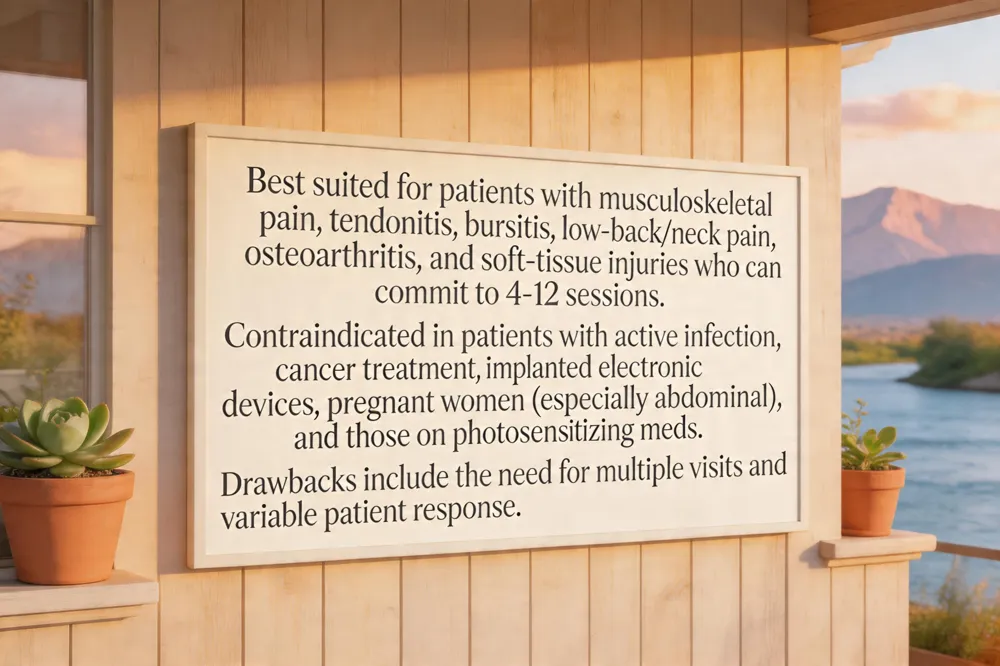 Cold (low‑level) laser therapy is most effective for patients with musculoskeletal pain, tendonitis, bursitis, low back or neck pain, osteoarthritis, and soft‑tissue injuries. Ideal candidates are individuals who seek a non‑invasive, drug‑free option and who can commit to a series of 4‑12 sessions, as benefits are cumulative rather than instantaneous.
Who should not use cold laser therapy? Patients with active infections at the treatment site, those undergoing cancer treatment, individuals with implanted electronic devices such as pacemakers or neurostimulators, and pregnant women (especially over the abdomen) should avoid the modality unless cleared by a physician. Photosensitizing medications also require medical clearance before treatment.
Two main contraindications: Direct eye exposure and application over malignant tissue or a pregnant uterus are absolute contraindications because of potential ocular injury and theoretical risk to tumor or fetal development.
Drawbacks: First, multiple sessions are needed before measurable relief, increasing time and cost. Second, patient response varies; some experience minimal benefit, making outcomes less predictable. Safety screening and individualized dosing remain essential for optimal results.
Integrating Cold Laser Therapy into a Comprehensive Chiropractic Plan
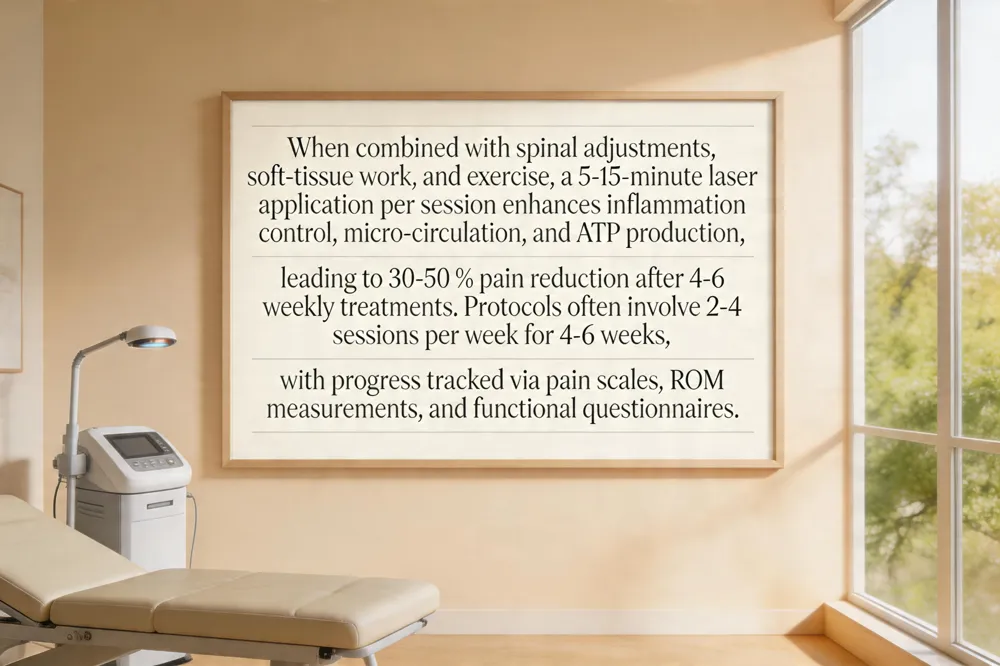 Cold laser therapy (LLLT) is most effective when woven into a multimodal chiropractic program. After a spinal adjustment, a brief 5‑ to‑minute laser application to the treated segment or surrounding soft tissue helps calm inflammation, boost micro‑circulation, and stimulate mitochondrial ATP production, which together accelerate tissue repair. When combined with soft‑tissue work such as myofascial release or instrument‑assisted massage, the photobiomodulatory effect reduces muscle guarding and enhances range‑of‑motion gains.
Typical protocols in Glenwood Springs and similar clinics involve 2‑4 sessions per week for 4‑6 weeks, each lasting 5‑15 minutes per treated area. Patients usually notice a modest reduction in pain after the first 2‑3 visits, with cumulative improvements—30‑50 % lower pain scores and measurable functional gains—emerging after 4‑6 weekly treatments. Clinicians track progress using validated pain scales, range‑of‑motion measurements, and functional questionnaires, adjusting duration power and session frequency as needed.
Does cold laser therapy work? Yes; when paired with adjustments, exercise, and manual therapy it enhances analgesia, improves mobility, and speeds healing, delivering a 30‑50 % pain reduction after a series of treatments.
Cold laser therapy side effects? Effects are mild and transient—temporary redness, tingling, or brief soreness; serious complications are virtually absent when a trained chiropractor follows proper dosing and eye‑protection protocols.
Is cold laser therapy scientifically proven? Thousands of peer‑reviewed studies, FDA clearance, and endorsements from professional bodies (e.g., APTA, WALT) support its efficacy for musculoskeletal pain and inflammation, making it an evidence‑based adjunct to chiropractic care.
Putting the Facts Together for Better Pain Relief
Cold laser (LLLT) is a non‑invasive, painless, FDA‑cleared modality that uses low‑intensity red or near‑infrared light to boost mitochondrial ATP, reduce inflammation, and accelerate tissue repair. Clinical data show 30‑50 % pain‑score reductions and improved range of motion after 4‑6 weekly sessions for conditions such as tendonitis, low back pain, plantar fasciitis and osteoarthritis. Side effects are rare—typically transient redness or a mild warm sensation—and serious complications are virtually nonexistent when administered by trained professionals. Most insurers will cover LLLT when it is medically indicated, keeping out‑of‑pocket costs moderate. Patients should expect cumulative benefits over multiple visits rather than instant cures. Discuss your specific injury, health history, and insurance details with a Glenwood Springs chiropractor to determine whether a personalized cold‑laser plan fits your pain‑relief goals.