Spinal Decompression – A Non‑Surgical Path to Nerve Pain Relief
Spinal decompression therapy gently stretches the vertebral column on a computer‑controlled traction table, creating a negative‑pressure environment within the intervertebral disc. This vacuum effect encourages re‑hydration of disc material and allows bulging or herniated fragments to retract, thereby relieving pressure on adjacent nerve roots. When a nerve is compressed, abnormal signaling produces sharp, shooting pain, tingling, numbness, or weakness—symptoms commonly seen in sciatica, lumbar radiculopathy, and pinched‑nerve syndromes. In Glenwood Springs, many patients opt for this non‑invasive, drug‑free modality because it integrates seamlessly with chiropractic adjustments, therapeutic exercise, and lifestyle counseling, offering rapid symptom reduction without anesthesia, incisions, or long recovery times. Clinical observations and several low‑risk studies report 30‑70 % pain‑score reductions and improved mobility after a series of 12‑20 sessions, making spinal decompression an attractive first‑line option for those seeking safe, evidence‑based relief of nerve‑related back and leg pain.
Understanding How Decompression Addresses Pinched Nerves
| Aspect | Details |
|---|---|
| Mechanism | Gentle computer‑controlled traction creates negative pressure in disc, pulling bulging material toward center and relieving nerve root compression. |
| Typical Timeline | Symptom relief often begins within 1‑3 weeks; full nerve healing usually achieved after 4‑6 weeks of consistent care. |
| Session Frequency | 2‑3 sessions per week, each lasting 30‑45 minutes. |
| Expected Outcomes | Reduced pain, improved range of motion, and restored nerve function when combined with chiropractic adjustments and home‑exercise program. |
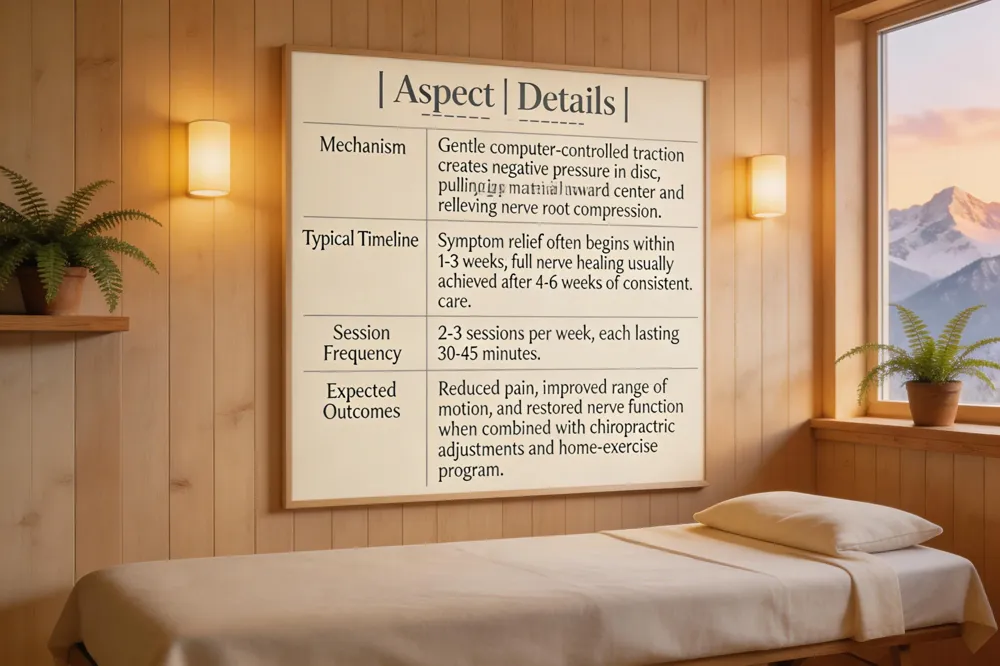 Spinal decompression uses gentle, computer‑controlled traction to create a negative pressure environment inside intervertebral discs. This suction‑like effect pulls bulging or herniated material back toward the disc center, relieving pressure on nearby nerve roots. In the lower back, neck, and shoulder regions, the therapist tailors pull‑force, angle, and cycle timing to target the specific nerve pathway, while accompanying chiropractic adjustments restore proper vertebral alignment and reduce muscle guarding. Most patients report noticeable symptom reduction within one to three weeks; full nerve healing typically occurs after four to six weeks of consistent sessions combined with a personalized home‑exercise program.
Can a chiropractor fix a pinched nerve in one visit? Immediate relief is common, but a short series of treatments is usually needed for complete recovery.
Can a chiropractor fix a pinched nerve in the lower back? Yes—targeted adjustments, decompression, and soft‑tissue work reduce pressure and promote healing.
How long does it take for a chiropractor to fix a pinched nerve? Relief often starts within 1‑3 weeks; full resolution generally requires 4‑6 weeks of care.
Can a chiropractor help with a pinched nerve in the shoulder? Yes—shoulder‑specific adjustments, decompression, and rehab restore motion and alleviate nerve compression.
Can a chiropractor help with a pinched nerve in the neck? Yes—gentle cervical adjustments and decompression open the nerve pathway and reduce pain.
Clinical Evidence, Success Rates, and What to Expect
| Metric | Value |
|---|---|
| Reported Success Rate | 60 %‑80 % for meaningful pain/functional improvement; up to 70 %‑90 % in strict protocol studies. |
| Treatment Course | 4‑6 weeks, 2‑3 sessions per week (30‑45 min each). |
| Duration of Benefits | Benefits often persist 3‑6 months or longer with continued home exercises. |
| Pros | Drug‑free, minimally invasive, customizable traction force, can avoid surgery. |
| Cons | Multiple visits required, variable insurance coverage, limited long‑term evidence, contraindications (e.g., severe osteoporosis, spinal implants). |
 Key findings from clinical studies and systematic reviews show that non‑surgical spinal decompression reduces intradiscal pressure, promotes disc re‑hydration and can achieve significant pain relief for disc‑related nerve compression. Reported success percentages for selected patients range from 60 %–80 % for meaningful pain and functional improvement, with some series citing 70 %–90 % when strict inclusion criteria and full protocol adherence are met. Typical treatment courses span 4–6 weeks, delivering 2–3 sessions per week of 30–45 minutes each; benefits often persist 3–6 months or longer if patients maintain prescribed home exercises and lifestyle changes. Pros include a drug‑free minimally invasive option that customizes traction force and can avoid surgery; cons involve contraindications (e.g., severe osteoporosis, spinal implants), the need for multiple visits, variable insurance coverage, and limited long‑term evidence. Overall, when carefully indicated and combined with chiropractic adjustments, spinal decompression offers a realistic, evidence‑informed pathway to pain reduction and restored mobility.
Cost, Insurance, and Practical Financial Guidance
| Cost Item | Approximate Price |
|---|---|
| Individual Session (Backcountry Chiropractic) | $75‑$120 |
| 12‑20 Session Package | $1,000‑$2,500 |
| National Session Range | $30‑$200 |
| Full Program (Nationwide) | $1,000‑$5,000 |
| Insurance Reimbursement | Limited; often requires documented medical necessity and inclusion in broader chiropractic plan. |
| Budget Strategies | Package discounts, financing options, combine with low‑cost modalities, seek ancillary coverage for imaging/consultation. |
 Spinal decompression therapy typically costs $75–$120 per session at Backcountry Chiropractic in Glenwood Springs, with multi‑session packages (12–20 visits) bringing the total to $1,000–$2,500. Nationally, session fees range $30–$200, and full programs often fall between $1,000 and $5,000. Insurance reimbursement is limited; many carriers label motorized decompression experimental and only cover it when a documented spinal condition is medically necessary and part of a broader chiropractic plan. To improve approval odds, ask your chiropractor to submit detailed diagnosis, imaging, and a treatment justification. Budget‑friendly strategies include seeking package discounts, financing options, and combining decompression with other low‑cost modalities (adjustments, therapeutic exercise) to reduce the number of visits. Patients should also consider ancillary costs such as initial consultations, imaging, and supplemental therapies when planning their out‑of‑pocket expenses.
Safety Profile, Contraindications, and Patient Guidance
| Consideration | Details |
|---|---|
| Common Side Effects | Mild soreness, temporary fatigue (similar to light workout). |
| Rare Complications | Brief pain spikes, nausea, possible worsening of disc herniation if table poorly calibrated. |
| Contraindications | Severe osteoporosis, recent fractures, spinal tumors, implanted hardware, uncontrolled infections/bleeding disorders, recent spinal surgery, metastatic cancer. |
| Post‑Session Recommendations | Avoid heavy lifting, high‑impact activity, prolonged static sitting, twisting; maintain ergonomic posture, stay hydrated, follow home‑exercise plan. |
| Pregnancy | Discuss with provider; therapy may be modified or avoided. |
 Spinal decompression therapy is largely safe when administered by a qualified chiropractor who screens for contraindications such as severe osteoporosis, recent fractures, spinal tumors, implanted hardware, uncontrolled infections or bleeding disorders. Most patients report only mild soreness or temporary fatigue—similar to a light workout—after a 30‑45‑minute session. Rare complications include brief pain spikes, nausea, or, in poorly calibrated cases, worsening disc herniation or nerve irritation.
Who should avoid the therapy? Individuals with recent spinal surgery, severe osteoporosis, active infections, metastatic cancer, or implanted spinal devices are generally advised against it. Pregnant patients should discuss options with their provider.
Best practices during and after sessions: Avoid heavy lifting, high‑impact activities, prolonged static sitting, and twisting motions that re‑compress the spine. Maintain ergonomic posture, stay hydrated, and follow the clinician’s home‑exercise plan. Report any sharp pain during treatment immediately.
Additional guidance: Chiropractors in Colorado cannot prescribe medications but can recommend OTC analgesics and refer patients for prescription drugs if needed, while also providing supportive services such as physical therapy or massage to enhance nerve release and overall recovery.
Local Non‑Invasive Care Options in Glenwood Springs
| Clinic | Services Offered |
|---|---|
| Backcountry Chiropractic (2425 Grand Ave Ste 105) | Spinal adjustments, therapeutic soft‑tissue work, laser & soft‑wave therapy, personalized rehab. |
| Trailhead Chiropractic (51241 HWY 6 Suite 8B) | Adjustments, massage, ergonomic education, lifestyle counseling. |
| Dr. Anna Bernstein (900 A Cooper Ave & 401 23rd St Ste 300A) | Acupuncture, nutrition counseling, chiropractic care, decompression. |
| Typical Session Length | 15‑30 minutes |
| Frequency | 2‑3 times per week |
| Expected Early Benefits | Reduced pain, improved range of motion, quicker return to daily activities within a few weeks. |
 Glenwood Springs hosts several evidence‑based chiropractic clinics that specialize in non‑surgical spinal care. Backcountry Chiropractic (2425 Grand Ave Ste 105) and Trailhead Chiropractic (51241 HWY 6 Suite 8B) both offer spinal adjustments, therapeutic soft‑tissue work, laser and soft‑wave therapy, and personalized rehabilitation programs. Dr. Anna Bernstein (900 A Cooper Ave and 401 23rd St Ste 300A) adds acupuncture and nutrition counseling to her suite of services. Beyond decompression, each practice provides targeted exercises, ergonomic education, and lifestyle counseling to support long‑term mobility. Starting treatment begins with a thorough history, physical exam, and review of imaging (MRI, X‑ray) to confirm nerve compression. Patients receive a private consultation, a trial spinal‑decompression session on FDA‑cleared motorized tables (e.g., DRX‑9000), and a customized care plan that may include adjustments, massage, and home‑exercise guidance. Most sessions last 15‑30 minutes, are performed 2‑3 times per week, and patients typically notice reduced pain, improved range of motion, and a quicker return to daily activities within a few weeks. Appointments can be booked by calling the clinics directly or online, and many insurance plans are accepted.
Take the First Step Toward Nerve‑Pain Freedom
Spinal decompression gently stretches the spine, lowering pressure on discs and nerve roots. This creates a vacuum that can retract bulging material, improve blood flow, and promote natural disc healing. Patients report reduced shooting pain, tingling, and numbness, along with range of motion and quicker return to daily activities. Because the treatment is performed on a motorized table, risks are minimal and downtime is none. If you suffer from sciatica, pinched nerves, or chronic back discomfort, schedule a consult at our clinic. Our chiropractor will evaluate imaging, tailor a traction protocol, and integrate adjustments, exercise and counseling for nerve‑pain relief.