Why Chiropractic Matters for Athletes in Glenwood Springs
Glenwood Springs sits at more than 7,800 feet, where reduced oxygen and increased impact forces strain muscles, joints, and connective tissue. Regular chiropractic maintenance mitigates these altitude‑related stresses by restoring optimal spinal alignment, which enhances neuromuscular signaling and improves oxygen delivery to working muscles. Precise spinal and peripheral joint adjustments reduce nerve interference, allowing faster reaction times, better balance, and more efficient movement patterns—critical advantages for trail runners, mountain bikers, and skiers. When chiropractic care is combined with strength‑training programs, physiotherapy, and nutrition plans, athletes benefit from a holistic, evidence‑based model: adjustments create a stable biomechanical foundation, physiotherapists address tissue healing, and nutrition supports inflammation control and tissue repair. This multidisciplinary approach not only accelerates recovery from strains and overuse injuries but also prevents biomechanical imbalances before they become performance‑limiting problems, enabling Glenwood Springs athletes to train harder, recover faster, and compete at their peak.
Integrating Chiropractic Care into Athletic Training
 Athletes in Glenwood Springs benefit from regular chiropractic adjustments because they restore proper joint alignment, improve nerve signaling, and enhance proprioception. By reducing nerve irritation and muscle tension, adjustments speed recovery from training stresses and allow athletes to train harder and more efficiently. The non‑invasive, drug‑free nature of chiropractic care makes it a safe complement to strength training, physiotherapy, and nutrition programs.
Should athletes get chiropractic adjustments?
Yes. Regular adjustments maintain optimal spinal and peripheral joint mechanics, which supports neuromuscular coordination, balance, and range of motion. This proactive approach corrects biomechanical imbalances before they develop into strains, sprains, or overuse injuries, while also providing drug‑free pain relief that accelerates post‑session recovery.
Benefits of chiropractic care for athletes
Chiropractic care enhances performance by improving joint mobility, reducing inflammation, and increasing circulation. Athletes report faster return to sport after injuries such as lower‑back pain, tendonitis, and shoulder impingement. Pre‑event sessions boost mental focus and reaction time, giving a competitive edge in high‑speed sports.
Is chiropractor good for athletes?
Absolutely. A sports‑focused chiropractor conducts functional movement screenings, delivers targeted spinal and extremity adjustments, and prescribes corrective exercises. This holistic, patient‑centered model supports pain‑free movement, optimal neuromuscular function, and sustained peak performance.
Can a chiropractor help with constipation?
Adjustments to the lower spine can improve nervous system regulation of intestinal motility, potentially relieving constipation as part of a broader wellness plan.
Local Glenwood Springs Chiropractic Resources
 Glenwood Springs offers a network of clinics that specialize in non‑invasive musculoskeletal care, making it easy for athletes and residents of nearby towns to access evidence‑based treatment. The clinics provide spinal adjustments, soft‑tissue therapies, motion‑restoration programs, and complementary modalities such as acupuncture and soft‑wave therapy, all aimed at restoring mobility, reducing pain, and enhancing performance.
Chiropractor Carbondale Carbondale residents can travel to Glenwood Springs for care at Backcountry Chiropractic. Led by Dr. Blake McDonald, the clinic delivers precise spinal adjustments, soft‑tissue work, therapeutic exercise, and personalized rehabilitation plans. Comprehensive assessments ensure each patient receives a treatment plan tailored to their specific needs and goals, helping them stay active and pain‑free.
Backcountry Chiropractic Glenwood Springs Located at 2425 Grand Ave Ste 105, Backcountry Chiropractic offers spinal adjustments, soft‑tissue therapy, and movement‑restoration programs for athletes and everyday patients. Services address back and neck pain, sciatica, sports injuries, whiplash, and scoliosis. The practice accepts major insurance plans, provides telehealth appointments, and offers free onsite parking.
Acupuncture Glenwood Springs At 900A Cooper Avenue, a wellness center provides hour‑long acupuncture sessions combined with energetic readings. Treatments activate the parasympathetic nervous system, relieving pain, stress, digestive issues, and women’s health concerns. Sliding‑scale fees ($45‑$95) and a 30‑minute non‑invasive energetic reading are also available.
Anna Bernstein Glenwood Springs CO Dr. Anna Bernstein, DC, operates from 900A Cooper Avenue and 401 23rd St, Suite 300A. She offers force and non‑force adjustments, acupuncture, craniosacral therapy, cold laser, soft‑tissue work, nutrition counseling, and herbal/homeopathic supplements, customizing care for each patient.
Trailhead Chiropractic Glenwood Springs Trailhead Chiropractic at 51241 Highway 6, Suite 8B uses neurologically‑based care, state‑of‑the‑art diagnostics, and soft‑wave therapy to address back/neck pain, migraines, sciatica, and more. The family‑run practice emphasizes education, empowerment, and flexible scheduling for outdoor enthusiasts and families.
Professional Sports and Chiropractic
 Chiropractic care has become an integral component of elite sports medicine programs, with NFL teams and other professional leagues routinely employing chiropractors to optimize player health. Surveys of athletic trainers reveal that 31 % of NFL franchises have a chiropractor on staff and 77 % refer athletes for chiropractic evaluation, underscoring the sport’s widespread acceptance of spinal adjustments for low‑back pain, neck “stingers,” and headache management.
Athletes at every level—from Olympic competitors to weekend warriors—regularly seek chiropractic treatment. High‑profile figures such as Tom Brady, Usain Bolt, and Michael Jordan publicly credit chiropractic adjustments for enhancing performance, reducing pain, and accelerating recovery. The evidence base supports these claims: studies demonstrate that regular adjustments improve joint range of motion, neuromuscular coordination, and proprioception, while soft‑tissue techniques lower inflammation and speed tissue repair.
The benefits for athletes are multifaceted. Restoring proper spinal alignment enhances nervous‑system efficiency, leading to better balance, reaction time, and movement economy. Increased joint mobility reduces stiffness and the risk of overuse injuries, while drug‑free pain relief allows continuous training. Early identification of biomechanical imbalances prevents strains and sprains, and pre‑event chiropractic sessions boost circulation, reduce muscle tension, and sharpen mental focus—providing a competitive edge on the field, track, or trail.
Injury Prevention Strategies for Outdoor Athletes in Colorado
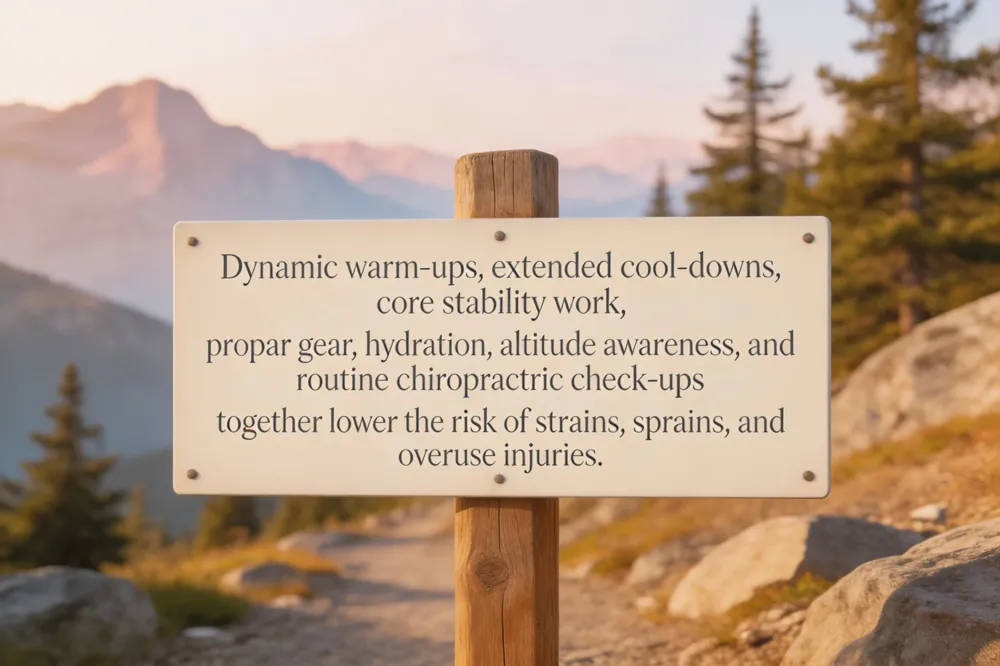 Colorado’s high‑altitude terrain and active outdoor culture demand a proactive, evidence‑based approach to injury prevention. Below are key strategies that blend dynamic warm‑up and cool‑down routines, core stability training, and practical considerations for equipment, hydration, and altitude.
Dynamic Warm‑Up and Cool‑Down Routines
Start each session with a dynamic warm‑up that activates the muscles and joints you’ll use—leg swings, high‑knees, and sport‑specific lunges for 5‑10 minutes. Finish with a cool‑down that lasts twice as long as the warm‑up, incorporating static stretches and deep‑breathing to restore tissue length and promote circulation. This sequence reduces muscle stiffness, prepares the nervous system, and limits delayed‑onset muscle soreness.
Core Stability and Balanced Training
A strong, balanced core protects the spine and pelvis, enhancing neuromuscular coordination. Incorporate planks, rotational lifts, and single‑leg stability drills 2‑3 times per week. Pair core work with a balanced fitness plan that rotates cardio, strength, and flexibility sessions, preventing overuse of any single muscle group.
Equipment, Hydration, and Altitude Considerations
Choose sport‑specific, well‑fitted footwear and protective gear (helmets, pads, braces) to reduce joint stress. At 7,800 ft, dehydration and reduced oxygen availability accelerate fatigue; athletes should sip electrolyte‑rich fluids before, during, and after activity, and allow extra recovery time for altitude‑related muscle strain. Regular chiropractic assessments every 4‑6 weeks keep spinal alignment optimal, identify early biomechanical imbalances, and provide personalized mobility guidance.
How to Prevent Common Sports Injuries
Prevent injuries by combining the dynamic warm‑up/cool‑down routine, a core‑focused training program, and routine chiropractic check‑ups. Use proper technique, stay hydrated, and listen to your body’s signals of fatigue or pain.
3 Ways to Prevent Injuries
1️⃣ Warm‑up dynamically and cool down with static stretches. 2️⃣ Build a strong, balanced core and stabilizers. 3️⃣ Schedule regular chiropractic maintenance to maintain alignment and address early imbalances.
10 Ways of Injury Prevention
- Wear supportive, activity‑specific footwear and protective gear.
- Progress intensity gradually and prioritize technique.
- Stay well‑hydrated and maintain a nutrient‑rich diet.
- Allow adequate rest, sleep, and recovery days.
- Strengthen core and stabilizing muscles.
- Incorporate dynamic warm‑ups and extended cool‑downs.
- Use sport‑specific equipment that fits correctly.
- Monitor altitude‑related fatigue and adjust training load.
- Schedule routine chiropractic evaluations for biomechanical screening.
- Engage in cross‑training to balance muscle usage and reduce repetitive stress.
Holistic and Multidisciplinary Approaches to Athlete Health
 Integrating chiropractic care with physiotherapy, nutrition, and strength‑training creates a comprehensive, evidence‑based system that supports both injury prevention and performance gains. In Glenwood Springs, clinics such as Performance+ Chiropractic and Trailhead Chiropractic collaborate with sports physicians, athletic trainers, and dietitians to design sport‑specific programs that combine spinal adjustments, Active Release Therapy, and targeted exercise prescriptions. Advanced diagnostic tools—digital postural X‑rays, 3‑D motion analysis (K Motion), and functional movement screenings—identify subtle biomechanical imbalances before they manifest as strains or sprains, allowing clinicians to tailor rehabilitation plans that restore optimal joint mobility, neuromuscular coordination, and proprioception.
Athletes benefit from personalized performance screening that measures range of motion, balance, and reaction time, then uses chiropractic adjustments to improve nervous‑system signaling and reduce muscular tension. Soft‑tissue techniques such as myofascial release and instrument‑assisted mobilization further accelerate tissue healing and reduce inflammation, supporting faster return‑to‑play.
Chiropractor Grand Junction Grand Junction residents have several reputable chiropractic options. The Spine & Injury Center of Grand Junction offers evidence‑based spinal adjustments, DOT and sports physicals, massage therapy, and supplements for pain relief and mobility. The Family Health Center, led by Dr. Chris Cembalisty, provides family‑focused, neurologically‑based care that emphasizes the body’s natural healing without drugs. Redlands Chiropractic & Wellness Center, under Dr. Ron Engler, combines holistic chiropractic with fascia‑focused techniques, massage, and nutritional support. All three clinics prioritize non‑invasive, personalized treatment plans to help patients recover from back pain, headaches, whiplash, and other musculoskeletal issues.
Can a chiropractor help with constipation? Chiropractic adjustments, especially in the lower spine, can improve nervous‑system function and promote better intestinal motility, which may relieve constipation.
Putting It All Together: A Path to Peak Performance
Key takeaways on performance and injury prevention: Regular chiropractic care optimizes spinal alignment, improves neuromuscular coordination, and expands joint range of motion—factors that translate into faster reaction times, better balance, and reduced injury risk. Soft‑tissue techniques and targeted exercises further decrease muscle tension and inflammation, supporting quicker recovery after training or competition. Actionable steps for athletes in Glenwood Springs: 1) Schedule an initial comprehensive assessment that includes posture analysis, functional movement screening, and digital imaging if needed. 2) Commit to maintenance adjustments every 4–6 weeks, especially during high‑altitude training cycles. 3) Incorporate prescribed corrective exercises, active‑release therapy, and ergonomic adjustments into daily warm‑up and cool‑down routines. 4) Pair chiropractic care with strength, conditioning, and nutrition plans for a multidisciplinary approach. Encouragement to schedule a chiropractic assessment: Investing in a professional, evidence‑based chiropractic evaluation today can uncover hidden biomechanical imbalances, keep you injury‑free, and unlock your full athletic potential in Glenwood Springs’ demanding outdoor environment.