Why Small Posture Changes Matter
Back pain affects roughly 80 % of American adults at some point, making it the nation’s most common health complaint. Everyday habits—prolonged sitting, slouching, improper monitor height, and carrying loads unevenly—place excess strain on the spine’s natural curves, accelerating disc degeneration and muscle tension. Small, evidence‑based adjustments such as a lumbar roll, feet‑flat positioning, and regular micro‑breaks can restore a neutral spine and dramatically lower disc pressure. Chiropractic care complements these habits by detecting subtle misalignments, providing spinal adjustments, and teaching ergonomic strategies, thereby preventing pain before it starts and supporting long‑term spinal health and improves overall function for daily activities.
Quick Relief Hacks You Can Do at Home
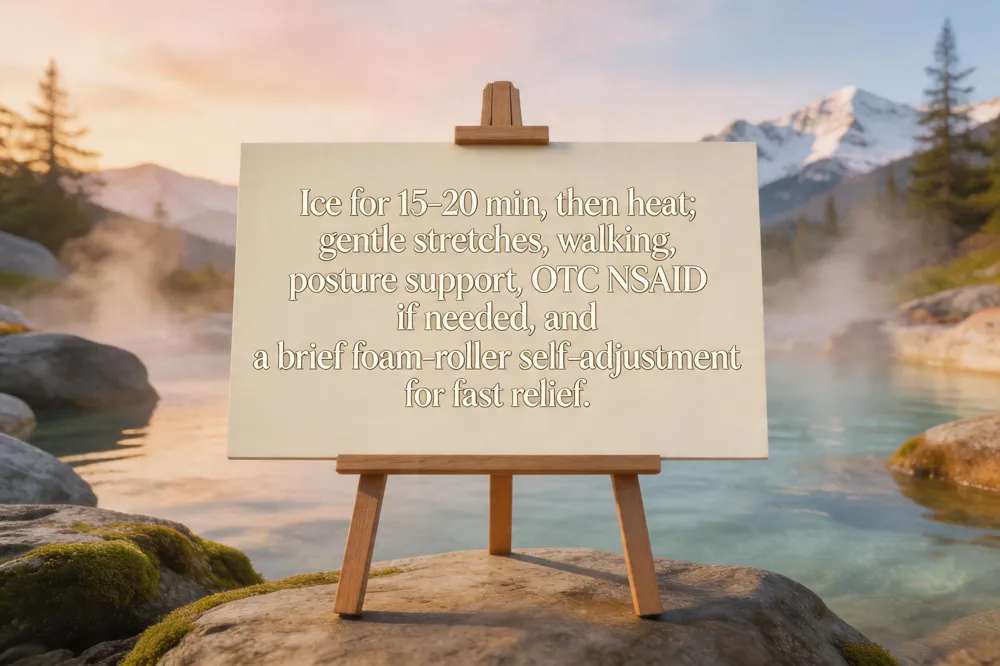 Ice and heat therapy: Apply a thin‑towel‑wrapped ice pack for 15‑20 minutes every 2‑3 hours during the first 48 hours to curb inflammation, then switch to a heating pad for 15‑20 minutes to relax muscles and improve circulation. Gentle stretches & low‑impact movement: Perform knee‑to‑chest, pelvic tilts, or a short walk; swimming and yoga keep the spine mobile without over‑exertion. Micro‑breaks & posture cues: Every 30‑60 minutes, stand, roll shoulders back, and take a brief stretch; use a lumbar roll or rolled towel while seated and place a pillow under the knees (back‑sleep) or between the knees (side‑sleep) to maintain neutral curves. When to seek professional help: If pain persists beyond a few days, worsens, or is accompanied by numbness, fever, or loss of function, schedule a chiropractic evaluation for targeted adjustments and personalized rehab.
How to relieve back pain fast at home: Ice first, then heat; gentle stretches, walking, posture support, OTC NSAID if needed, and consider a foam‑roller self‑adjustment.
How to relieve lower back pain fast: Ice 15 min → heat 15 min; knee‑to‑chest, pelvic tilts, short walks, pillow support, mindfulness breathing, and a brief chiropractic adjustment if pain persists.
How to relieve back pain in 5 minutes: Sit with lumbar roll, do ten slow cat‑cow stretches, stand and sway side‑to‑side, deep shoulder‑down‑back breaths, then walk a minute tall and tall.
Managing Severe Pain and When to Call a Professional
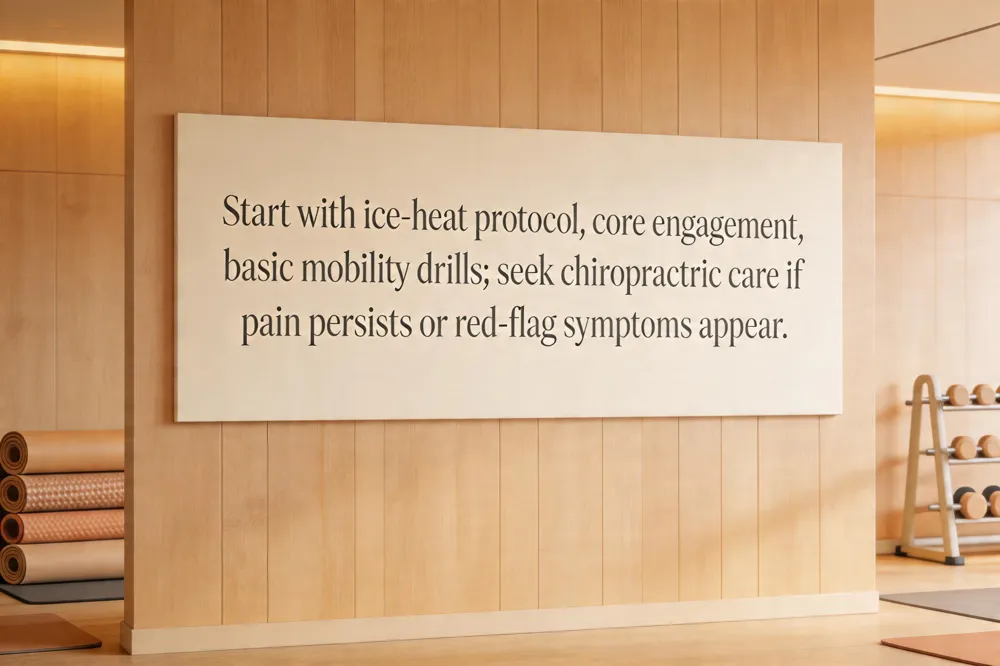 Severe lower‑back pain often starts with an ice‑heat protocol: apply 15–20 minutes of ice to curb inflammation, then switch to gentle heat to relax tight muscles. While the tissues settle, keep the core lightly engaged—think a soft brace or a gentle abdominal draw‑in—and move through basic mobility drills such as pelvic tilts or cat‑cow stretches to restore range without aggravating the injury.
A qualified chiropractor can assess joint restrictions, perform a precise adjustment, and prescribe therapeutic exercises that reduce guarding and improve spinal stability. Complementary care—including low‑impact aerobic activity (walking or swimming), proper ergonomics, and balanced nutrition—supports long‑term recovery.
Red‑flag symptoms demand immediate medical attention: sudden numbness or weakness in the legs, loss of bladder or bowel control, unexplained fever, or pain that awakens you at night. If any of these appear, seek professional evaluation promptly. For persistent, all‑day pain lasting more than a week, schedule a comprehensive spinal assessment to prevent chronic disability.
Long‑Term Prevention and Lifestyle Hacks
 Maintaining a healthy back for later life hinges on regular core‑strengthening and flexibility work (planks, bird‑dogs, hip‑flexor stretches) performed at least twice weekly, combined with a balanced diet and aerobic activity to keep weight in a healthy range. An ergonomic workstation—chair with lumbar support, monitor at eye level, feet flat on the floor—reduces spinal strain, while micro‑breaks every 30‑60 minutes reset posture. Good posture examples: standing with ears over shoulders, knees slightly bent; sitting with lumbar support, knees at 90°, feet flat; walking with head up and balanced stride. At home, use a rolled towel or lumbar pillow, keep screens at eye level, and set a timer for brief walks. Posture correctors can remind you to sit upright but should be paired with targeted strengthening; they do not replace exercise or bone‑health measures for osteoporosis, though they aid alignment and fall prevention.
Age‑Specific and Gender‑Specific Strategies
 Posture hacks for seniors: Use a lumbar roll or cushion to keep the natural curve while seated; stand with feet shoulder‑width apart, engage the core, and gently tuck the chin to avoid forward‑head posture. Incorporate shoulder‑blade squeezes, seated marching, and gentle tai‑chi or yoga stretches. Adjust chair, desk, and TV heights so elbows stay at 90°, and schedule regular chiropractic check‑ins for alignment fine‑tuning.
Female lower back pain treatment: Begin with gentle spinal adjustments to restore joint motion and reduce tension. Add core‑strengthening and pelvic‑floor exercises, especially during pregnancy or postpartum, and use heat or ice as needed. Include prenatal‑specific stretches, proper footwear, and nutrition rich in calcium and vitamin D to support bone health.
How to improve posture in 7 days: Set the monitor at eye level, place a lumbar roll while seated, and perform daily scapular‑retraction and chest‑opening stretches. Add a ten‑minute core routine (plank, dead‑bug, bird‑dog). On day 7, check alignment in a mirror (ears‑shoulders‑hips‑knees‑ankles) and consider a professional chiropractic adjustment for lasting results.
The Chiropractic Advantage and Specialized Care
 Chiropractors can significantly improve posture by identifying spinal and muscular imbalances and applying precise adjustments, soft‑tissue therapy, and targeted exercise programs. Studies show reduced pain and measurable postural gains, though lasting results require ergonomic habits and strengthening. Rotator‑cuff problems benefit from chiropractic care that aligns the shoulder girdle, reduces joint strain, and incorporates rehab exercises, often avoiding surgery. While evidence for ALS is limited, chiropractic may palliate musculoskeletal discomfort associated with the disease, similar to benefits seen in other neuro‑degenerative conditions. Stress‑related cortisol elevation can be moderated by chiropractic’s influence on nervous‑system balance, helping the body return to normal stress responses. For gym‑based posture work, prioritize upper‑back and core strengthening: dumbbell rows, cable face pulls, reverse flies, farmer’s walks, and dynamic chest‑opening stretches to promote a tall, neutral spine.
Common Pitfalls and the Worst Habit
 Prolonged slouched sitting is the single most damaging habit for back pain. When the spine is hunched on an unsupportive couch, chair, or mattress, natural curves are lost, intervertebral disc pressure rises, and muscle tension builds. Adding to this, unsupported mattresses and shoes that lack proper arch support force the pelvis and lower back into maladaptive positions, increasing load on lumbar structures. A lack of regular movement and core weakness compounds the problem; without frequent micro‑breaks and strengthening exercises, the muscles that stabilize the spine become fatigued and ineffective.
What's the worst thing you can do for back pain? The answer is to stay in a slouched, immobile position for long periods on an unsupportive surface—this misaligns the spine, reduces circulation, and turns mild discomfort into chronic pain.
What causes back pain in females? Hormonal fluctuations, pregnancy‑related posture changes, osteoporosis, menstrual cramps, and a higher prevalence of certain musculoskeletal disorders contribute, alongside lifestyle factors such as prolonged sitting and improper lifting.
Take Action Today for a Pain‑Free Tomorrow
Begin by placing a small rolled towel or lumbar roll behind the lower back while seated; this simple hack restores the natural lumbar curve and reduces disc pressure, a technique supported by ergonomic research and chiropractic practice. Next, commit to micro‑breaks every 30‑60 minutes to stand, walk, and perform core‑activating moves such as bird‑dog or side planks, which strengthen stabilizers and improve spinal endurance, as shown in multiple clinical studies. Finally, book a chiropractic evaluation in Glenwood Springs, where a qualified practitioner can assess alignment, provide adjustments, and personalize a holistic program to keep you pain‑free and support long‑term health.