Introducing Whole‑Person Rehabilitation
Whole‑person rehabilitation is an evidence‑based, patient‑centered model that treats the body, mind, and emotions as an integrated system. Its core components are mindfulness practices (e.g., breath awareness, guided meditation), movement‑based therapies (therapeutic exercise, yoga, functional mobility drills), and manual therapy (spinal adjustments, soft‑tissue work, joint mobilizations). By simultaneously reducing stress‑induced cortisol, enhancing proprioception, and improving joint mechanics, this triad lowers pain intensity, increases range of motion, and supports tissue healing. Clinical trials show that patients receiving the combined approach report 30‑40 % greater pain reduction and higher adherence to home programs than those receiving a single modality. The model aligns with SAMHSA’s holistic health framework, which emphasizes mental‑health support, emotional regulation, and physical rehabilitation for comprehensive well‑being, making it especially effective for chronic back pain, sports injuries, and mobility limitations.
Mindfulness: The Mental Pillar of Pain Reduction
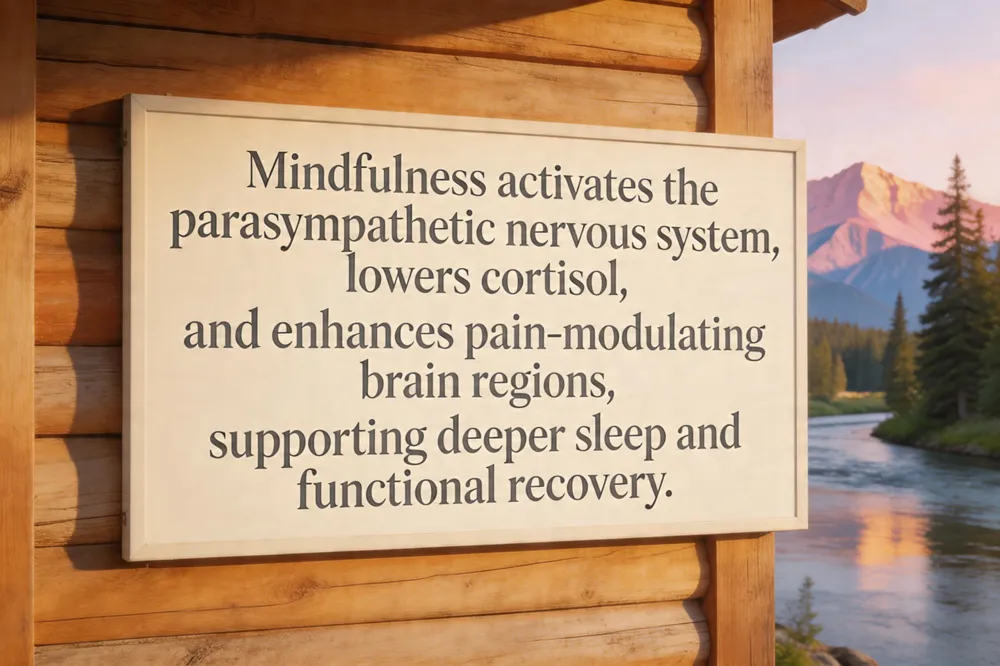 Research consistently shows that mindfulness practices—breath awareness, guided meditation, and body‑scan techniques—activate the parasympathetic nervous system, lowering cortisol and other stress hormones. When combined with chiropractic adjustments, studies report measurable drops in salivary cortisol, suggesting that spinal realignment and soft‑tissue work help the nervous system regulate stress responses. Neurophysiologically, mindfulness modulates pain‑processing regions such as the prefrontal cortex, anterior cingulate, and insula, diminishing the brain’s perception of nociceptive signals and enhancing endogenous analgesic release (endorphins, serotonin). Improved sleep quality follows these pathways; reduced pain and anxiety promote deeper restorative sleep, which in turn accelerates tissue repair, hormone balance, and overall pain modulation. For chronic‑pain patients, stress‑regulation benefits translate into higher adherence to movement programs and lower fear‑avoidance behaviors, fostering long‑term functional recovery.
Can a chiropractor help with cortisol levels? Yes—regular spinal adjustments and manual therapy have been linked to cortisol reductions, likely through improved nervous‑system communication and endorphin release. While larger trials are pending, many patients experience calmer mood, better sleep, and lower anxiety after a series of non‑invasive adjustments.
Somatic therapy Somatic therapy uses gentle movement and breath work to heighten body awareness, release stored tension, and support nervous‑system balance. Integrated with chiropractic care in Glenwood Springs, it enhances relaxation, speeds tissue healing, and promotes sustainable functional mobility.
Movement Therapy Foundations and Certification
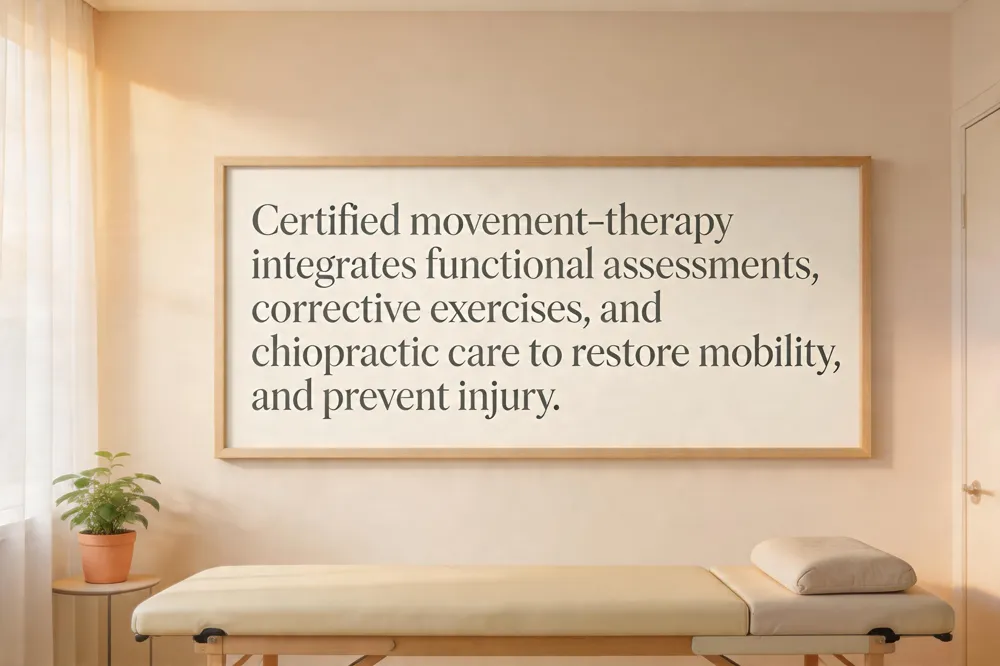 Our clinic’s therapists hold a Movement‑Therapy certification issued by the National Association of Movement Therapists (NAMT), which follows the rigorous standards of the American Dance/Movement Therapy Association. This credential confirms completion of coursework in movement observation, kinesiology, therapeutic body work, and supervised clinical training that meets nationally‑recognized competency benchmarks. Ongoing professional development ensures that our team applies the latest evidence‑based, non‑invasive movement techniques to alleviate pain, improve joint function, and restore natural mobility.
Movement therapy near me – For residents of Glenwood Springs, Colorado, our chiropractic clinic offers personalized movement‑based programs that combine gentle spinal adjustments with active isolated stretching and therapeutic exercises. A fully equipped gym allows supervised practice of prescribed movements, supporting recovery from injury, chronic back or joint pain, and athletic performance goals.
Movement Therapy programs – Each program begins with a Functional Movement System (FMS) assessment to identify postural imbalances and mobility restrictions. Individualized plans integrate corrective exercises, functional movement training, and targeted chiropractic adjustments. Patients also benefit from injury‑prevention workshops, core‑stability sessions, and expressive movement techniques that enhance body awareness and stress relief. Continuous monitoring and plan adjustments ensure progress toward pain‑free mobility and long‑term functional health.
Manual Therapy Integration and Comparative Modalities
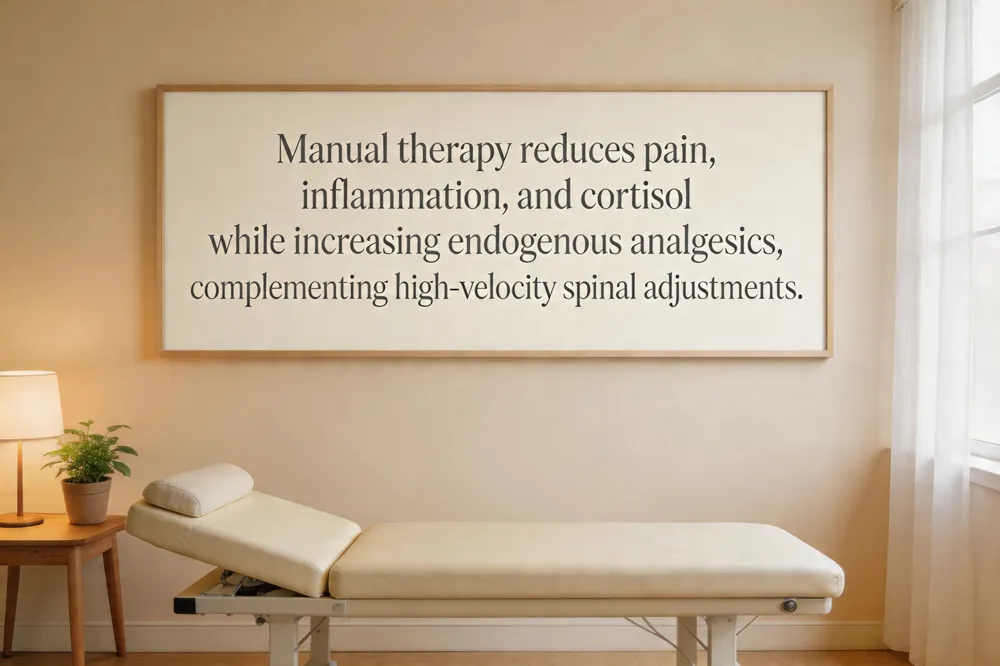 Manual therapy delivers measurable pain reduction, expands joint range of motion, and modulates inflammation by enhancing blood flow and lowering cortisol and CRP levels. Neurophysiological mediators include immediate decreases in spinal excitability, increased endogenous analgesics (serotonin, β‑endorphins, cannabinoids), and altered cortical pain processing, which together reset maladaptive pain pathways. Compared with osteopathic manipulative treatment (OMT), chiropractic care focuses more on high‑velocity spinal adjustments and often incorporates imaging to target subluxations, while OMT, performed by physicians, blends musculoskeletal work with comprehensive medical management and typically uses fewer visits. Both are evidence‑based, but the “better” modality hinges on the patient’s specific condition and practitioner expertise.
Physiotherapy – Physiotherapy is a science‑based, whole‑person approach that restores movement, strength, and function through targeted exercises, manual therapy, and patient education. At Glenwood Chiropractic we blend these principles with precise spinal adjustments, creating a comprehensive plan that addresses pain, improves mobility, and supports overall musculoskeletal health.
Is OMT better than a chiropractor? – OMT and chiropractic care both use hands‑on techniques, but OMT is delivered by osteopathic physicians who can provide full medical care and often rely on palpation, whereas chiropractors specialize in spinal and joint thrusts, frequently using imaging to guide treatment. The optimal choice depends on the individual’s diagnosis, preferences, and the clinician’s expertise.
Trauma‑Informed Whole‑Person Care
 Movement therapy is a cornerstone of trauma‑recovery because it re‑educates the nervous system and releases fascia‑bound tension that often stores emotional stress. Gentle, guided movements provide novel sensory input that updates the limbic system, reducing the chronic freeze‑response and easing pain. In Glenwood Springs, our clinic designs individualized, non‑invasive programs that blend therapeutic movement with spinal adjustments, restoring joint mechanics while calming the autonomic nervous system.
Neuroplastic changes occur when patients repeatedly practice mindful movement; repeated activation of proper motor pathways strengthens cortical connections, improves proprioception, and diminishes central sensitization. Research shows that combining mindfulness‑based movement with manual therapy accelerates these brain‑level adaptations, leading to faster functional gains.
Integration with Chiropractic adjustments enhances the effect: adjustments correct vertebral subluxations, improve nerve communication, and create a receptive environment for movement‑driven neuroplasticity. Manual therapy also reduces muscle tension, allowing patients to move more freely during exercises.
Safety is paramount—programs are adaptable for all ages and for those with limited mobility using supportive devices, seated drills, and low‑impact activities. This whole‑person approach delivers physical relief, emotional regulation, and lasting mobility while eliminating the need for medication.
Lifestyle, Environment, and Whole‑Person Wellness
 Living at the 8,200‑foot altitude of Glenwood Springs influences circulation, oxygen delivery, and tissue healing, so rehab programs must progress movement and manual therapy gradually to protect joints and support recovery. The surrounding Rocky‑Mountain terrain provides natural opportunities for hiking, trail walking, and skiing, which act as active extensions of therapeutic exercise, boost endorphin release, and improve cardiovascular health. Whole‑person wellness models promoted by SAMHSA and NIDA stress the integration of mental‑health support, mindfulness, and lifestyle education with physical rehabilitation, recognizing that stress, anxiety, and substance‑use triggers amplify pain perception. Non‑invasive, drug‑free interventions—mindfulness meditation, movement‑based therapies such as yoga or functional drills, and chiropractic manual therapy—reduce inflammation, lower cortisol, and avoid opioid side effects, delivering safer, sustainable pain relief.
Your Path to Integrated Healing
Mindfulness, movement, and manual therapy work together to create a whole‑person rehabilitation model. Mindful breathing and body‑scan meditation calm the nervous system, lowering cortisol and pain perception, while therapeutic exercise, yoga, and functional mobility drills restore flexibility, strength, and proprioception. Skilled spinal adjustments, joint mobilizations, and soft‑tissue work increase range of motion, improve circulation, and reduce inflammation. When these three components are combined, patients experience faster pain relief, greater functional gains, and enhanced emotional resilience. The synergistic effect also promotes better sleep, reduced anxiety, and a stronger sense of self‑efficacy, supporting long‑term health. To discover how this integrated approach can address your specific back‑pain or mobility concerns, schedule a personalized assessment with our certified chiropractic team today for lasting relief.