Welcome to Your First Chiropractic Experience
Your first chiropractic visit begins with a welcome and an intake form that captures your medical history, current symptoms, and lifestyle habits. The chiropractor then performs a focused physical exam—posture analysis, range‑of‑motion testing, muscle strength checks, and, when needed, imaging—to pinpoint the source of pain. What makes this experience unique is the patient‑centered approach: findings are explained in plain language, a personalized treatment plan is co‑created, and options such as manual adjustments, Activator‑assisted techniques, or soft‑tissue therapy are discussed. Key questions you’ll want to ask include the recommended adjustment method, visit frequency, expected outcomes, and home‑care advice.
The First Visit: What to Expect and How It Differs
 During a first chiropractic appointment you will complete a brief intake questionnaire that captures your medical history, current medications, and lifestyle factors. The chiropractor then conducts a detailed symptom interview, asking about pain location, intensity, quality (sharp, dull, throbbing), onset, duration, and triggers. A comprehensive physical examination follows, including posture analysis, range‑of‑motion testing, muscle‑strength and tone checks, reflex screening, and, when indicated, on‑site X‑rays or advanced imaging for recent trauma or suspected spinal deformity. After reviewing the findings, the clinician creates a personalized treatment plan outlining visit frequency, goals, and any home‑care recommendations. If the exam reveals a safe, clear target, many chiropractors perform a gentle adjustment on the same day, using a controlled thrust that may produce a normal popping sound. If the practitioner advises a later session, the decision is based on your specific condition and clinical judgment. To prepare, bring relevant records, wear loose, breathable clothing (e.g., yoga pants and a t‑shirt), arrive early for paperwork, stay hydrated, and avoid heavy meals or vigorous activity right before the visit. This approach ensures a patient‑centered, evidence‑based start to your musculoskeletal health journey.
Understanding Adjustments: Techniques, Mechanics, and Sensations
 A first‑time patient encounters several adjustment styles. The Diversified high‑velocity low‑amplitude (HVLA) thrust is the most common, delivering precise manual pressure that restores spinal alignment and eases low‑back, neck, and headache pain. For those preferring gentler work, the Activator low‑force method uses a spring‑loaded handheld instrument that delivers a quick, controlled impulse—ideal for seniors, pregnant women, or arthritis patients. The Torque Release Technique, an instrument‑assisted approach, targets the nervous system without twisting, reducing stress and chronic pain. Upper‑cervical care (Toggle Recoil, MC2) focuses on the atlas and axis to improve migraines, dizziness, and posture. Flexion‑Distraction and spinal decompression gently stretch the spine, relieving disc pressure. Soft‑touch chiropractic applies light, precise pressure to muscles and fascia, improving circulation and reducing inflammation. Mechanical adjustments, often with the Activator, provide a low‑force, high‑speed thrust that minimizes muscle guarding. Mechanistically, adjustments correct subluxations, relieve nerve irritation, trigger cavitation, and promote endorphin release, fostering natural healing. Common side‑effects are mild soreness, stiffness, or fatigue lasting 24‑48 hours; serious complications are rare when proper screening is performed. The term “chiropractic” is pronounced /ˌkaɪə.roʊˈpræk.tɪk/ in the US and /ˌkaɪə.rəʊˈpræk.tɪk/ in the UK.
Managing Aftereffects: Soreness, Recovery, and Red‑Flag Signs
 After a chiropractic adjustment most patients notice mild soreness for up to three days while muscles, ligaments and tendons adapt to the new alignment. This temporary achiness is normal and usually eases with gentle walking, prescribed stretches, and adequate hydration (80‑120 oz water daily). Apply a cold pack for 20 minutes several times a day to limit inflammation; heat can be used briefly after the first 24‑48 hours if stiffness persists. Nutrition rich in fruits, vegetables and anti‑inflammatory foods supports the body’s natural waste‑clearance mechanisms—no new toxins are released, only the usual metabolic by‑products (lactic acid, CO₂) are cleared more efficiently. Watch for red‑flag signs: intense or worsening pain, numbness, tingling, loss of strength, swelling, fever, or neurological symptoms such as severe neck pain, dizziness or speech difficulty. If any arise, or last beyond a week, contact your chiropractor promptly for a follow‑up assessment.
Benefits, Risks, and the Science Behind Chiropractic Care
 Chiropractic care can provide rapid relief from back, neck, joint and muscle pain, improve posture, reduce headache frequency and speed recovery from sports injuries through targeted spinal adjustments and adjunct therapies. Functional gains often include increased range of motion and better nervous‑system balance. The technique is generally safe, but high‑velocity thrusts may cause joint irritation, temporary soreness, or, in very rare cases, vertebral‑artery injury leading to stroke—particularly with cervical manipulations. Systematic reviews show modest benefit for acute or chronic low‑back pain, while evidence for other conditions remains limited, leading many experts to label the original subluxation theory as pseudoscientific. Some studies suggest adjustments lower cortisol, helping reduce stress‑related anxiety. First‑time visits are longer and include a health questionnaire, exam and sometimes imaging; in the United States they typically cost $100‑$250, with many clinics offering $70‑$120 new‑patient specials and insurance discounts. Choosing a licensed, experienced practitioner maximizes benefits and minimizes risks.
Tailoring Your Care: From Neck Techniques to Lifestyle Integration
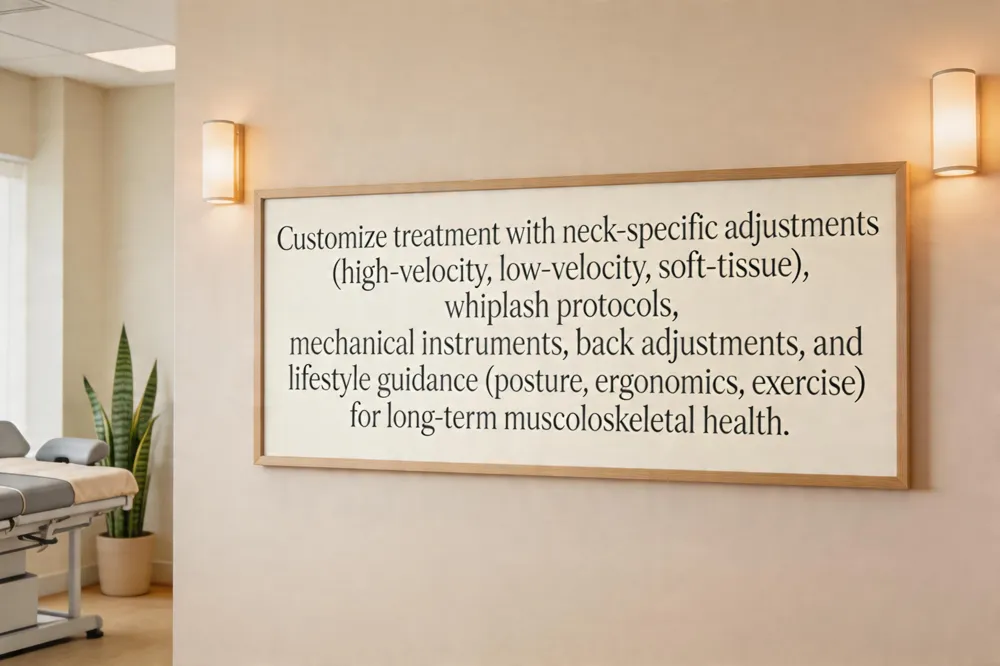 Chiropractic neck adjustment techniques – Options range from high‑velocity low‑amplitude thrusts to gentle low‑velocity methods. Cervical mobilization, manual traction, and drop‑piece adjustments provide controlled movement without excessive rotation. Soft‑tissue work such as Muscle Energy Technique and myofascial release eases muscle knots. Glenwood Springs clinicians match technique to comfort level and specific neck pathology.
Whiplash chiropractic treatment techniques – Initial care uses gentle cervical and thoracic adjustments, often flexion‑distraction or instrument‑assisted decompression to protect discs. myofascial release and trigger‑point therapy improve blood flow, while tailored exercises restore range of motion and strengthen stabilizers. Posture and ergonomic counseling prevent re‑injury.
Non‑manual chiropractic adjustment – Mechanical instruments (Activator, PulStar) deliver precise, low‑force impulses, ideal for patients hesitant about manual thrusts or when hands are fatigued. The calibrated force reduces audible pop and maintains comfort.
Chiropractic back adjustments – A controlled thrust applied on a padded table restores joint mobility, eases tension, and supports nervous system function, relieving low‑back pain and related symptoms. Minor post‑adjustment soreness is normal.
Lifestyle integration – Glenwood Springs’ active community benefits from posture, ergonomics, and exercise guidance that complement adjustments, supporting long‑term musculoskeletal health.
Your Path Forward
After your initial visit, the chiropractor will suggest a schedule for follow‑up appointments, often weekly or bi‑weekly at first, then spaced based on how quickly pain eases and mobility improves. Keep the posture habits taught during the exam—sit tall, use ergonomic supports, and perform the prescribed stretches and strengthening exercises to reinforce alignment. Track your symptoms; note any increase in pain, numbness, weakness, or new headaches, as these may signal red‑flag conditions that require immediate medical review. For questions, appointments, or emergencies, call the Glenwood Springs office at (970) 555‑1234 or email info@glenwoodchiro.com. Our team is ready to support your recovery.