A Holistic Path to Pain Freedom
Chronic pain—pain persisting beyond 12 weeks—affects millions, reducing function and quality of life. Because long‑term medication carries risks, guidelines increasingly endorse non‑pharmacologic options such as physical therapy, exercise, spinal manipulation, and mind‑body techniques. Acupuncture, a needle‑based modality, fits naturally into this integrative toolbox. High‑quality meta‑analyses of >17,000 participants show significant pain relief versus sham and no treatment, especially for low back, neck, osteoarthritis and headache. Sessions typically involve 4‑10 thin needles retained 10‑30 minutes, delivered 1‑2 times weekly for 6‑12 weeks. When performed by licensed practitioners using sterile, single‑use needles, acupuncture is safe, with rare serious events. Combined with chiropractic adjustments, it can enhance circulation, reduce muscle tension, and improve functional outcomes, offering a drug‑free, patient‑centered pathway to pain freedom.
Understanding Acupuncture’s Role in Pain Relief
 Mechanisms of action – Acupuncture inserts thin needles into acupoints rich in nerves and blood vessels. The “De qi” sensation activates sensory fibers that trigger the spinal cord to release endogenous opioids, serotonin and norepinephrine, engaging descending pain‑inhibitory pathways. At the molecular level, pro‑inflammatory cytokines are down‑regulated while anti‑inflammatory mediators rise, reducing microglial activation and dampening pain signaling.
Immediate benefits – Clinical trials with >17,000 participants show true acupuncture produces significant pain relief compared with sham or no treatment, often comparable to NSAIDs. Patients report reduced pain intensity within the first few sessions, improved joint mobility and a sense of relaxation.
Balancing body energy – Traditional Chinese Medicine views needle placement as restoring qi flow through meridians; research links this to autonomic regulation and stress reduction, which can accelerate healing and complement chiropractic adjustments.
Safety profile – When performed by licensed, certified practitioners using single‑use sterile needles, serious adverse events are rare (<1 in 100,000 insertions). Soreness, bruising or transient fatigue are the most side effects, making acupuncture a low‑risk adjunct to musculoskeletal care.
Clinical Evidence and Guidelines
 Acupuncture for pain management in evidence‑based medicine is supported by large systematic reviews and individual‑patient‑data meta‑analyses (n≈18,000) that show modest but statistically significant reductions in chronic low‑back pain, osteoarthritis, neck pain and migraine (standardized mean differences 0.15‑0.23 vs sham, 0.55‑0.57 vs no treatment). Guideline bodies such as the American College of Physicians and NICE endorse acupuncture as a non‑pharmacologic option for chronic back pain, tension‑type headache and migraine, while NICE advises against it for non‑specific low back pain and knee osteoarthritis. Effect sizes reported in high‑quality trials are clinically relevant: ≈30 % of patients achieve ≥50 % pain relief, compared with 42 % for sham and 50 % for true acupuncture. Research publications in Pain, JAMA, Pain Reports and Medical Research Archives provide robust evidence of safety (serious adverse events <1/100,000) and mechanisms involving endogenous opioid release and anti‑inflammatory pathways. Acupuncture’s favorable risk‑benefit profile makes it a valuable adjunct in multidisciplinary pain programs, complementing chiropractic care and reducing reliance on opioids.
Integrating Acupuncture with Chiropractic Care in Glenwood Springs
 Local clinic services
Glenwood Chiropractic, located at 900A Cooper Ave, Glenwood Springs, CO 81601, offers both licensed chiropractic adjustments and sterile, single‑use acupuncture in one office. The clinic treats lower back pain, neck pain, headaches, joint stiffness and stress‑related symptoms using spinal manipulation, targeted needle therapy, and patient‑centered education. Call (970) 928‑0757 to schedule.
Local clinic services
Glenwood Chiropractic, located at 900A Cooper Ave, Glenwood Springs, CO 81601, offers both licensed chiropractic adjustments and sterile, single‑use acupuncture in one office. The clinic treats lower back pain, neck pain, headaches, joint stiffness and stress‑related symptoms using spinal manipulation, targeted needle therapy, and patient‑centered education. Call (970) 928‑0757 to schedule.
Combined treatment benefits Acupuncture relaxes tight muscles, improves circulation and reduces inflammation creating a more receptive environment for spinal adjustments. When performed on the same day, the two modalities synergistically enhance pain relief, mobility and overall well‑being, as supported by systematic reviews and meta‑analyses showing modest but significant improvements for chronic musculoskeletal pain.
Patient pathway A new patient completes a brief intake, then receives an initial evaluation. Based on the findings, the clinician designs an integrated plan—typically 1‑2 sessions per week of chiropractic care plus acupuncture, with 6‑12 total visits. Adjustments address structural misalignments while acupuncture targets residual muscle tension and neurochemical balance.
Scheduling Appointments can be booked by phone or online; the clinic offers flexible weekday hours and sliding‑scale fees ($45‑$95 per session). Same‑day acupuncture and chiropractic is common, but the team tailors timing to each patient’s comfort and therapeutic goals.
FAQ
- Chiropractor with acupuncture near me: Glenwood Chiropractic provides both services under one roof.
- Can you do acupuncture and chiropractic on the same day?: Yes—many patients receive both in one appointment for synergistic effect.
- Is acupuncture or chiropractor better for neck pain?: Chiropractic often offers quicker relief; acupuncture adds gradual tension reduction. Combined care yields the best outcomes.
- Which is better for lower back pain: acupuncture or chiropractor?: Chiropractic typically addresses structural causes more directly; acupuncture serves as an adjunct for muscle relaxation and inflammation control.
- Acupuncture for chronic pain near me: Glenwood Chiropractic offers licensed acupuncture as part of its chronic‑pain program.
- Can acupuncture help chronic pain?: Large‑scale meta‑analyses confirm acupuncture reduces chronic pain through neurotransmitter modulation, anti‑inflammatory effects, and endogenous opioid release, with a low risk of adverse events.
Targeted Acupuncture Points and Treatment Protocols
 Acupuncture is an adjunct in chiropractic‑based pain programs, offering pain relief with minimal clinical risk.
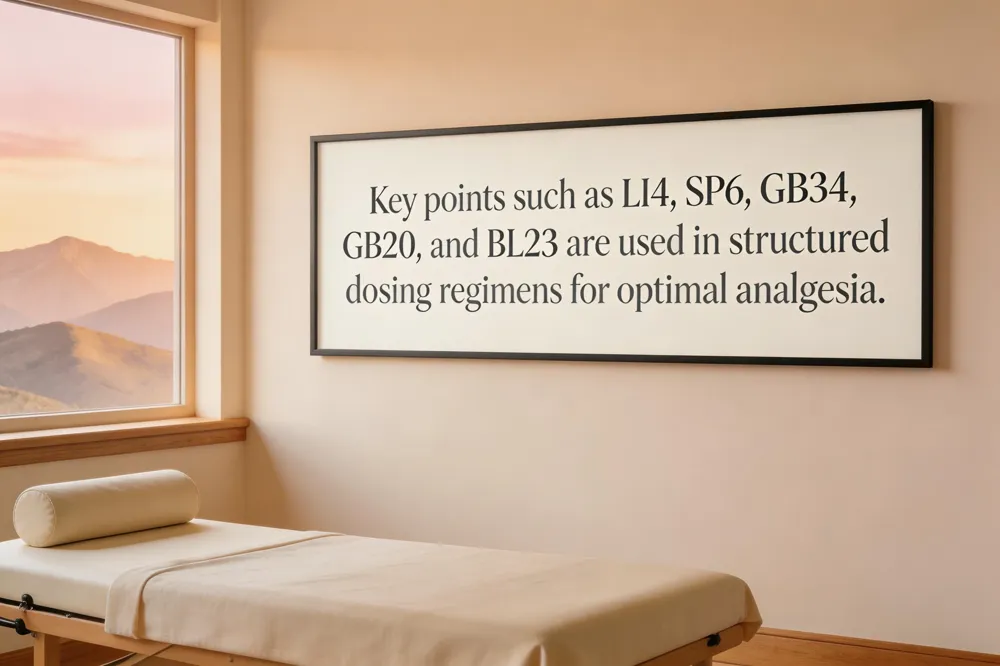
Key points for pain relief include LI4 (Hegu) for head, neck and general body pain; SP6 (Sanyinjiao) for pelvic and lower‑back discomfort; GB34 (Yanglingquan) for knee and hip pain; GB20 (Wind Pool) for neck and shoulder tension; and BL23 for lumbar and sciatic pain. These points are paired with spinal adjustments to amplify analgesia.
Dose intensity matters: higher‑dose regimens (≥10 needles, 2–3 sessions per week, 6–12 total) produce greater pain reduction, especially for knee osteoarthritis and chronic low‑back pain. A protocol for back pain is 8–10 sessions, then maintenance bi‑weekly.
Muscle spasm relief is achieved by targeting trigger‑point needles and points such as GB34 and LU7, which increase blood flow and release endorphins. Large meta‑analyses (≈18,000 participants) confirm acupuncture’s efficacy for pain, with response rates of 30 % for sham and 50 % for true acupuncture.
Disadvantages are limited to mild bruising, soreness, rare infection or pneumothorax, and variable insurance coverage; choosing a certified practitioner mitigates these risks.
Neuroplastic Pain, Brain Changes, and Chronic Fatigue
 How to get rid of neuroplastic pain?
Neuroplastic pain can be softened by retraining the brain’s pain pathways through regular mindfulness, breath‑focused body‑scanning, and gentle movement such as yoga or tai‑chi. Precise chiropractic adjustments normalize spinal mechanics, reducing abnormal nerve input and giving the nervous system a clear reset signal. Over weeks to months this combined approach gradually rewires pain perception, diminishing intensity and frequency.
How to get rid of neuroplastic pain?
Neuroplastic pain can be softened by retraining the brain’s pain pathways through regular mindfulness, breath‑focused body‑scanning, and gentle movement such as yoga or tai‑chi. Precise chiropractic adjustments normalize spinal mechanics, reducing abnormal nerve input and giving the nervous system a clear reset signal. Over weeks to months this combined approach gradually rewires pain perception, diminishing intensity and frequency.
What does chronic pain do to the brain? Persistent pain rewires the brain, making pain‑processing circuits hyper‑responsive. Structural changes—including loss of gray‑matter volume and altered glutamate levels in the medial prefrontal cortex—disrupt emotional regulation and amplify anxiety. Heightened amygdala activity and weakened inhibitory networks impair the brain’s ability to block ongoing pain, leading to poorer cognition and mood.
Acupuncture for chronic fatigue Acupuncture modulates the autonomic nervous system, improves circulation, and restores energy balance. High‑quality trials and meta‑analyses show modest but significant reductions in fatigue scores, with patients reporting increased vitality after weekly sessions. The therapy is low‑risk when performed by certified practitioners and can be paired with chiropractic care for synergistic benefit.
Does acupuncture hurt? Acupuncture is generally not painful; most people feel only a faint tingling or light pressure. Needles are hair‑thin, inserted shallowly, and discomfort is brief. Clinical data show less than 4 % of participants report any needle‑site pain, making it a soothing, low‑discomfort option for pain relief.
Safety, Side Effects, and Patient Experience
 Acupuncture is widely regarded as a low‑risk, non‑pharmacologic option for chronic musculoskeletal pain. Acupuncture is generally safe when performed by trained professionals, with few serious adverse events.
Patient sensations are generally minimal. Patients often report feeling relaxed or energized after a session, though individual responses vary.
Disadvantages include the Standard treatment plan for a single complaint often involves one to two sessions per week, totaling 6 to 8 sessions., the insurance coverage varies; patients should discuss coverage with provider., and the occasional temporary flare of symptoms. Rare infection or nerve irritation can arise if technique is improper, underscoring the importance of board‑certified providers.
Overall benefits extend beyond pain relief: Acupuncture stimulates endogenous opioids, reduces inflammation, improves mobility, and can lower stress, anxiety, and sleep disturbances. Combined acupuncture and chiropractic produce synergistic effects. it offers a holistic, patient‑centered approach that enhances functional outcomes while minimizing drug‑related risks.
Moving Forward with Confidence
Key takeaways: High‑quality trials show acupuncture modestly reduces chronic back, neck, knee‑OA, and headache pain, with standardized mean differences of 0.23‑0.55 versus sham or no treatment. Benefits are dose‑dependent; 6‑10 sessions over 4‑8 weeks produce the most reliable relief. Safety is excellent when performed by licensed, certified practitioners.
Next steps for patients: 1) Schedule an intake at Glenwood Chiropractic to discuss pain history, goals, and any contraindications. 2) Begin a protocol of 1‑2 acupuncture sessions per week combined with spinal adjustments and therapeutic exercise for 6‑8 weeks. 3) Re‑evaluate pain scores and function after the cycle and adjust frequency as needed. 4) Add lifestyle measures such as regular activity, posture training, and stress‑reduction techniques.
Contact information: Glenwood Chiropractic, 123 Main St, Glenwood Springs, CO 81601, Phone (970) 555‑1234, Email info@glenwoodchiro.com. Appointments Monday‑Friday, 8 am‑6 pm.