Introduction
Sciatica, a painful condition caused by irritation or compression of the sciatic nerve, affects roughly 40 % of adults at some point in life. Because the nerve travels from the lower spine through the buttocks and down each leg, even modest spinal stress can trigger sharp, burning pain that radiates to the foot. Conservative, non‑surgical care hinges on lifestyle choices: weight management, regular low‑impact movement, posture awareness, ergonomic adjustments, and stress‑reduction all lessen mechanical and inflammatory pressure on the nerve. This guide will walk readers through evidence‑based chiropractic strategies, core‑strengthening exercises, stretching routines, ergonomic tips, and complementary therapies such as heat‑cold contrast, massage, and mindfulness, empowering patients to regain function and reduce flare‑ups. By integrating these habits, people experience relief within to weeks, and the risk of chronic episodes diminishes.
Immediate At‑Home Relief Techniques
 Immediate relief for sciatica pain
Start with ice for the first 24‑48 hours: apply a cold pack wrapped in a thin towel for 15‑20 minutes, up to three times daily, to blunt inflammation. After this acute phase, switch to a warm pack or heating pad for 15‑20 minutes to relax tight muscles and improve blood flow. An over‑the‑counter NSAID such as ibuprofen may be taken as directed to curb pain and swelling.
Immediate relief for sciatica pain
Start with ice for the first 24‑48 hours: apply a cold pack wrapped in a thin towel for 15‑20 minutes, up to three times daily, to blunt inflammation. After this acute phase, switch to a warm pack or heating pad for 15‑20 minutes to relax tight muscles and improve blood flow. An over‑the‑counter NSAID such as ibuprofen may be taken as directed to curb pain and swelling.
Immediate relief for sciatica pain at home Introduce gentle movement promptly—short walks or light leg swings, or a figure‑four hip stretch—to keep the sciatic nerve from tightening. Simple stretches (knees‑to‑chest, hamstring or child’s pose) held 20‑30 seconds each improve flexibility without aggravating the nerve. Adopt short‑term posture tweaks: sit with lumbar support, feet flat, knees at 90°, and take a stretch break every 20‑30 minutes when working at a desk.
How to relieve sciatica pain in 30 seconds Lie on your back, bend both knees, and pull the painful leg’s knee toward your chest for a few breaths; this quickly reduces nerve tension. Alternatively, sit upright, cross the affected ankle over the opposite knee, and gently press down on the knee to open the hip. A rapid 20‑second cold pack on the lower back can further numb the area. Follow these micro‑moves with a professional chiropractic adjustment for lasting relief.
Targeted Stretching and Nerve Mobilization
 Sciatica stretches
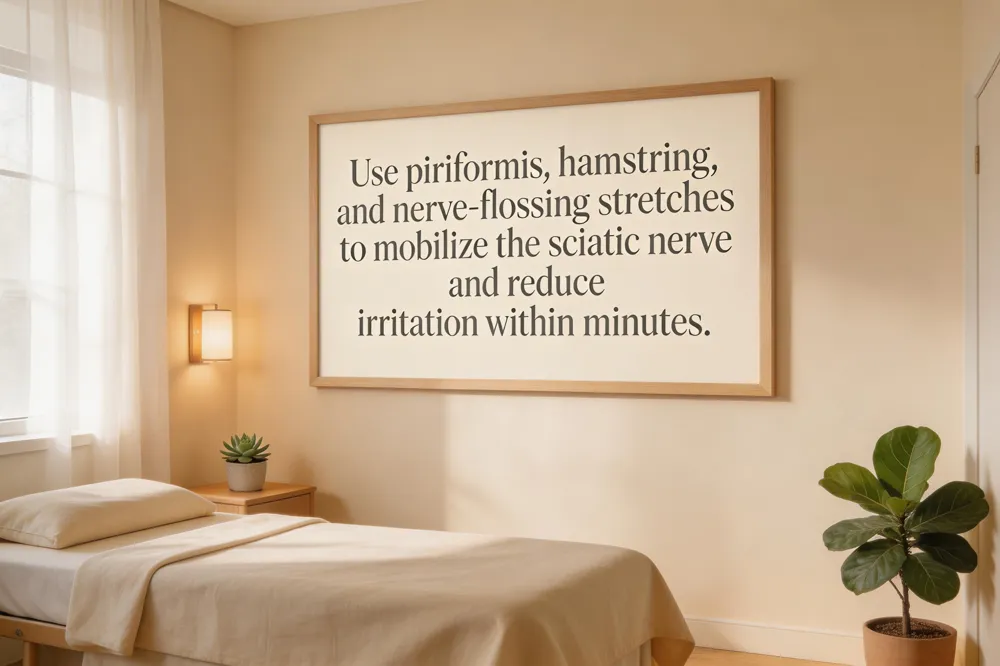
Gentle stretches that target the piriformis, hamstrings, and lower back can relieve nerve irritation and restore mobility. A classic piriformis stretch: lie on your back, cross the affected leg over the opposite knee, then gently pull the thigh toward your chest; hold 20‑30 seconds, repeat each side. Seated hamstring stretches—reaching toward your toes with a straight back—lengthen muscles that pull on the sciatic nerve, while a knee‑to‑chest stretch opens the glutes and lower back. Adding low‑impact movements such as cat‑cow or a glute bridge promotes circulation and reduces nerve pressure.
Sciatica stretches
Gentle stretches that target the piriformis, hamstrings, and lower back can relieve nerve irritation and restore mobility. A classic piriformis stretch: lie on your back, cross the affected leg over the opposite knee, then gently pull the thigh toward your chest; hold 20‑30 seconds, repeat each side. Seated hamstring stretches—reaching toward your toes with a straight back—lengthen muscles that pull on the sciatic nerve, while a knee‑to‑chest stretch opens the glutes and lower back. Adding low‑impact movements such as cat‑cow or a glute bridge promotes circulation and reduces nerve pressure.
Say goodbye to sciatic nerve pain in just 10 minutes with this natural method Combine nerve‑flossing with a piriformis stretch: sit upright, straighten the affected leg, flex the ankle, hold five seconds, then gently bend the knee; repeat 10‑15 times to glide the nerve through tight muscles. Follow with a reclining pigeon pose or seated spinal twist to release hip tension, then apply a warm compress to the lower back for a few minutes. Consistent practice, good posture, and core activation often bring noticeable relief within ten minutes.
Sciatica adjustment at home A true spinal adjustment is a precise, hands‑on technique that should only be performed by a licensed chiropractor. At home, support a professional adjustment by using the piriformis stretch, seated forward bend, or knee‑to‑chest stretch (20‑30 seconds each) and applying a warm pack to the lower back for 5‑10 minutes to relax muscles. Maintain neutral posture and avoid prolonged sitting. If pain persists, schedule an in‑clinic visit for a targeted chiropractic adjustment.
Lifestyle Adjustments for Long‑Term Management
 Effective long‑term management of sciatica hinges on three pillars: weight control and nutrition, ergonomic habits for sitting and sleeping, and stress‑reduction with quality sleep.
Weight management and nutrition – Maintaining a healthy body weight reduces mechanical load on lumbar discs and the sciatic nerve; even a 10 % weight loss can markedly lower nerve pressure. An anti‑inflammatory diet rich in omega‑3s, leafy greens, fruits, and lean proteins further diminishes systemic inflammation that can aggravate nerve irritation.
Ergonomic seating and sleeping hygiene – A supportive chair with lumbar cushions, removal of back‑pocket strain, and a firm mattress (or a pillow between the knees for side‑sleepers) keep the spine in a neutral position, decreasing disc compression and nerve impingement.
Stress reduction and sleep quality – Chronic stress elevates muscle tension and pain perception. Mind‑body practices such as yoga, meditation, or deep‑breathing, combined with 7–9 hours of restorative sleep, support tissue repair and lower inflammatory markers.
Answers to common questions
What lifestyle changes help sciatica? Regular low‑impact movement (walking, light housework), daily hamstring/piriformis stretching, proper posture, ergonomic furniture, weight management, core‑strengthening, and alternating heat/ice therapy together relieve nerve pressure and inflammation.
How to cure sciatica permanently? Identify the root cause (misalignment, muscular imbalance, disc issue) and address it with chiropractic adjustments, targeted therapeutic exercises, consistent posture‑care, ergonomic workstations, sustained activity, and weight control. Consistent non‑invasive care can achieve lasting relief.
How to relieve sciatic nerve pain without exercise? Apply ice (15‑20 min, several times daily) followed by heat after 48‑72 h, use a firm mattress with knee pillow, receive a professional chiropractic adjustment, incorporate massage or trigger‑point therapy, take OTC NSAIDs as needed, and maintain ergonomic sitting with lumbar support.
Understanding Conservative Care and Treatment Options
 Conservative (non‑surgical) care for sciatica focuses on relieving nerve irritation while preserving spinal integrity. It typically combines targeted physical‑therapy exercises, stretching, core‑strengthening, ergonomic adjustments, and over‑the‑counter anti‑inflammatory medication. Chiropractic adjustments are a key component, gently realigning vertebrae to reduce pressure on the sciatic nerve without invasive procedures.
What is a conservative treatment for sciatica? A conservative approach begins with a structured rehab program—low‑impact aerobic activity for hamstring and piriformis stretches, and core‑strengthening drills—to improve flexibility and posture. Chiropractic adjustments complement these exercises, while NSAIDs or ibuprofen control inflammation. Occasionally, a single epidural steroid injection may be added for short‑term relief while the patient continues the rehab plan.
How many treatments for sciatica with a chiropractor? Most patients require a series of adjustments. Acute cases often improve after 5‑12 sessions, with 3‑4 visits per week in the first two weeks, then 2‑3 visits weekly through weeks 3‑10. Maintenance may drop to one visit every two weeks once pain subsides, though the exact schedule is individualized.
Is chiropractic safe for sciatica? Yes. When performed by a qualified practitioner, spinal adjustments are safe and non‑invasive. Mild soreness or a brief “cracking” sensation are common; serious complications are rare. Patients with severe osteoporosis, fractures, or uncontrolled arthritis should discuss risks beforehand.
Best medicine for sciatica pain First‑line agents are over‑the‑counter anti‑inflammatory medication such as ibuprofen or naproxen, which reduce nerve‑site inflammation. Acetaminophen can be added for additional relief; muscle‑relaxants may help with spasms. Corticosteroid injections are reserved for persistent inflammation.
Strong painkillers for sciatica Opioids (e.g., hydrocodone) are occasionally prescribed for severe pain but are limited to short‑term use due to dependence risk. Clinicians prefer non‑pharmacologic options—chiropractic care and physical therapy, and lifestyle changes—to address the underlying irritation while minimizing reliance on strong analgesics.
Choosing the Right Professional Help
 When sciatica first appears, many wonder whether to seek a medical doctor or a chiropractor. If the pain is mild, without numbness, weakness, or loss of bladder/bowel control, beginning with a chiropractor is a safe, non‑invasive option. Chiropractors can perform spinal adjustments, soft‑tissue therapy, and prescribe gentle stretching and core‑strengthening exercises that relieve pressure on the sciatic nerve and improve posture. For more severe symptoms—persistent worsening pain, neurological deficits, or red‑flag signs such as bowel or bladder dysfunction—a primary‑care physician or spine specialist should be consulted first. Doctors can order imaging, prescribe NSAIDs, and refer to physical therapy or, when necessary, surgical evaluation.
If you are searching for a "chiropractor for sciatica near me" in Glenwood Springs, our clinic offers targeted adjustments, spinal decompression, and individualized exercise programs designed to reduce nerve irritation without medication or surgery. Patient reviews consistently highlight rapid pain reduction, thorough examinations, and clear education on home care, noting that the drug‑free approach helped them avoid surgery and regain mobility.
Can a chiropractor make sciatica worse? A qualified chiropractor rarely causes lasting harm. Some patients experience a brief increase in discomfort as the nervous system adapts—this is normal and short‑lived. Problems typically arise only from improper assessment or untrained practitioners, so choosing a licensed, experienced professional and communicating any new symptoms is essential for a safe recovery.
Managing Severe Symptoms and Red‑Flag Alerts
 Recognizing urgent warning signs is the first step in protecting the nervous system. Red‑flag symptoms such as sudden, severe leg pain, loss of bladder or bowel control, progressive muscle weakness, or numbness around the genital area signal possible cauda equina syndrome or serious nerve compression and require immediate medical evaluation.
When sciatica pain is so bad you can’t walk, limit activity and lie on your back with knees slightly elevated. Apply ice for the first 48 hours (15‑20 minutes, several times a day) to reduce inflammation, then transition to heat to relax tight muscles. Promptly seek professional care—ideally a chiropractor or spine specialist—who can perform gentle spinal adjustments, targeted soft‑tissue therapy, and prescribe a short, supervised rehabilitation program that may include low‑impact aerobic activity, core‑strengthening, and specific hamstring, piriformis, and lumbar stretches. A walking aid and NSAIDs may be used temporarily to restore mobility safely.
Rapid response strategies combine these emergency measures with a structured care plan. Early intervention, often within the first week of severe symptoms, can prevent prolonged disability. In most cases, patients notice measurable relief after a few chiropractic visits, followed by a maintenance schedule that supports long‑term spinal health.
Conclusion
Managing sciatica effectively begins with habits. Maintaining a healthy weight, quitting smoking, and staying active with exercise such as walking or swimming reduce mechanical pressure on the lumbar spine. Regular stretching of the hamstrings, piriformis, and lower back—through yoga, toe‑touches, or guided moves—improves nerve glide and eases muscle tension. Proper ergonomics at work and home, including a supportive chair, lumbar cushions, and breaks from sitting, keep the spine in a neutral position. Applying ice during the first 48‑72 hours and then heat helps control inflammation and muscle spasm. When these self‑care measures are combined with professional chiropractic care—spinal adjustments, tissue therapy, and exercise programs—the result is faster pain relief, restored mobility, and a lower chance of recurrence. Take the first step today: schedule a chiropractic evaluation and start integrating these lifestyle changes for lasting sciatica relief.