Setting the Stage
Pediatric chiropractic care has become a widely accessed complementary service in the United States. Recent surveys indicate that roughly 3.4 %–3.5 % of all children—about two million—have visited a chiropractor, with adolescents (≈5 %) using the service more often than younger school‑age children (≈2 %). Parents turn to chiropractic care for a range of school‑related reasons: to improve posture and reduce backpack‑related musculoskeletal discomfort, to alleviate headaches, neck pain, or ear‑related issues that interfere with concentration, and to support overall nervous‑system function that may enhance attention, sleep quality, and academic performance. The gentle, low‑force techniques employed with children are designed to be safe while addressing musculoskeletal imbalances that can impede classroom focus and attendance. Consequently, many families view chiropractic care as a non‑pharmacologic adjunct that complements traditional educational and medical interventions.
The Growing Body of Pediatric Chiropractic Research
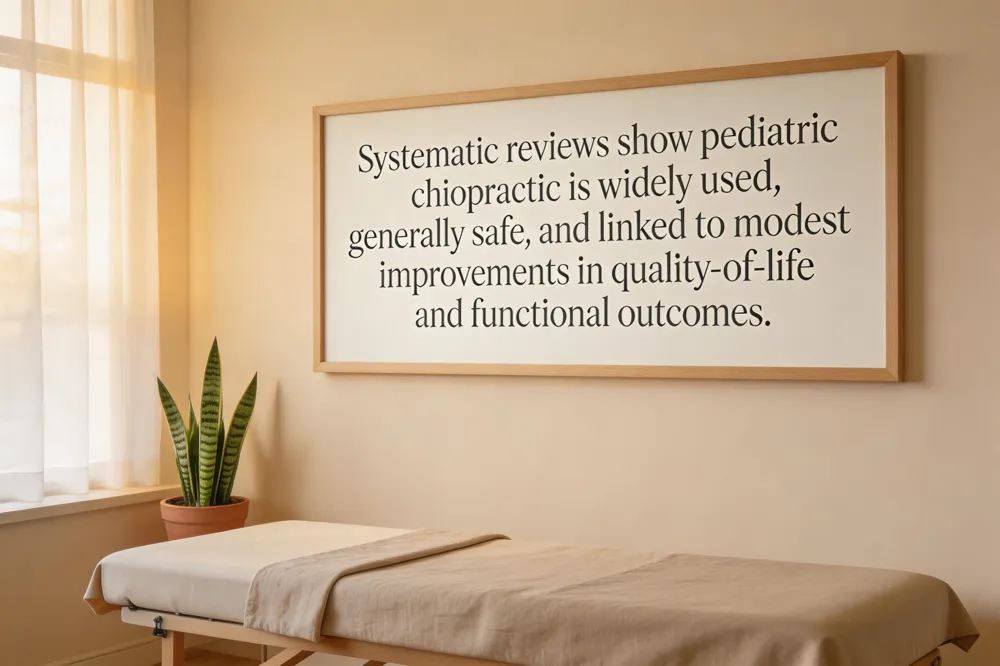 Recent systematic reviews confirm that pediatric chiropractic care is widely used and generally safe, with only a small percentage of mild, transient adverse events reported. For example, a 2024 review noted that serious complications are exceedingly rare, and most techniques employed with children are low‑force, age‑appropriate adjustments. Practice‑based research networks such as the International Chiropractic Pediatric Association (ICPA) are now collecting thousands of cases to evaluate outcomes beyond pain relief. These networks report improvements in quality‑of‑life measures (e.g., PedsQL™ scores) and functional mobility, such as better balance and reduced hyperactivity, after 12‑week multimodal protocols.
Pediatric Chiropractic Research
The evidence base has expanded but remains limited; many studies are case series or small pilots. Nonetheless, large‑scale ICPA data suggest that over 90 % of families observe perceived benefits, particularly in musculoskeletal comfort, sleep quality, and school attendance.
Is Pediatric Chiropractic Safe?
Yes. When performed by a licensed chiropractor with pediatric training, adjustments are gentle—often fingertip pressure or instrument‑assisted—and serious events are rare. Parents should verify credentials and discuss any health concerns to ensure safe, coordinated care.
Overall, emerging data point to modest gains in life of life and functional outcomes, underscoring the need for larger, controlled trials to confirm clinical efficacy.
Training the Professionals: Pediatric Chiropractic Certification
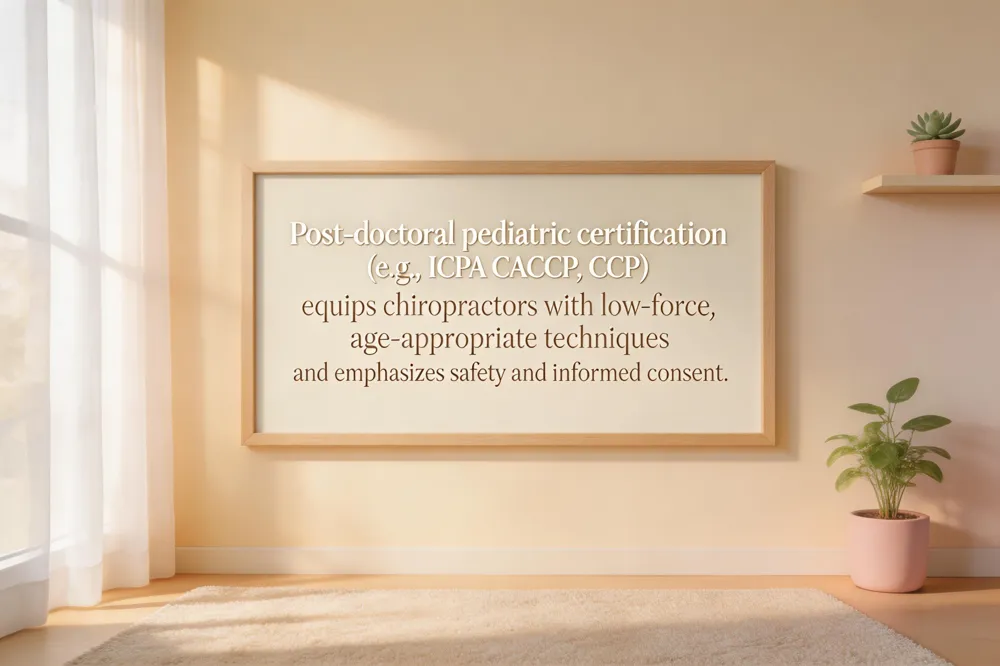 Pediatric chiropractic certification is a post‑doctoral credential that equips clinicians to safely assess and treat children from newborns through adolescents. The most widely recognized pathway is the International Chiropractors Association (ICPA) Pediatric Certification (CACCP), a 200‑hour curriculum that expands on the Webster Technique and Perinatal Certification. Core modules cover developmental assessment, age‑appropriate adjustment techniques, spinal‑flag screening, family‑centered care, and neuro‑developmental milestones. Graduates earn the designation “Pediatric Certified by the Academy Council on Chiropractic Pediatrics” and are listed in the ICPA referral directory. An alternative online option is the Certified Chiropractic Pediatrics (CCP) program, which provides 24 CE hours focused on neurodevelopment, safe adjustment protocols, and evidence‑based red‑flag identification. Both tracks require passing a written examination and ongoing continuing‑education to maintain the credential. While chiropractic care remains controversial due to limited high‑quality evidence for non‑musculoskeletal conditions and safety concerns around high‑velocity neck manipulations, the pediatric certification process emphasizes low‑force, evidence‑informed techniques and transparent informed‑consent practices.
Children in the Chair: Age‑Appropriate Care
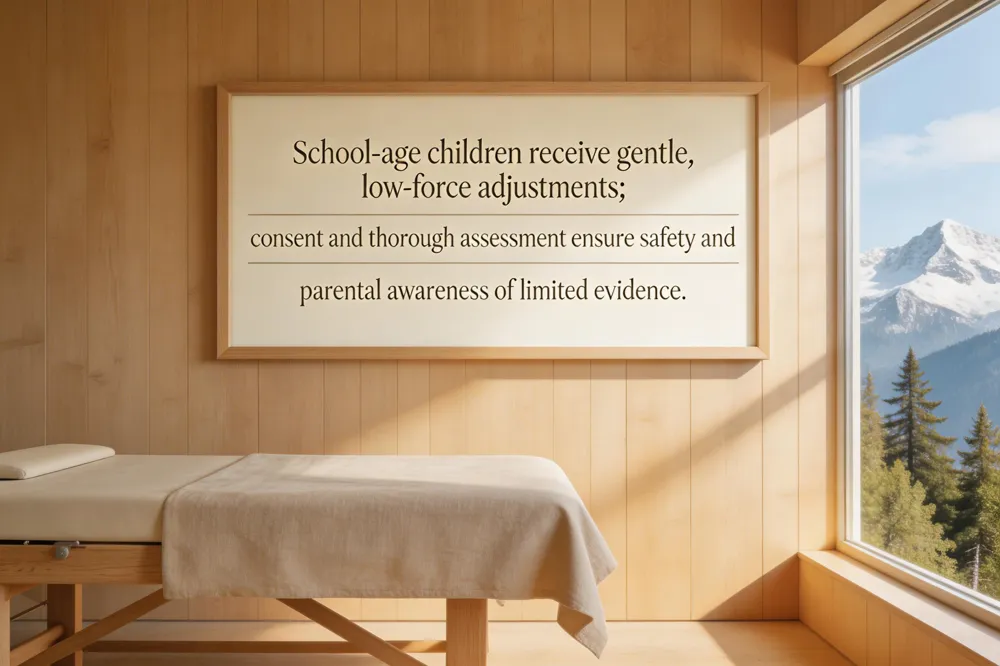 School‑age children are among the most frequent users of pediatric chiropractic services in the United States, with roughly 3‑4 % of children aged 7‑15 visiting a chiropractor each year. Research on safety consistently shows that low‑force, age‑appropriate adjustments—often delivered with fingertip pressure, instrument‑assisted techniques, or the Activator Method—are well tolerated by a 10‑year‑old and rarely produce serious adverse events. Before any treatment, the chiropractor conducts a thorough history, a focused musculoskeletal exam, and child appropriate reflex and postural assessments, then obtains informed parental consent. This consent process ensures families understand the limited evidence base, the goals of care, and the non‑invasive nature of the intervention.
Can a 10 year old go to a chiropractor?
Yes. A 10‑year‑old can safely receive chiropractic care. Pediatric chiropractors use gentle, low‑force adjustments matched to the child’s size and tissue tolerance, and they always obtain parental consent after a comprehensive assessment.
Pediatric chiropractic adjustment
A pediatric chiropractic adjustment is a soft, non‑invasive spinal treatment designed for children. Techniques such as low‑force mobilizations, cranial‑sacral therapy, and myofascial release help correct mild subluxations, support nervous‑system function, and may reduce common complaints like headaches, posture problems, and occasional ear or digestive issues. When performed by a qualified, board‑certified chiropractor, these adjustments are considered safe and can complement standard pediatric health care.
Tiny Hands, Tiny Adjustments: Infant Chiropractic
 Infant chiropractic care focuses on gentle, low‑force spinal contacts that aim to support the developing nervous system. Parents often report improvements in colic, sleep quality, and early motor milestones after a few sessions, attributing these changes to better neural communication and reduced muscular tension. The typical infant chiropractor conducts a brief visual and palpation assessment, then uses a soft‑touch instrument or fingertip pressure to correct tiny subluxations that may arise during birth or rapid growth. This approach is non‑invasive, drug‑free, and designed to be painless for the baby. However, the scientific evidence for these benefits remains limited; most data are anecdotal or derived from small case series, and larger, controlled trials are needed to isolate the active components of multimodal protocols. When considering care, families should seek a practitioner with verified pediatric training and a collaborative relationship with their pediatrician, recognizing that insurance coverage is often lacking and out‑of‑pocket costs may apply. Overall, infant chiropractic offers a plausible adjunct for musculoskeletal comfort, but its efficacy should be viewed within the context of modest research support.
Chiropractic Care and Academic Performance
 A recent case series of three children with dyslexia (ages 7‑15) who completed a 24‑session, 12‑week chiropractic and neuro‑functional protocol reported notable academic gains: reading levels advanced five to six grades, handwriting improved, and overall grades rose 30 % across subjects. The multimodal approach combined low‑force spinal adjustments with photobiomodulation, ocular‑motor training, vestibular‑balance work, and neuro‑timing exercises. Authors attribute these outcomes to enhanced neuroplasticity and more efficient neural signaling when subluxations are cleared, allowing the cerebellum, vestibular system, and ocular‑motor pathways to function optimally. Dyslexia, classified by the International Dyslexia Association as a neurological learning disability, may thus benefit from interventions that target brain‑body communication. Likewise, a study of chiropractic students showed that test anxiety—particularly the cognitive component of worry—negatively correlates with written‑exam scores (R² ≈ 6.7 %). Reducing physiological stress through improved posture, sleep, and autonomic balance could mitigate such anxiety and support concentration. In practice, gentle, age‑appropriate adjustments can improve spinal alignment, reduce musculoskeletal discomfort, and foster a calmer nervous system, creating a healthier platform for learning and test performance.
Real‑World Outcomes: School‑Aged Children Case Review
 A retrospective case review of 180 school‑aged children (5‑18 years) from nine Colorado schools examined the impact of a 12‑week on‑site chiropractic program that combined low‑force spinal adjustments with adjunctive therapies. Participants completed the Pediatric Quality of Life Inventory™ (PedsQL™) and the Strengths and Difficulties Questionnaire (SDQ before and after treatment. Statistically significant improvements were observed in the overall PedsQL™ score and specifically in the “health and activities” subscale (p < .001), indicating enhanced daily functioning and well‑being. The SDQ revealed a modest but significant reduction in hyperactivity symptoms (p = .013). These findings suggest that gentle, multimodal chiropractic care can positively influence health‑related quality of life and behavioral regulation in children, offering a non‑pharmacologic option to support academic engagement. Because the study is retrospective and lacks a control group, randomized trials are needed to confirm causation and define optimal protocols.
For families in Glenwood Springs seeking a pediatric chiropractor, Glenwood Chiropractic provides child‑focused, low‑force adjustments, infant massage, and cranial‑sacral therapy within a safe, developmental‑appropriate framework. The clinic’s licensed pediatric chiropractors aim to reduce musculoskeletal discomfort, improve sleep, and support nervous‑system health, helping children stay comfortable and focused during school days. Appointments can be booked online or by phone, and the practice is centrally located for easy access.
Practical Considerations: Finding Care and Costs
 When seeking a pediatric chiropractor, start by verifying that the practitioner holds a D.C. license, has completed post‑graduate pediatric training, and uses low‑force, age‑appropriate techniques—standards that reduce the already‑low risk of adverse events in children (≈0.2‑0.5% mild events). In the United States, roughly 3.4 % of children visit a chiropractor, with higher use among adolescents (5.1 %). To locate a qualified provider, consult professional directories (e.g., the American Chiropractic Association), ask your child’s pediatrician for referrals, and confirm the clinic’s experience with school‑age musculoskeletal issues such as backpack strain or postural complaints.
Pediatric Chiropractor salary
A pediatric chiropractor’s earnings are generally in line with those of other chiropractors in the United States. According to the U.S. Bureau of Labor Statistics, the median annual wage for chiropractors was about $79,000 in 2024, which translates to roughly $38 per hour. PayScale’s 2026 data for chiropractors with pediatric‑care skills shows an average base salary of $70,394, with a typical range from $57,000 to $80,000 and total compensation (including bonuses) up to $84,000. Salaries can vary by region, years of experience, and practice setting; in Colorado, especially in a community‑focused clinic like Glenwood Springs, earnings reflect these national benchmarks while meeting growing demand for non‑invasive child‑focused care.
Most insurance plans cover a portion of pediatric chiropractic visits, and many clinics offer sliding‑scale fees. Out‑of‑pocket costs typically range from $30‑$45 per follow‑up appointment, with initial consultations averaging $80‑$100; families can check with their insurer and the provider’s billing office for exact benefits.
Safety and Controversy: Navigating Concerns
 Pediatric chiropractic care is widely used, and systematic reviews consistently report a very low incidence of adverse events—typically mild, transient soreness or brief fatigue. Serious complications such as subarachnoid hemorrhage, stroke, or vertebral injury are exceedingly rare, with only isolated case reports in the pediatric literature. Because practitioners employ low‑force , age‑appropriate techniques—often fingertip pressure or instrument‑assisted adjustments—the risk profile is far lower than that of high‑velocity adult manipulations.
Why is chiropractic care controversial? Chiropractic care is controversial because its foundational theory of vertebral subluxation as a universal disease cause lacks solid scientific validation. While evidence supports modest benefits for musculoskeletal pain, claims of efficacy for non‑musculoskeletal conditions remain unproven, and occasional high‑velocity neck adjustments have raised safety concerns. Internal philosophical divisions and occasional anti‑vaccination stances further fuel criticism from mainstream medicine.
Is pediatric chiropractic safe? Yes, when performed by a licensed chiropractor with specific pediatric training. Adjustments for children are gentle, low‑force, and tailored to developmental anatomy, resulting in a negligible rate of serious adverse events. Ethical practice requires clear informed consent, transparent communication of the limited evidence base, and coordination with the child’s primary health providers to ensure safe, complementary care.
Integrating Chiropractic into School Health Programs
 Back‑health education and ergonomic tips are essential components of a school‑based chiropractic program. Children should be taught to keep backpacks under 10‑15 % of their body weight, use both shoulder straps, and place the pack close to the body. Classroom ergonomics—feet flat, knees at 90°, back straight, shoulders relaxed, and head balanced over the shoulders—help preserve the spine’s natural curves and reduce fatigue. Short movement breaks every 30‑45 minutes, the 20‑20‑20 screen‑time rule, and core‑strengthening activities further support spinal alignment and concentration.
Multidisciplinary collaboration enhances the effectiveness of these initiatives. Chiropractors can work with teachers to embed posture‑check routines into daily schedules and provide on‑site screenings that identify early musculoskeletal imbalances. Coordination with pediatricians ensures that any underlying medical conditions (e.g., vestibular dysfunction, sensory processing issues) are addressed concurrently, allowing a unified, patient‑centered plan that integrates chiropractic adjustments, physical therapy, and educational accommodations.
Future research should focus on large, controlled trials that isolate the impact of specific chiropractic modalities—such as low‑force adjustments, myofascial release, and neuro‑functional training—on academic outcomes, absenteeism, and musculoskeletal health. Longitudinal studies comparing schools with integrated chiropractic programs to standard health curricula will clarify cost‑effectiveness and guide policy recommendations for widespread adoption.
Putting It All Together
Evidence from case series, retrospective reviews, and small pilots suggests that gentle, low‑force chiropractic care can modestly improve reading fluency, attention, and school‑related pain in children, especially when combined with neuro‑functional therapies. Safety data across thousands of pediatric visits show serious adverse events are rare, with most reports limited to transient soreness or fatigue.
Practical steps for parents: (1) Choose a licensed chiropractor with pediatric training; (2) Schedule an initial assessment that includes postural, vestibular and and reflex testing; (3) Follow a multimodal protocol—adjustments, ergonomic education, and targeted exercises—while maintaining open communication with the child’s pediatrician; (4) Monitor progress with simple school‑performance metrics (grades, attendance, pain reports).
A robust research agenda is needed: larger randomized controlled trials, component‑analysis of multimodal protocols, and long‑term follow‑up to determine which interventions drive the observed academic gains.