Welcome to a New Era of Non‑Surgical Care
Degenerative disc disease (DDD) presents a frustrating mix of chronic pain, stiffness and occasional nerve‑related symptoms that can limit daily activities, especially for active residents of Glenwood Springs. Modern care recognizes that no single therapy can address the complex biomechanics, inflammation and lifestyle factors involved. A multimodal plan—combining NSAIDs or short‑term oral steroids for inflammation, targeted weight‑loss and ergonomic counseling, core‑strengthening physical therapy, spinal manipulation, flexion‑distraction, therapeutic massage, acupuncture and, when appropriate, non‑surgical spinal decompression—offers synergistic relief while preserving spinal motion. Glenwood Springs patients benefit from a collaborative team that tailors each modality to their goals, monitors progress with validated outcomes, and empowers them with education and home‑exercise programs to sustain long‑term health and improved quality of life daily.
Non‑Surgical Management and Safety
 Spinal decompression near me – Glenwood Springs Chiropractic uses a traction table to create disc pressure, retract bulging material and improve nutrient flow. Sessions are paired with adjustments.
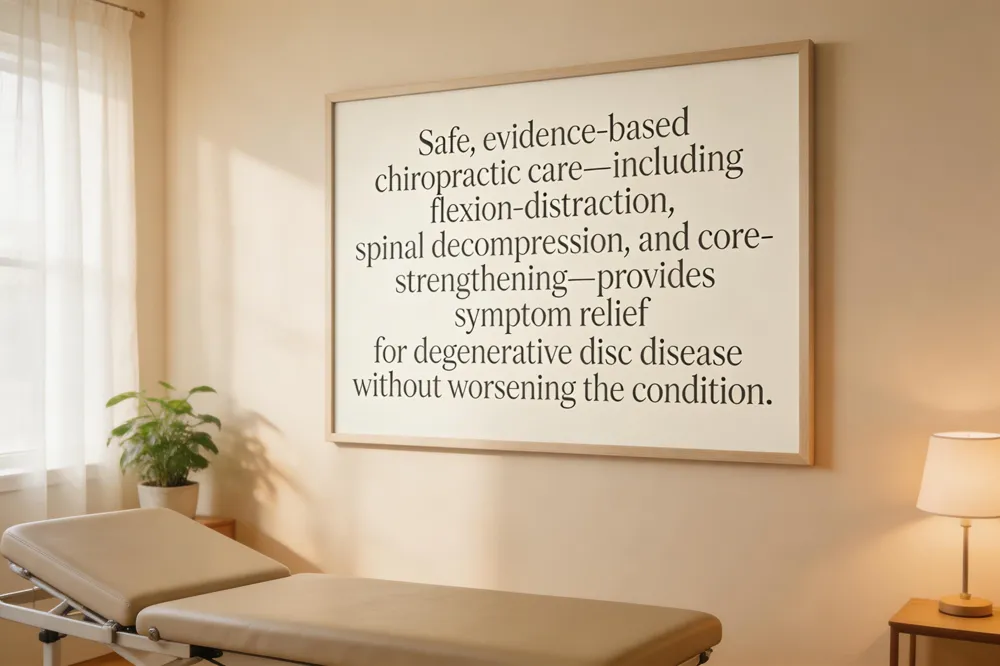
Can chiropractor make degenerative disc disease worse – Properly trained chiropractors use flexion‑distraction or techniques that restore joint mobility without stressing the disc; Practice minimizes risk.
Can chiropractor make herniated disc worse – Aggressive thrusts may enlarge an acute tear, so clinicians prefer mobilizations and soft‑tissue work; pain leads to referral, then therapy aids recovery.
Is chiropractic safe for degenerative disc disease – Yes, for DDD adjustments, flexion‑distraction, massage, core‑strengthening and TENS are safe; may need modified care.
Chiropractor for degenerative disc disease near me – Glenwood Springs Chiropractic, 123 Main St, Glenwood Springs, CO, offers decompression and rehabilitation.
Success rate of decompression – 71‑89 % of patients achieve pain reduction, 76 % show healing after 12‑20 sessions.
Best pain relief for DDD – A plan combining NSAIDs, prescription analgesics or muscle relaxants, adjustments, core‑strengthening therapy, weight‑management and lifestyle counseling provides effective relief.
Innovative Regenerative and Minimally Invasive Therapies
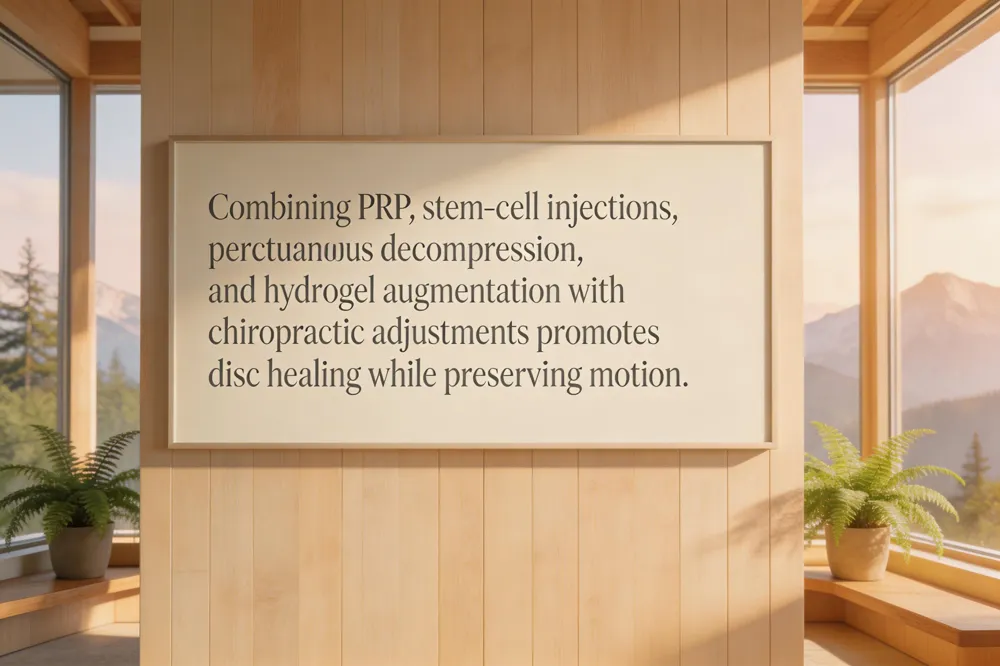 New treatments for degenerative disc disease aim to preserve motion and stimulate healing rather than fuse the spine. Regenerative options such as platelet‑rich plasma (PRP) and autologous stem‑cell injections reduce inflammation and promote disc repair. Minimally invasive procedures—including percutaneous spinal decompression, intradiscal electrothermal therapy, and hydrogel nucleus pulposus augmentation—provide cushioning without large incisions. At our Glenwood Springs clinic we combine these evidence‑based modalities with chiropractic adjustments for a non‑surgical plan.
Cutting‑edge care blends regenerative medicine, minimally invasive spine technologies, and rehabilitation. Spinal decompression and instrument‑assisted mobilization relieve pressure, while biologic injections target disc healing at the cellular level. Bioactive approaches such as hydrogel augmentation and radiofrequency treatments reduce inflammation and rebuild structure. Complementary therapeutic‑exercise programs enhance spinal support and prevent recurrence.
Yes—most herniated discs can be managed without surgery. Initial care includes rest, NSAIDs, and a physical‑therapy program, often supplemented with chiropractic adjustments and guidance. If pain persists, short‑term oral corticosteroids or epidural steroid injections may be added. These strategies provide symptom relief and improved mobility.
Lifestyle, Exercise, and Self‑Care Strategies
 Does walking help degenerative spine?
Yes. Regular low‑impact walking improves blood flow and nutrient delivery to intervertebral discs, supports core muscles, and reduces stiffness. Short daily walks (20‑30 min) can lessen inflammation and promote better posture when combined with breaks from prolonged sitting.
Degenerative disc disease physical therapy exercises
Gentle core‑stabilizing moves such as planks, bird‑dog, side‑plank, pelvic tilts, and slow lumbar flexion/extension strengthen deep stabilizers without overloading discs. Hamstring stretches, low‑impact cardio (walking, stationary bike), and occasional lumbar decompression maintain flexibility and relieve pressure.
How to naturally repair spinal discs?
Stay hydrated, eat an anti‑inflammatory diet rich in omega‑3s and lean protein, and engage in low‑impact aerobic activity (walking, swimming, cycling). Use ergonomic supports, maintain healthy weight, and consider non‑invasive therapies like spinal decompression to encourage disc re‑hydration.
What to avoid doing with degenerative disc disease?
Avoid prolonged static positions, heavy lifting with a rounded back, high‑impact activities (running, jumping), smoking, excessive alcohol, and a diet high in inflammatory foods. Do not rely solely on pain medication without professional guidance.
Physical therapy or chiropractor for degenerative disc disease?
Physical therapy delivers personalized exercise programs; chiropractic care provides spinal adjustments to correct misalignments and reduce nerve irritation. A combined, multimodal approach often yields the best pain relief and functional stability.
How I cured my degenerative disc disease
I began with gentle chiropractic adjustments paired with a customized core‑strengthening program, adopted an anti‑inflammatory diet, stayed hydrated, and incorporated regular low‑impact cardio and ergonomic habits. Within months my chronic pain faded and mobility returned.
Herniated Disc and Sciatica: Conservative Care Pathways
 Herniated disc repair surgery
Discectomy or microdiscectomy removes the disc fragment compressing a nerve, usually after 6‑12 weeks of failed conservative care. The procedure is minimally invasive, but risks include infection, bleeding, nerve injury, or dural leak. Most patients resume light activities in 2‑3 weeks and full duties in 4‑6 weeks.
Herniated disc repair surgery
Discectomy or microdiscectomy removes the disc fragment compressing a nerve, usually after 6‑12 weeks of failed conservative care. The procedure is minimally invasive, but risks include infection, bleeding, nerve injury, or dural leak. Most patients resume light activities in 2‑3 weeks and full duties in 4‑6 weeks.
Herniated disc surgery recovery time Recovery spans 6‑12 weeks. Pain often lessens within the first few weeks; sedentary work may resume after 2‑4 weeks, while physically demanding jobs may need up to 12 weeks. Early mobilization, avoiding heavy lifting and a guided PT program accelerate healing.
Herniated disc exercises Gentle core‑strengthening (pelvic tilts, bird‑dog), lumbar extensions, and low‑impact activities (walking, swimming) reduce disc pressure. Supine/prone stretches such as cobra, hamstring, and cat‑cow improve flexibility without aggravating symptoms.
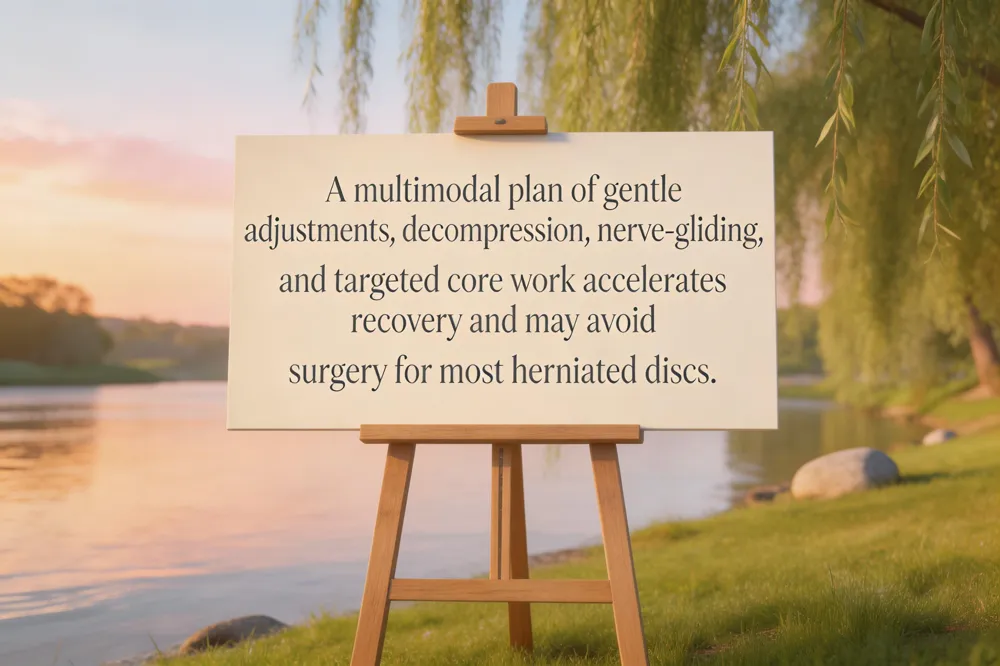
Treatment for herniated disc and sciatica A multimodal chiropractic plan starts with gentle spinal adjustments and spinal decompression, supplemented by core‑strengthening, nerve‑gliding, TENS, massage, and anti‑inflammatory nutrition.
How to heal a herniated disc quickly Early chiropractic adjustments, anti‑inflammatory‑, posture education, and targeted stretches shorten recovery. Short‑term NSAIDs or corticosteroid injections may be used for severe pain.
Herniated disc treatment timeline 1‑2 days–2 weeks: acute pain, ice/heat, meds. 2‑6 weeks: pain declines, start core work. 6‑12 weeks: symptoms stabilize; maintain PT and lifestyle habits thereafter.
Advanced Clinical Insights and Prognosis
 Treatment for stage 4 degenerative disc disease – A multimodal plan blends gentle instrument‑assisted spinal decompression, targeted chiropractic adjustments, and customized core‑strengthening exercises. Regenerative options such as PRP may be added, together with weight‑management and ergonomic counseling for lasting pain reduction.
Can L4 and L5 be cured permanently? – While “cure” is rare, many patients achieve long‑term symptom‑free periods through comprehensive chiropractic care, spinal adjustments, therapeutic exercise, and lifestyle modification. Structural damage may still require surgery, but post‑operative rehab can preserve gains.
Life expectancy with degenerative disc disease – DDD does not shorten lifespan; it mainly affects quality of life. Early non‑invasive treatment, regular exercise, and chiropractic care help maintain functional independence and prevent complications that could indirectly impact longevity.
Can degenerative disc disease kill you? – DDD itself is not lethal. Severe complications such as cauda equina syndrome can be life‑threatening if untreated, but timely conservative management prevents these outcomes.
Four stages of DDD – Dysfunction (early dehydration), Dehydration (height loss, fissures), Stabilization (bulging, persistent pain), Collapsing (advanced loss, osteophytes). Recognizing stages guides targeted chiropractic interventions.
What does a chiropractor do for DDD? – Conducts a detailed assessment, performs specific adjustments (including flexion‑distraction and instrument‑assisted spinal decompression), applies adjunctive modalities (massage, TENS, spinal decompression), and prescribes personalized exercise and ergonomic programs to reduce pain, restore motion, and slow progression.
Your Path Forward Without Surgery
Non‑surgical management of degenerative disc disease includes NSAIDs, short‑term muscle relaxers or oral corticosteroids, weight‑loss programs, core‑strengthening physical therapy, spinal decompression, chiropractic adjustments, flexion‑distraction, therapeutic massage, acupuncture, and emerging regenerative injections such as PRP. Our clinic tailors each element to your anatomy, pain pattern, and lifestyle, ensuring a collaborative, evidence‑based plan. Take the first step now—schedule a evaluation and begin a personalized, surgery‑free pathway to lasting relief and restored mobility and improved quality of life for years starting today now.