Introduction
Pediatric chiropractic care is a specialized, drug‑free approach that uses gentle, low‑force spinal adjustments to address subluxations affecting a child's nervous system and musculoskeletal development. In Colorado, especially in growing communities such as Glenwood Springs, families are increasingly seeking these services as part of a holistic health routine, reflecting national trends where roughly 3‑4% of U.S. children receive chiropractic care each year. This article aims to clarify what pediatric chiropractic care entails, summarize the current evidence regarding its safety and modest benefits for issues like sleep, immune function, and musculoskeletal comfort, and explain why it has become a popular complementary option for parents who prefer non‑invasive, preventive health strategies for their children.
What Ages Can Benefit From Pediatric Chiropractic?
 What is the youngest age appropriate for a chiropractor?
There is no official minimum age for chiropractic care—pediatric chiropractors are trained to work with newborns and infants using very gentle, age‑appropriate techniques. Many clinics will begin treatment as soon as a baby shows signs of colic, ear infections, or other musculoskeletal concerns. While a small percentage of practitioners prefer to wait until a child is two years old, pediatric specialists routinely see patients from birth onward. The key is that each adjustment is customized to the child’s size, development stage, and specific health goals. Therefore, the youngest age appropriate for a chiropractor can be right after birth, provided the practitioner has pediatric expertise.
What is the youngest age appropriate for a chiropractor?
There is no official minimum age for chiropractic care—pediatric chiropractors are trained to work with newborns and infants using very gentle, age‑appropriate techniques. Many clinics will begin treatment as soon as a baby shows signs of colic, ear infections, or other musculoskeletal concerns. While a small percentage of practitioners prefer to wait until a child is two years old, pediatric specialists routinely see patients from birth onward. The key is that each adjustment is customized to the child’s size, development stage, and specific health goals. Therefore, the youngest age appropriate for a chiropractor can be right after birth, provided the practitioner has pediatric expertise.
Safety, Evidence, and the AAP Position
 Systematic reviews of pediatric chiropractic show low‑quality evidence; modest benefit for musculoskeletal pain (e.g., low‑back, nurse‑maid’s elbow) but not for asthma, colic, ADHD. Adverse‑event rates are very low: large surveys report 0.5‑1 % mild events (transient soreness, fussiness) and serious complications are rare, with no deaths documented in decades. The American Academy of Pediatrics (AAP) does not list chiropractic manipulation as a routine evidence‑based treatment. AAP policy advises clinicians to discuss the limited evidence, obtain informed consent, and refer only when a licensed chiropractor uses gentle, age‑appropriate techniques and conventional care is insufficient. Parents report perceived improvements in sleep, immune function, and behavior, yet the scientific consensus stresses cautious use and further research. Overall, when performed by trained pediatric chiropractors, care is non‑invasive, drug‑free and has a favorable safety profile, but clinicians should base referrals on a clear risk‑benefit assessment.
Common Childhood Conditions Treated
 Pediatric chiropractors frequently address torticollis, infant colic and gas, and ear or sinus infections. Gentle, low‑force adjustments aim to correct subluxations that may arise from birth trauma, falls, or prolonged device use, thereby improving nervous‑system signaling and supporting growth.
Can a chiropractor fix torticollis? Yes—many infants with torticollis improve with chiropractic care that combines light cervical adjustments, neck massage, and targeted stretching. The non‑invasive approach reduces muscle tension and restores range of motion, often complementing physical therapy.
Baby chiropractic adjustment for gas Light spinal adjustments can relieve trapped gas by enhancing nerve communication to the digestive tract. After a brief newborn screen, the chiropractor applies fingertip‑contact techniques that are safe for infants, with clinical reports noting calmer babies and reduced crying within days.
Why would a child need to see a chiropractor? Small spinal misalignments from birth stress, backpacks, or sports can interfere with sleep, digestion, and immune function. Chiropractic care offers a drug‑free option to alleviate colic, ear infections, headaches, and growing‑pain discomfort while promoting optimal development.
Key Benefits for Growth, Sleep, Immunity, and Behavior
 Pediatric chiropractic care uses gentle, low‑force adjustments that target subluxations—partial misalignments that can irritate nerves and disrupt the nervous system. By restoring proper spinal alignment, the nervous system functions more efficiently, which research suggests can boost immune response and reduce the frequency of ear infections, colds, and digestive complaints. Improved nerve communication also helps regulate sleep cycles, leading to deeper, more restorative sleep and fewer nighttime awakenings. Parents often report better mood, increased focus, and reduced hyper‑activity in children whose spinal stress is relieved, supporting academic performance and behavioral regulation.
What are the benefits of pediatric chiropractic care?
It relieves discomfort from misalignments, enhances nervous‑system function, improves sleep, strengthens immunity, and may lessen common issues such as colic, constipation, and ADHD‑related symptoms. Regular visits promote healthy posture, coordination, and injury prevention.
Is gentle chiropractic effective?
Gentle methods provide pain relief and mobility gains without the discomfort of high‑velocity thrusts, making them suitable for developing spines.
Pediatric chiropractor reddit
Online forums show mixed views: many parents share positive outcomes, while others remain skeptical, highlighting the need for informed, evidence‑based decisions.
Finding a Qualified Pediatric Chiropractor Near You
 When seeking a pediatric chiropractor, verify that the practitioner holds a Doctor of Chiropractic (DC) license and has completed additional pediatric coursework or certification, which ensures gentle, low‑force techniques appropriate for developing spines. Use online tools such as Google Maps, the state licensing board, or professional directories; search for terms like "licensed pediatric chiropractor Glenwood Springs Colorado" to locate nearby providers. Look for clinics that advertise comprehensive intake exams, age‑specific adjustments, and a family‑friendly environment.
Pediatric chiropractor near me – In Glenwood Springs, CO, search "pediatric chiropractor Glenwood Springs CO" or use Google Maps. Choose a licensed DC with pediatric training who offers non‑invasive, gentle adjustments for children of all ages. Confirm the office’s intake process, insurance acceptance, and any complimentary pediatric consultation.
Infant chiropractor near me – Glenwood Chiropractic provides soft, neurologically‑based adjustments for newborns, addressing colic, sleep issues, and birth‑related spinal strains. The downtown clinic offers a calming setting, personalized care plans, and easy scheduling. Call (970) 555‑1234 or visit the website to book an appointment.
Integrating Chiropractic Care With Conventional Pediatric Medicine
 Collaboration with pediatricians is essential. Chiropractors who treat children should communicate diagnosis, treatment plans, and progress notes to the child’s primary physician, ensuring that chiropractic care complements, not replaces, standard medical management. Informed consent must be obtained from parents or guardians, explaining the limited yet emerging evidence, the gentle low‑force techniques used, potential minor side‑effects such as transient soreness, and the rare possibility of serious injury. Co‑management strategies include shared‑care protocols, joint follow‑up appointments, and clear referral pathways when a child’s condition exceeds the scope of chiropractic practice.
Pediatric chiropractic research – The evidence base is modest but growing; small trials show modest improvements for infant colic, asthma, and nocturnal enuresis, while systematic reviews emphasize safety, rare serious adverse events, and the need for larger, high‑quality studies.
Chiropractic care in children: a review of evidence and safety – Adjustments may provide modest relief for musculoskeletal pain; mild adverse events occur in roughly 0.5‑1 % of visits and serious injuries are virtually absent. Transparent discussion of these findings is crucial for family‑centered, safe care.
Real‑World Experiences and Practical Takeaways
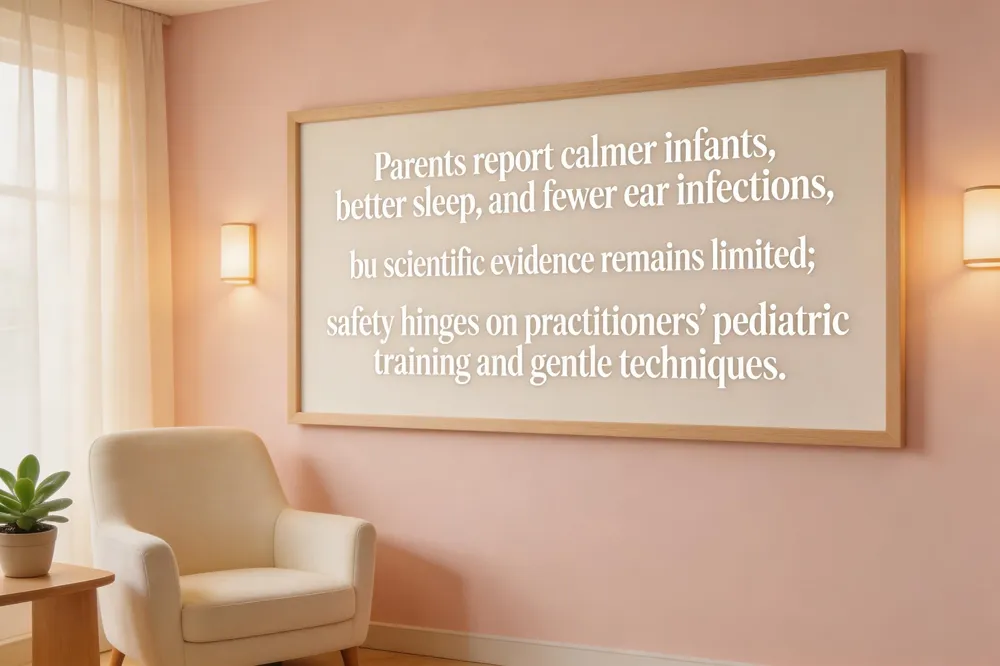 Parents who choose baby chiropractic often report gentle relief from colic, smoother sleep patterns, and fewer ear‑infection episodes, attributing these changes to improved nervous‑system function and spinal alignment. Many describe a calmer, more energetic infant who meets developmental milestones with ease. The upside, however, is tempered by limited high‑quality scientific evidence; most studies are small, and the long‑term benefits remain uncertain. Safety hinges on a chiropractor’s pediatric training and the use of very low‑force, infant‑specific techniques, making practitioner selection critical. Some clinicians argue that routine spinal manipulation for healthy babies may be unnecessary and advise coordination with a pediatrician. Common concerns—such as the fear of pain, radiation exposure from imaging, or potential adverse events—are typically addressed by explaining that adjustments are painless, non‑invasive, and that radiographs are discouraged in infants. Overall, parents appreciate the drug‑free, non‑surgical option but are urged to weigh modest evidence against individual child needs and to maintain open communication with their child’s primary health providers.
Conclusion
Pediatric chiropractic care offers a gentle, drug‑free approach that can support children’s musculoskeletal growth, immune function, sleep quality, digestion, and behavioral regulation. While systematic reviews note that high‑quality evidence is limited, multiple observational studies and clinical observations report modest improvements in lower‑back pain, ear infections, colic, and sleep disturbances, and serious adverse events are rare when adjustments are performed by a licensed chiropractor with specialized pediatric training. Parents seeking an adjunct to conventional pediatric care should prioritize practitioners who hold additional pediatric certification, use low‑force age‑appropriate techniques, and communicate clearly about the limited evidence base and potential risks. For families in the Glenwood Springs area, Glenwood Chiropractic provides experienced pediatric chiropractors who can conduct comprehensive assessments and gentle adjustments tailored to each child’s developmental stage. To learn more or schedule a consult, please contact Glenwood Chiropractic at (970) 456‑4562.