Why Non‑Surgical Care Matters
Degenerative disc disease (DDD) is an age‑related loss of hydration and elasticity in intervertebral discs, often accelerated by genetics, smoking, obesity, repetitive spinal loading, and prior trauma. Patients typically experience chronic back or neck pain, stiffness, reduced range of motion, and occasionally radiating numbness or tingling when nerve roots are irritated. DDD progresses through four stages—from early thinning and dehydration to severe disc collapse with possible vertebral fusion—each stage increasing mechanical stress and symptom burden. Initiating conservative, patient‑centered care early—through chiropractic adjustments, targeted physical‑therapy core strengthening, weight‑management, ergonomic education, and complementary modalities such as acupuncture or spinal decompression—can reduce inflammation, improve spinal alignment, and slow further degeneration, often obviating the need for invasive surgery.
Diagnosing DDD and Determining Safe Chiropractic Care
 A chiropractor’s role in the diagnosis of degenerative disc disease (DDD) begins with a detailed medical history, a thorough musculoskeletal and neurological examination, and, when indicated, imaging such as X‑rays, MRI, or CT scans. These tools allow the clinician to identify disc height loss, hydration changes, and any nerve root irritation, differentiating Early‑stage DDD from more advanced pathology.
The comprehensive exam establishes whether the spine is stable enough for manual therapy. Early‑stage DDD—characterized by mild disc thinning without severe herniation or neurologic deficit—can be safely managed with gentle, non‑thrusting techniques (e.g., flexion‑distraction, instrument‑assisted adjustments) and spinal decompression therapy that creates negative intradiscal pressure to promote re‑hydration. For moderate disease, lighter Chiropractic adjustments, targeted core‑strengthening exercises, and ergonomic counseling are employed to avoid excess force on the disc.
Safety is paramount. Contra‑indications include severe osteoporosis, acute fractures, advanced disc herniation with significant nerve compression, or progressive neurological deficits such as incontinence or profound weakness. In such cases, the chiropractor refers the patient for medical or surgical evaluation.
Can a chiropractor diagnose degenerative disc disease? Yes—through the exam and imaging described above, a chiropractor can confirm DDD, identify the specific disc levels involved, and design a personalized, non‑invasive treatment plan.
Is chiropractic safe for degenerative disc disease? When performed by a qualified clinician who tailors techniques to disease stage, chiropractic care is low‑risk. Gentle Chiropractic adjustments and spinal decompression therapy are appropriate in early stages; more advanced cases receive lighter manual therapy, therapeutic exercise, and lifestyle guidance.
Things to avoid with degenerative disc disease: high‑impact activities (running, jumping, heavy lifting), prolonged slouched sitting without lumbar support, repetitive twisting or bending, and smoking—each of which increases disc stress and accelerates degeneration. By adhering to these guidelines, patients can achieve pain relief and functional improvement while minimizing the need for invasive surgery.
Core Non‑Surgical Treatments for Back Pain
 A multimodal, patient‑centered program is the cornerstone of effective non‑surgical back‑pain care.
Physical therapy and core strengthening – Evidence‑based PT protocols focus on stabilizing the lumbar and thoracic spine through targeted core‑muscle activation, flexibility drills, and functional movement training. Strengthening the deep abdominal, back, and hip‑flexor groups reduces axial load on intervertebral discs and improves posture, which in turn lessens nociceptive input.
Medication management – Short‑term use of over‑the‑counter NSAIDs (ibuprofen, naproxen) diminishes inflammation around damaged disc tissue. Muscle relaxants (1‑2 weeks) address painful spasms, while a brief 7‑10‑day oral corticosteroid course can further curb swelling when oral inflammation is prominent. Opioids are reserved for severe, breakthrough pain and limited to a maximum one‑week trial.
Weight loss and ergonomic adjustments – Even modest weight reduction lowers compressive forces on lumbar discs, slowing degenerative progression. Ergonomic counseling—proper workstation setup, safe lifting mechanics, and supportive footwear—helps maintain neutral spinal alignment throughout daily activities.
Complementary therapies – Acupuncture, therapeutic massage, and heat/ice modalities complement the core program by enhancing local blood flow, releasing endorphins, and moderating muscular tension. Massage techniques such as trigger‑point release and myofascial work are safe for disc‑degeneration when performed by a qualified therapist.
What is the best non‑surgical treatment for back pain? The most effective approach is a personalized, multimodal regimen that blends gentle spinal adjustments, core‑strengthening exercises, targeted medication, and complementary modalities such as massage or acupuncture. Ongoing education on posture and self‑care sustains relief and reduces reliance on drugs.
Can I get a massage with degenerative disc disease? Yes. Therapeutic massage can be safely incorporated, focusing on surrounding musculature with techniques‑ as deep‑tissue work and trigger‑point therapy. The session should be tailored to avoid excessive pressure on the disc itself and coordinated with the overall treatment plan.
Cutting‑Edge and Regenerative Options
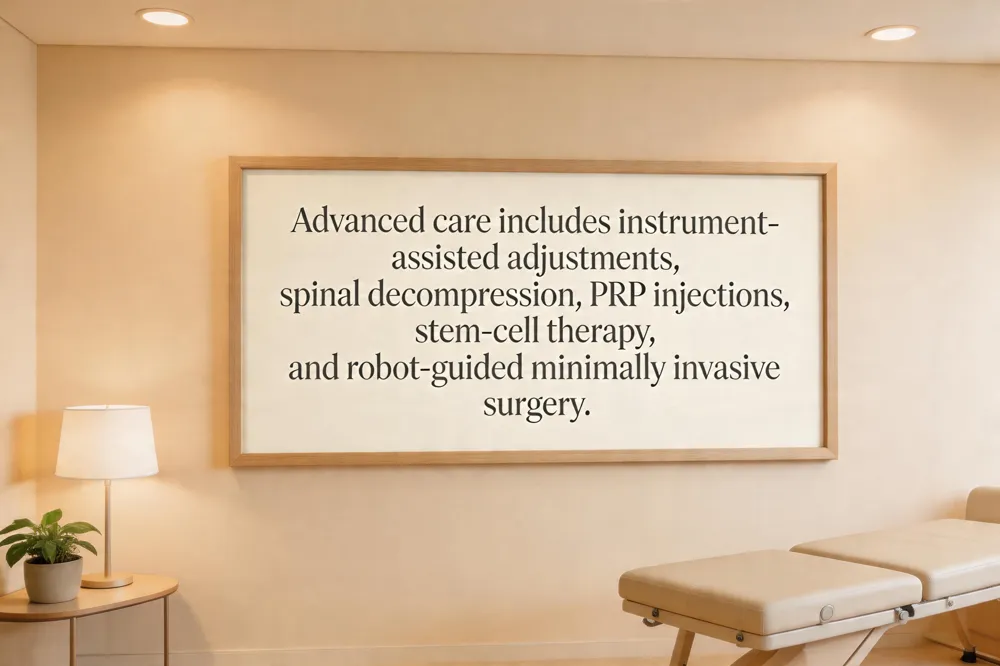 Non‑surgical care for degenerative disc disease (DDD) now integrates advanced biomechanics, biologics, and minimally invasive technologies.
Cutting‑edge treatment for degenerative disc disease – At our Glenwood Springs clinic we start with instrument‑assisted chiropractic adjustments to restore joint mechanics while minimizing tissue strain. Spinal decompression therapy gently stretches the disc space, creating negative pressure that draws nutrients back into the damaged disc and eases nerve irritation. For biologic support we offer platelet‑rich plasma (PRP) injections which deliver concentrated growth factors to promote tissue healing and improve disc health. When surgery becomes necessary, our orthopedic spine surgeon can perform robot‑guided, minimally invasive procedures (e.g., Mazor X Stealth™) that provide precise corrections through small incisions, shortening recovery times.
New treatments for degenerative disc disease – Regenerative approaches now include stem‑cell injections and engineered disc‑regeneration therapies that aim to rebuild healthy tissue rather than merely mask pain. Laser disc decompression and robot‑guided spine surgery offer smaller incisions and reduced need for full‑scale fusion. Non‑surgical decompression therapy, combined with personalized chiropractic adjustments and therapeutic exercise programs, creates a comprehensive, conservative care plan tailored to each patient’s condition and lifestyle goals.
Degenerative disc disease treatment with stem‑cell therapy – Autologous mesenchymal stem cells harvested from the patient’s bone‑marrow can be injected directly into the affected cervical or lumbar disc. This regenerative option reduces inflammation, promotes new cellular growth, and may improve flexibility and pain without invasive surgery. Candidates are screened for severe spinal stenosis, spondylolisthesis, scoliosis, or kyphosis, which are not suitable for stem‑cell injections. A thorough exam at our Glenwood Springs office determines eligibility and, when appropriate, coordinates referrals with specialized regenerative‑medicine centers.
Preventing Progression & Long‑Term Outlook
 Maintaining disc health requires a multifaceted, evidence‑based approach. Lifestyle modifications such as weight management, ergonomic workstations, and regular low‑impact aerobic activity (walking, swimming, cycling) reduce axial load and improve nutrient diffusion to the intervertebral discs. Core‑strengthening and core work—back, on, upper thighs, buttocks—enhances spinal stability, lessening mechanical stress on degenerated discs. Smoking cessation is critical because nicotine impairs disc nutrition and accelerates dehydration; a diet rich in omega‑3 fatty acids, antioxidants, and adequate protein supports matrix synthesis and reduces systemic inflammation.
Chiropractic maintenance care plays a central role: periodic spinal adjustments restore alignment, relieve facet joint irritation, and promote normal disc mechanics, while adjunct modalities (flexion‑distraction, therapeutic massage, TENS) address muscle tension and improve circulation.
How to stop degenerative disc disease from progressing – Combine weight control, low‑impact cardio, core strengthening, posture education, Smoking cessation, and regular chiropractic adjustments to preserve disc height, reduce inflammation, and maintain functional mobility.
Life expectancy with degenerative disc disease – DDD is an age‑related wear‑and‑tear condition that does not shorten lifespan. With appropriate non‑invasive management, most patients enjoy a normal life expectancy, focusing on quality of life and functional independence rather than mortality risk.
Addressing Concerns About Chiropractic Risks and Surgery
 Can a chiropractor make degenerative disc disease worse?
Improper or overly aggressive manipulation could theoretically aggravate a degenerated disc, but reputable chiropractors use evidence‑based protocols that mitigate this risk. High‑velocity thrusts are avoided on fragile segments; instead, gentle manual techniques, flexion‑distraction, spinal decompression therapy, and targeted therapeutic exercises are employed. These methods reduce abnormal facet loading, improve nutrient flow, and support surrounding musculature without imposing excessive force. When the practitioner evaluates the stage of DDD, imaging findings, and neurological status, the likelihood of worsening the condition is minimal.
Can a chiropractor make degenerative disc disease worse?
Improper or overly aggressive manipulation could theoretically aggravate a degenerated disc, but reputable chiropractors use evidence‑based protocols that mitigate this risk. High‑velocity thrusts are avoided on fragile segments; instead, gentle manual techniques, flexion‑distraction, spinal decompression therapy, and targeted therapeutic exercises are employed. These methods reduce abnormal facet loading, improve nutrient flow, and support surrounding musculature without imposing excessive force. When the practitioner evaluates the stage of DDD, imaging findings, and neurological status, the likelihood of worsening the condition is minimal.
Is surgery the best option for DDD? Surgery is not first‑line for most DDD patients. Conservative care—chiropractic adjustments, core‑strengthening physical therapy, acupuncture, weight‑loss counseling, and orthobiologic injections (PRP, stem cells)—often yields substantial pain relief and functional improvement while avoiding anesthesia, infection, and long recovery. Surgery is reserved for cases with severe nerve compression, progressive neurological deficit, or failure of structured non‑surgical care after 6‑12 weeks. Even when surgery becomes necessary, minimally invasive options (e.g., robotic‑assisted fusion or disc replacement) reduce tissue trauma. A multidisciplinary, patient‑centered approach ensures that non‑invasive therapies are maximized before considering operative intervention.
Your Path to a Pain‑Free Spine Starts With Non‑Surgical Care
A thorough evaluation—history, physical exam, and imaging—identifies the stage of degenerative disc disease and guides a personalized plan. Evidence‑based options include targeted physical therapy, core‑strengthening and posture training, chiropractic adjustments (thrusting, flexion‑distraction, instrument‑assisted), spinal decompression, acupuncture, and orthobiologic injections such as PRP or VIA Disc. Combining these modalities addresses inflammation, restores motion, and supports disc health, while lifestyle changes—weight management, ergonomic habits, low‑impact exercise, smoking cessation—enhance outcomes. Glenwood Springs residents are encouraged to schedule a multidisciplinary assessment, stay active, and stay informed about non‑surgical pathways to lasting relief.