Understanding Chronic Shoulder Pain and the Dual‑Modality Approach
Chronic shoulder pain—pain persisting longer than three months—affects up to 30 % of adults and has a lifetime prevalence of roughly 70 %, often arising from rotator‑cuff tendinopathy, adhesive capsulitis, bursitis, or arthritis. In Glenwood Springs, the chiropractic philosophy embraces non‑invasive musculoskeletal care that blends spinal and peripheral adjustments, targeted therapeutic exercise, and adjunctive modalities such as acupuncture. Integrating acupuncture with a structured rehabilitation program yields superior outcomes to either modality alone: meta‑analyses of 35 RCTs show a mean VAS pain reduction of 1.3 cm and a 6.8‑point gain on the Fugl‑Meyer upper‑limb assessment when acupuncture augments rehab. The analgesic effect of acupuncture—mediated by endogenous opioids and neurotransmitter modulation—relaxes muscles, improves blood flow, and reduces inflammation, creating a therapeutic window that allows patients to engage more fully and safely in strengthening, stretching, and scapular‑stabilization exercises. This dual‑modality strategy aligns with evidence‑based, patient‑centered care, accelerating pain relief, restoring function, and minimizing reliance on pharmaceuticals or invasive procedures.
Why Combine Acupuncture with Rehabilitation?
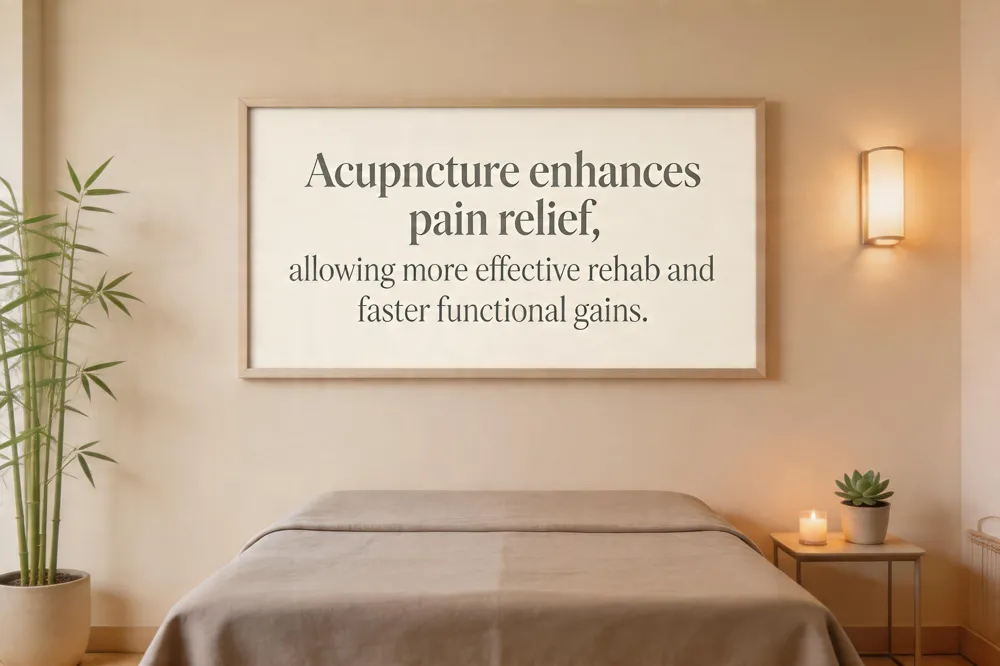 Recent meta‑analysis of 35 RCTs (2,554 patients) shows that adding acupuncture to rehabilitation cuts VAS shoulder pain by 1.32 points and boosts Fugl‑Meyer upper‑limb scores by 6.8, while ADL scores rise 11 points. Mechanistically, needle stimulation activates endogenous opioids, modulates GABA, serotonin, glutamate and norepinephrine, and increases local blood flow, breaking the pain‑spasm cycle. This analgesic window lets patients perform strengthening, stretching and scapular stabilization exercises more fully, producing larger gains in range of motion (e.g., +13° anteflexion, +17° abduction) and functional recovery. This combined plan enhances overall shoulder function significantly.
What is the best acupuncture point for shoulder pain?
LI 15 (Jianyu) is most effective; located in the depression below the acromion on the deltoid, it reduces inflammation and improves circulation.
Acupuncture points for shoulder pain
Key points: LI‑15, SJ‑14, GB‑21, plus supportive LI‑10, GB‑20, SI‑3.
Can I do physical therapy and acupuncture at the same time?
Yes—acupuncture eases pain and relaxes muscles allowing more effective PT sessions; coordinated scheduling maximizes recovery.
Home Care Strategies for Shoulder Pain
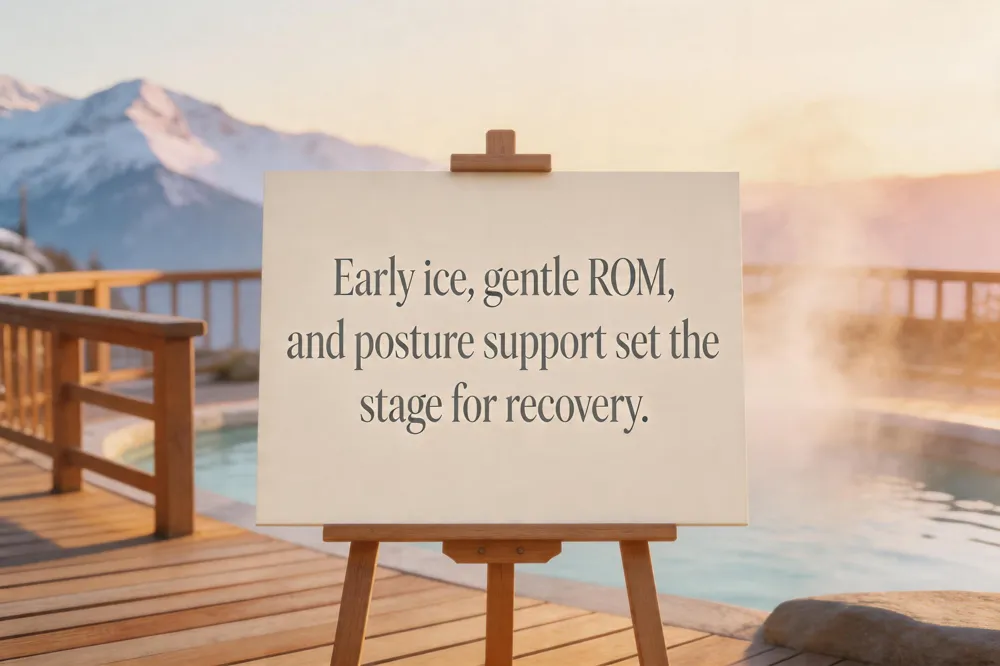 When shoulder pain treatment at ensure first step is to protect the joint with short‑term rest and apply ice for 15‑20 minutes several times a day to reduce inflammation. After the first 24‑48 hours you can alternate ice with a warm pack (always with a barrier) and use over‑the‑counter NSAIDs or an analgesic gel such as Voltaren for additional pain relief. Gentle, pain‑free range‑of‑motion stretches—like the pendulum swing or crossover‑arm stretch—performed 2‑3 times daily help maintain flexibility and prevent stiffness. Light self‑massage or a brief foam‑roller session can ease muscle spasms, while maintaining good posture throughout the day supports the rotator cuff and surrounding tissues. If pain, swelling, or limited motion persists beyond 48 hours, or if the discomfort worsens, schedule an appointment with our Glenwood Springs chiropractors for a personalized, non‑invasive treatment plan.
Addressing Left‑Side Shoulder Discomfort
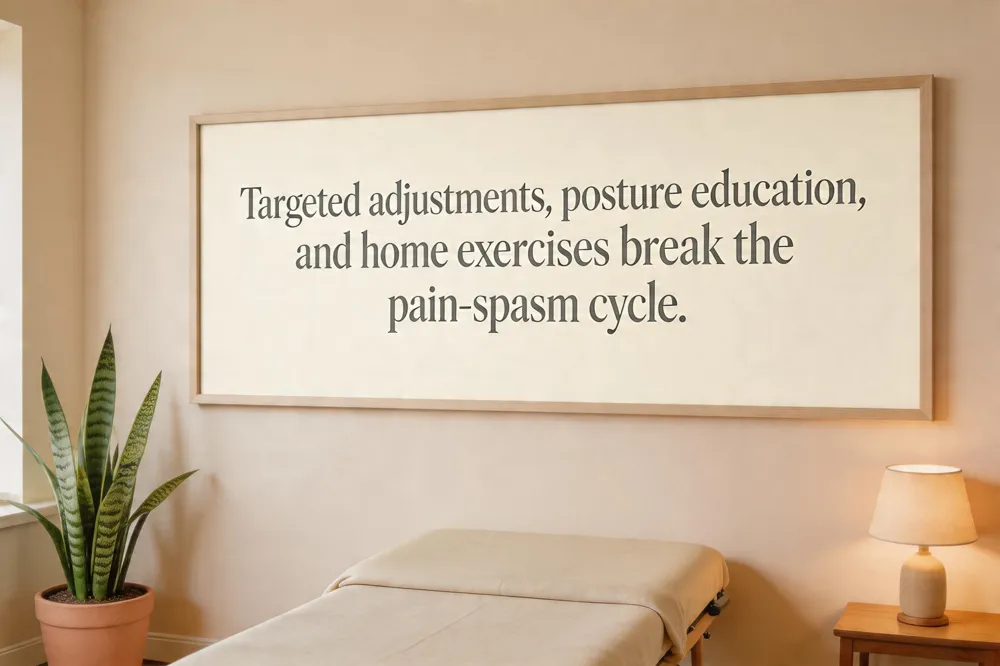 Left‑shoulder pain often stems from rotator‑cuff irritation, bursitis, impingement, or postural strain. A thorough chiropractic assessment can identify joint misalignments, muscle imbalances, and nerve‑root irritation that amplify pain. Gentle spinal and peripheral adjustments restore proper glenohumeral mechanics, while soft‑tissue techniques reduce muscular tension and improve local blood flow.
Posture correction is critical: excessive forward‑head posture and rounded shoulders increase load on the acromioclavicular and glenohumeral joints. Our Glenwood Springs team teaches ergonomic habits—adjusting workstation height, using supportive pillows while sleeping, and maintaining neutral scapular positioning during daily activities.
Targeted home exercises complement the in‑clinic work. A daily routine of pendulum swings, wall slides, scapular squeezes, and resistance‑band external rotations (2–3 sets of 10‑15 reps) promotes range of motion, strengthens rotator‑cuff stabilizers, and breaks the pain‑spasm cycle.
Combining these chiropractic adjustments, posture education, and structured exercises provides a safe, drug‑free pathway to faster pain relief and lasting shoulder health.
Resources for Exercise Guidance
 AAOS Shoulder exercises spanish
The American Academy of Orthopaedic Surgeons (AAOS) offers a complete set of shoulder‑exercise instructions in Spanish on its OrthoInfo site. By selecting the "español" filter you can view illustrated guides covering pendulum circles, assisted/active flexion, rotations, wall‑walking, and isometric drills. Recommended dose is 10‑15 minutes, 2‑3 times daily. Our clinic can print a hard copy for you.
AAOS Shoulder exercises spanish
The American Academy of Orthopaedic Surgeons (AAOS) offers a complete set of shoulder‑exercise instructions in Spanish on its OrthoInfo site. By selecting the "español" filter you can view illustrated guides covering pendulum circles, assisted/active flexion, rotations, wall‑walking, and isometric drills. Recommended dose is 10‑15 minutes, 2‑3 times daily. Our clinic can print a hard copy for you.
Shoulder impingement exercises PDF We provide a downloadable PDF of safe impingement‑focused exercises (gentle stretches, scapular retractions, and rotator‑cuff‑). Contact the front desk or visit our website to receive it.
Rotator cuff exercises PDF A PDF of progressive rotator‑cuff strengthening (band external rotations, prone Y‑T‑W‑I, and controlled loading) is available for all ages. Request it from staff or download it online.
Shoulder ROM exercises for elderly PDF Low‑impact ROM routines designed for older adults (pendulum swings, assisted wall‑walks, seated shoulder circles) are offered as a printable PDF for home or clinic use.
Finding Acupuncture Near You
 Local Glenwood Springs acupuncture services are readily available at Glenwood Chiropractic, where a board‑certified acupuncturist works side‑by‑side with our chiropractors to treat shoulder pain. The clinic offers flexible scheduling—appointments can be booked online or by calling (970) 555‑1234—and sessions are typically 30‑45 minutes, 1‑2 times per week, depending on the individual’s needs. All practitioners hold state licensure, have completed accredited acupuncture training, and follow strict infection‑control protocols, ensuring a safe, minimally invasive experience. Integration with chiropractic care is seamless: after acupuncture reduces inflammation and relaxes tight muscles, our chiropractors perform targeted adjustments and prescribe a progressive rehab program that includes strengthening, stretching, and proprioceptive drills. This combined approach accelerates pain relief, restores range of motion, and supports long‑term functional recovery without reliance on medication or surgery. If you’re searching for “acupuncture for shoulder pain near me,” schedule a personalized, evidence‑based treatment plan today at Glenwoodchiro.com.
Managing Persistent Shoulder Pain
 Persistent shoulder discomfort should not be ignored. Warning signs of worsening pathology include pain that lasts more than two weeks, escalating swelling, numbness, or a sudden loss of range of motion—indicators of possible rotator‑cuff tears, tendonitis, adhesive capsulitis, or early osteoarthritis. In the long term, untreated pain can lead to muscle atrophy, chronic inflammation, and joint stiffness, reducing overall function and increasing the risk of dislocation.
Potential underlying conditions range most common culprits are rotator‑cuff tendinopathy, bursitis, impingement, and frozen shoulder. Less frequent causes include glenohumeral arthritis, labral tears, or referred neck pathology. A thorough clinical exam, imaging when needed, and a detailed history help pinpoint the exact source.
Long‑term outlook and curative possibilities: Evidence shows that a multimodal, non‑invasive approach—combining chiropractic adjustments, structured rehabilitation exercises, and adjunctive acupuncture—can dramatically reduce pain and restore function. Acupuncture modulates endogenous opioid pathways and improves local blood flow, allowing patients to engage more fully in physio‑driven strengthening and range‑of‑motion programs. Most patients achieve meaningful relief within 6‑12 weeks, with sustained benefits when a personalized maintenance plan is followed.
What happens if my shoulder keeps hurting constantly? If your shoulder hurts constantly, it may signal an underlying structural problem—such as a rotator‑cuff tear, tendon inflammation, or joint degeneration—that is worsening and could lead to arthritis or loss of mobility. Persistent pain for more than two weeks, especially when accompanied by swelling, numbness, or limited range of motion, often indicates tissue damage that won’t heal on its own. Ignoring these warning signs can result in muscle atrophy, chronic inflammation, and an increased risk of future dislocations or severe joint stiffness. A thorough evaluation by a qualified clinician is essential to identify the exact cause and prevent long‑term complications. Contact our Glenwood Springs clinic for a comprehensive, non‑invasive assessment and a personalized plan to restore function and relieve pain.
Can chronic shoulder pain be cured? Yes—chronic shoulder pain can often be eliminated or dramatically reduced without surgery. Through targeted chiropractic adjustments, therapeutic exercises, and modalities such as acupuncture or cryotherapy, we address joint dysfunction, muscle imbalances, and inflammation that keep pain lingering. When needed, we also incorporate anti‑inflammatory medications, corticosteroid or PRP injections, and posture‑correction strategies to accelerate healing. Most patients experience restored range of motion, increased strength, and lasting relief within a few weeks to months of consistent, personalized care. Only in rare, severe cases (e.g., advanced rotator‑cuff tears or frozen shoulder) might surgical intervention become necessary.
Your Path to Pain‑Free Mobility
At our Glenwood Springs clinic we create an integrated care plan that blends chiropractic adjustments, targeted shoulder‑rehab exercises, and evidence‑based acupuncture to restore function and relieve chronic shoulder pain. First, a comprehensive assessment determines the specific pathology—rotator‑cuff tendinopathy, adhesive capsulitis, or impingement—and guides the selection of acupuncture points such as LI15, SI9, and GB21. Simultaneously, a personalized rehabilitation program includes pendulum stretches, resistance‑band external rotations, and scapular stabilization drills performed 2‑3 times weekly. To begin, call our office to schedule an initial evaluation; our licensed chiropractor and acupuncturist will coordinate care and set realistic goals. Contact us at (970) 555‑1234 or email info@woodglenchiro.com for personalized treatment planning. We aim to restore mobility.