Introduction
Laser therapy, especially low‑level (cold) laser, has become a mainstream adjunct in chiropractic clinics across the United States. By delivering non‑thermal photons in the 600‑1000 nm range, cold lasers stimulate mitochondrial cytochrome‑c oxidase, boost ATP production, and modulate inflammatory pathways. This photobiomodulation accelerates tissue repair, reduces pain, and improves microcirculation without the heat or tissue damage associated with traditional high‑power surgical lasers. For chiropractors, it offers a precise, painless tool that can be applied before or after spinal adjustments to enhance cellular healing and shorten recovery time. Patient choice matters because individual pain mechanisms, tissue depth, and personal preferences determine whether a cold‑laser protocol, a complementary modality, or another conservative option best aligns with a holistic, patient‑centered care plan.
Understanding Laser Types and Their Drawbacks
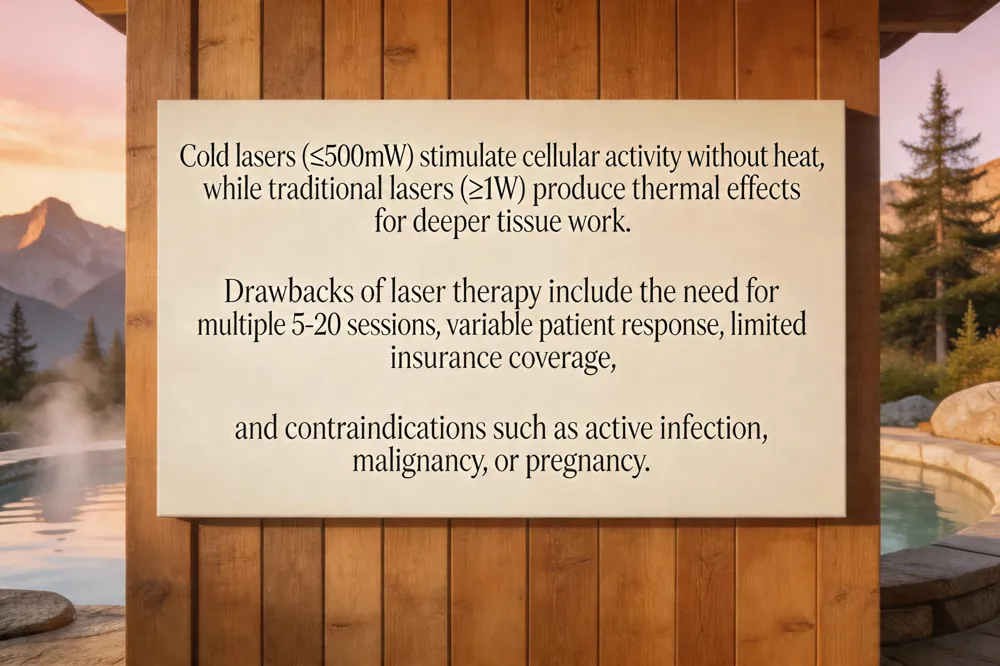 Cold laser therapy, also called low‑level laser therapy (LLLT) uses low‑intensity light (≤500 mW) that penetrates tissue without heat, stimulating mitochondrial ATP production, reducing inflammation, and promoting collagen synthesis. Traditional laser therapy, by contrast, employs high‑power beams (≥1 W) that generate thermal effects for cutting, coagulation, or ablation in surgical settings. Both modalities work through photobiomodulation, but cold lasers are non‑invasive and painless, while traditional lasers carry higher risks of burns, pigment changes, and require stricter safety protocols.
What are two drawbacks of laser therapy? Laser therapy often requires multiple sessions—typically 5‑20 visits—to achieve noticeable relief, extending treatment time and cost. Effectiveness varies among patients; some experience minimal benefit. Insurance coverage is limited, leaving many to pay out‑of‑pocket, and contraindications such as active infection, malignancy, or pregnancy restrict use for certain individuals.
How much does laser therapy usually cost? Pricing depends on laser class and treatment length. Class III cold lasers run $40‑$60 per session, while Class IV deep‑tissue devices range $75‑$125, with premium systems reaching $100‑$200. Acute injuries may need 4‑8 sessions ($300‑$600), whereas chronic conditions often require 12‑20 sessions ($900‑$2,000). Compared with long‑term medication or surgery, laser therapy remains a cost‑effective , non‑invasive option.
Cold Laser vs. Traditional Laser: Definitions and Location
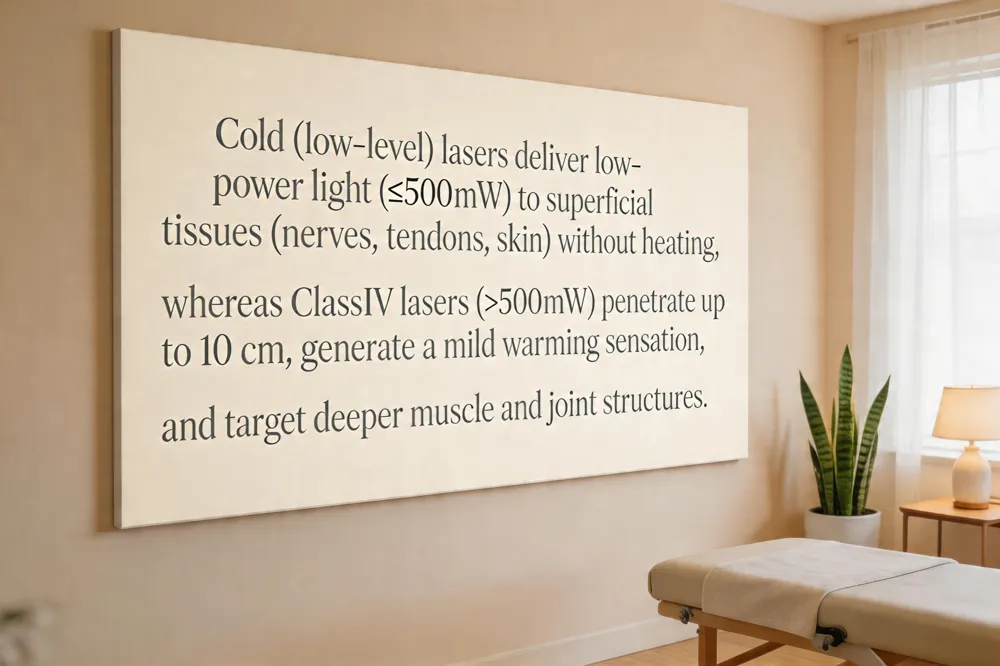 Cold laser therapy, also called low‑level laser therapy (LLLT), delivers Low‑level laser therapy stimulates cellular activity without heat (≤500 mW) that does not generate heat. The photons are absorbed by mitochondrial chromophores, boosting ATP production, reducing inflammation, and promoting cellular repair in superficial tissues such as nerves, tendons, and skin. This photobiomodulation contrasts with higher‑powered laser systems (e.g., Class IV lasers) that emit >500 mW, penetrate deeper (up to 10 cm), and often produce a gentle warming sensation for larger muscle groups and joint structures. Both are non‑invasive and safe when used by trained clinicians, but they differ in power, depth of penetration, and optimal indications.
Is cold laser therapy the same as laser therapy? Cold laser therapy is a specific type of laser therapy, but it is not the same as all laser treatments. It uses low‑power light that stays cool and works mainly on superficial tissues, whereas high‑powered lasers deliver deeper, thermal effects. Choosing between them depends on the diagnosis and treatment goals.
Where can I find a chiropractor offering laser therapy in Glenwood Springs, Colorado? The Anna Bernstein office at 900A Cooper Ave, Glenwood Springs, CO 81601, provides Cold (low‑level) Laser Therapy as part of its musculoskeletal care. Hours are Mon‑Wed 10 am‑5 pm and Thu‑Fri 10 am‑1 pm; appointments can be scheduled at (970) 928‑0757. The practice combines adjustments, nutrition counseling, acupuncture, and laser therapy to relieve pain and restore mobility.
Cold laser therapy, also called low‑level laser therapy (LLLT), delivers Low‑level laser therapy stimulates cellular activity without heat (≤500 mW) that does not generate heat. The photons are absorbed by mitochondrial chromophores, boosting ATP production, reducing inflammation, and promoting cellular repair in superficial tissues such as nerves, tendons, and skin. This photobiomodulation contrasts with higher‑powered laser systems (e.g., Class IV lasers) that emit >500 mW, penetrate deeper (up to 10 cm), and often produce a gentle warming sensation for larger muscle groups and joint structures. Both are non‑invasive and safe when used by trained clinicians, but they differ in power, depth of penetration, and optimal indications.
Is cold laser therapy the same as laser therapy? Cold laser therapy is a specific type of laser therapy, but it is not the same as all laser treatments. It uses low‑power light that stays cool and works mainly on superficial tissues, whereas high‑powered lasers deliver deeper, thermal effects. Choosing between them depends on the diagnosis and treatment goals.
Where can I find a chiropractor offering laser therapy in Glenwood Springs, Colorado? The Anna Bernstein office at 900A Cooper Ave, Glenwood Springs, CO 81601, provides Cold (low‑level) Laser Therapy as part of its musculoskeletal care. Hours are Mon‑Wed 10 am‑5 pm and Thu‑Fri 10 am‑1 pm; appointments can be scheduled at (970) 928‑0757. The practice combines adjustments, nutrition counseling, acupuncture, and laser therapy to relieve pain and restore mobility.
Benefits of Chiropractic Laser Therapy and Class IV Differences
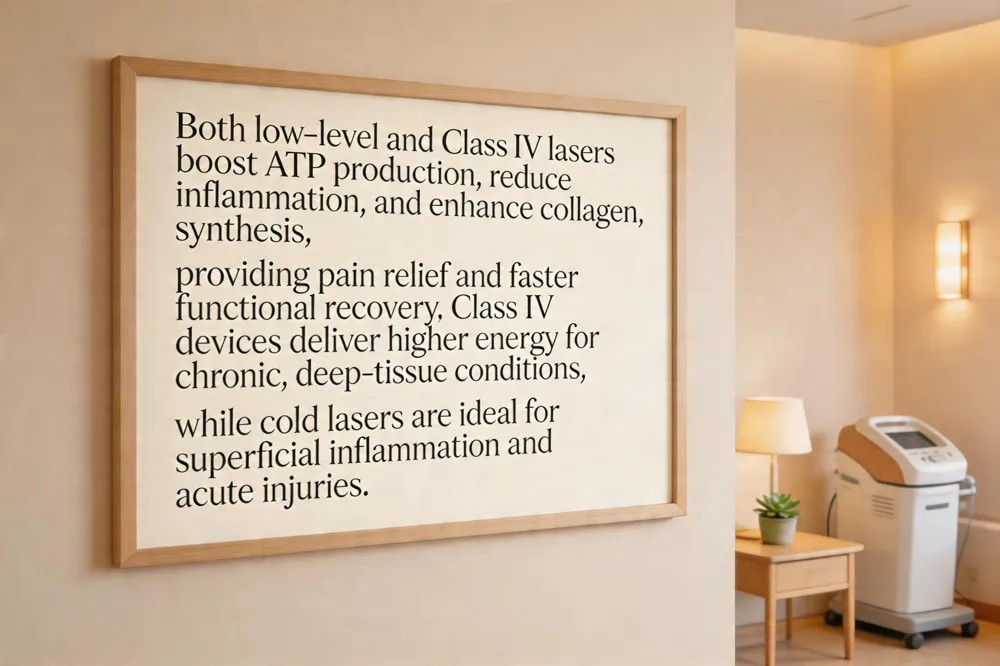 Cold (low‑level) laser therapy is a cornerstone of chiropractic care for musculoskeletal pain. By delivering photons absorbed by mitochondrial cytochrome c oxidase, the treatment raises ATP production, reduces inflammatory cytokines and improves microcirculation. Patients experience pain relief, diminishing muscle spasm, and increased joint range of motion, allowing quicker return to daily activities and complementing spinal adjustments without drug side effects.
Class IV laser therapy differs fundamentally from cold laser therapy. [Class IV] devices operate above 0.5 W, penetrate several centimeters into muscle, joint and connective‑tissue layers, and generate a warming sensation. This higher energy yields faster ATP synthesis and more robust tissue repair, making it ideal for chronic conditions such as osteoarthritis, rotator‑cuff disease and post‑surgical recovery. In contrast, cold laser therapy uses ≤0.5 mW, reaches only superficial tissues, and is painless, suitable for skin‑level inflammation, carpal tunnel syndrome and acute sprains.
Evidence—including randomized trials and systematic reviews—shows that photobiomodulation from both Class IV and low‑level lasers produces pain reductions, improves functional outcomes, and accelerates wound and collagen healing, supporting their integration into evidence‑based chiropractic protocols.
Safety, Side Effects, and FDA‑Approved Devices
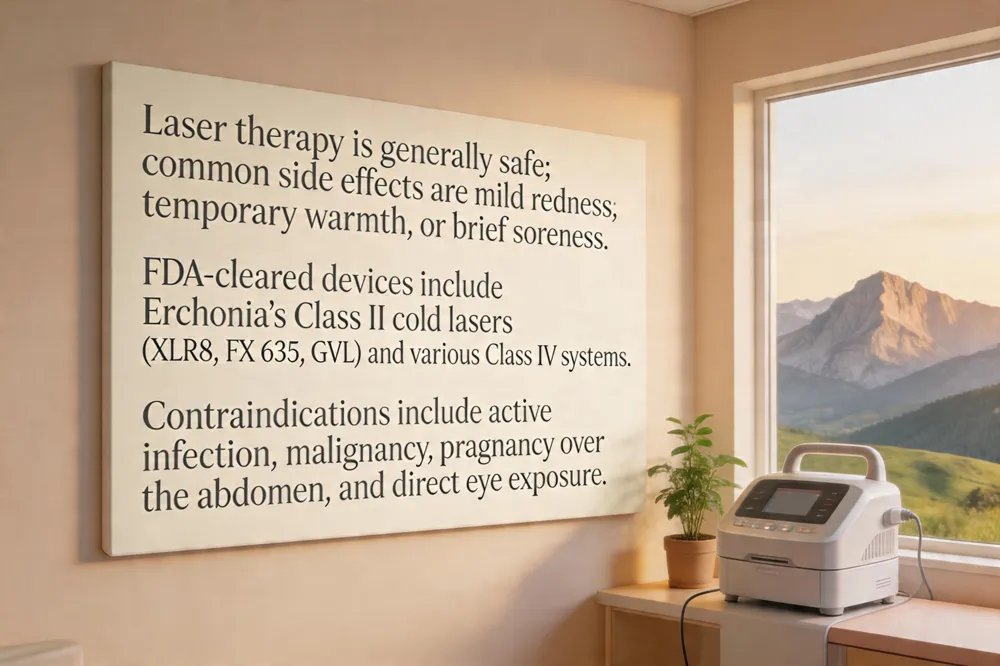 Cold (low‑level) laser therapy is a non‑thermal, non‑invasive modality that is well‑tolerated when administered by a trained practitioner. The most common side effects are mild and transient: patients may notice a temporary reddening of the skin, a gentle warmth, or a brief soreness that resembles post‑exercise fatigue. Occasional tingling or mild itching can occur, but these reactions typically resolve within a few hours to a couple of days, and serious complications are rare.
Several laser systems have received FDA clearance for clinical use. Erchonia’s XLR8, FX 635, and GVL devices are Class II, FDA‑cleared cold lasers indicated for acute and chronic musculoskeletal pain, including back, neck, shoulder, and heel disorders. Other manufacturers offer FDA‑cleared Class IV “high‑power” lasers for deeper tissue work, but the low‑power category is dominated by Erchonia’s line, which is supported by multiple Level‑1 clinical studies.
Contraindications include active infections, malignant tumors, pregnancy over the abdomen, and direct eye exposure; protective eyewear is mandatory. Proper dosing, patient screening, and adherence to manufacturer safety protocols ensure the therapy remains safe and effective.
Typical Protocols and Integrating Laser Therapy with Chiropractic Care
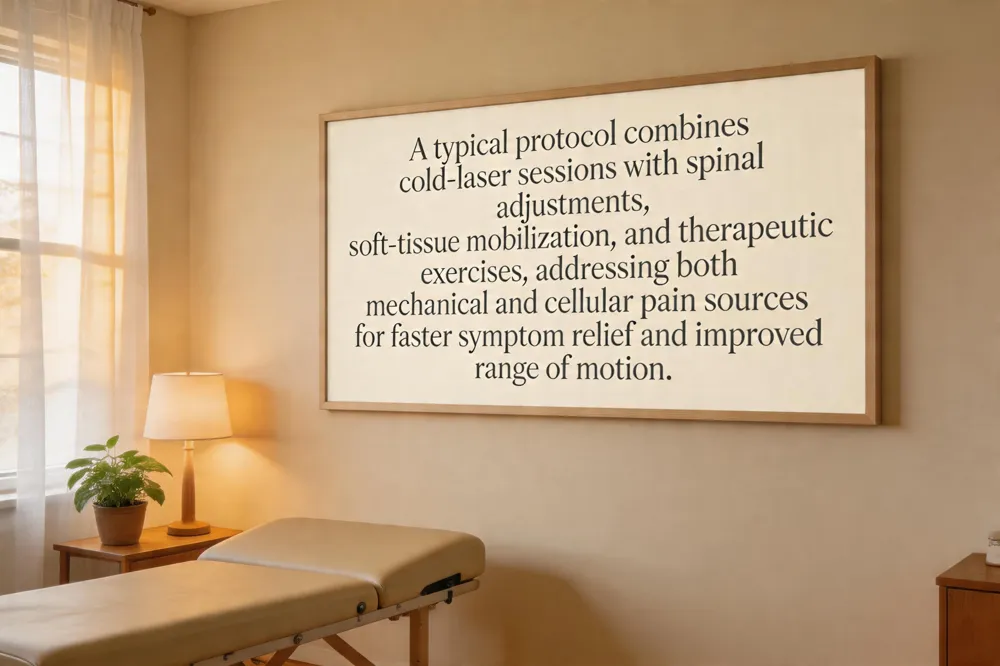 Cold‑laser therapy is routinely combined with spinal adjustments, soft‑tissue mobilization, and therapeutic exercises. The laser reduces inflammation and boosts ATP production, while adjustments restore joint alignment and nerve function. This multimodal approach addresses both mechanical and cellular sources of pain, leading to faster symptom relief, improved range of motion, and a quicker return to daily activities for back, neck, joint, and sports‑related injuries.
Conclusion
Key takeaways: Cold (low‑level) laser therapy stimulates ATP production, reduces inflammation and promotes tissue repair without heat or drugs, making it a safe, non‑invasive adjunct to chiropractic care. Choosing the right laser therapy for your healing journey involves assessing injury depth, chronicity and individual health, consulting a qualified practitioner, and selecting a proven, FDA‑cleared device that matches your specific musculoskeletal needs today.