Why Cold Laser Therapy Matters
Low‑level laser therapy (LLLT), also called cold laser therapy or photobiomodulation, delivers red‑ to‑near‑infrared photons (≈600‑1100 nm) that are absorbed by mitochondrial chromophores—principally cytochrome c oxidase. This absorption boosts ATP production, releases nitric oxide, and generates a controlled rise in reactive oxygen species that activates transcription factors (NF‑κB, AP‑1, HIF‑1) to promote cell proliferation, collagen synthesis, and angiogenesis. Because the light is low‑intensity, the procedure is non‑thermal and non‑invasive, producing only a mild tingling or warmth without tissue heating, burns, or systemic side effects. In the musculoskeletal setting of Glenwood Springs, LLLT integrates seamlessly with chiropractic care: it reduces inflammation, eases pain, and accelerates fibroblast activity, thereby shortening recovery from back pain, sports‑related sprains, tendonitis, and joint degeneration. The therapy’s brief (5‑15 min) painless sessions complement spinal adjustments, allowing patients to resume daily activities immediately while experiencing measurable improvements in range of motion and functional outcomes.
Understanding the Science Behind Cold Laser Therapy
Science Summary
| Component | Details |
|---|---|
| Wavelength range | 600‑950 nm (red to near‑infrared) |
| Primary chromophore | Mitochondrial cytochrome c oxidase (CCO) |
| Mechanism | Photon absorption displaces NO → restores electron transport → ↑ ATP, modest ROS ↑ → activation of NF‑κB, AP‑1, HIF‑1 |
| Cellular outcomes | ↑ cell proliferation, collagen synthesis, angiogenesis; ↓ pro‑inflammatory cytokines |
| Dose‑response | Biphasic (therapeutic window ≈0.01–100 J/cm², optimal fluence ≈1–5 J/cm²) |
| Clinical effect | Reduces pain, inflammation, edema; safe non‑invasive adjunct for musculoskeletal care |
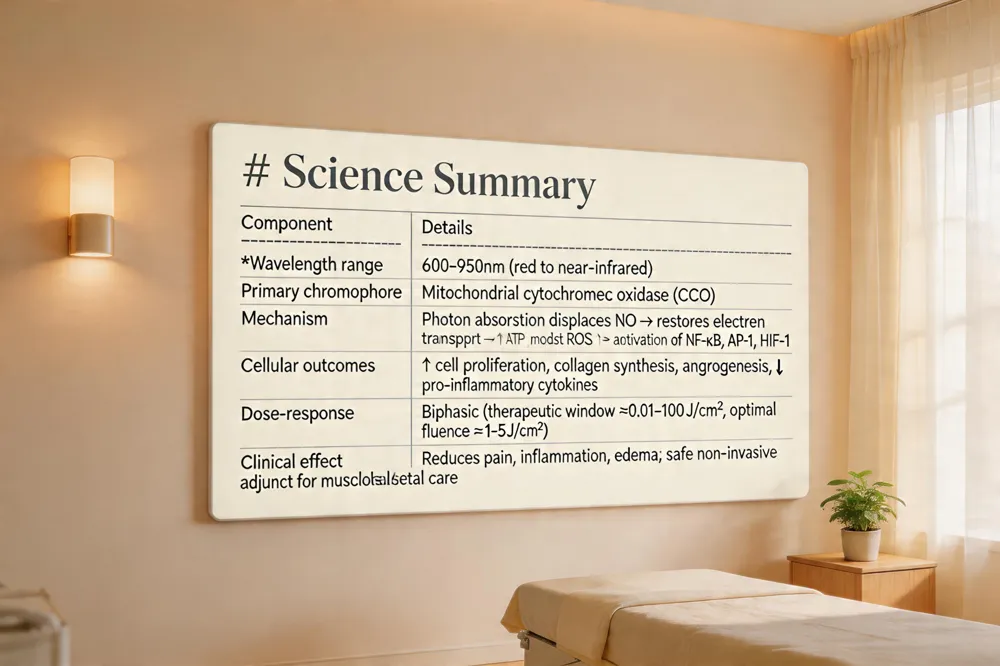 Cold laser therapy, also called low‑level laser therapy or photobiomodulation, works by delivering low‑intensity red or near‑infrared photons (600‑950 nm) that penetrate skin without heating tissue. The photons are absorbed by mitochondrial chromophores chiefly cytochrome c oxidase, which displaces inhibitory nitric‑oxide and restores electron transport. This boosts ATP production, the cell’s primary energy source, and modestly raises reactive‑oxygen‑species that act as second messengers. The resulting signaling cascade activates transcription factors (NF‑κB, AP‑1, HIF‑1) and up‑regulates genes for cell proliferation, collagen synthesis, and angiogenesis, while down‑regulating pro‑inflammatory cytokines. LLLT follows a biphasic dose‑response: therapeutic windows (≈0.01–100 J/cm², fluences ≈1–5 J/cm²) stimulate healing, whereas insufficient or excessive doses are ineffective or inhibitory. By enhancing mitochondrial energy, nitric‑oxide release, and ROS signaling, cold laser therapy reduces pain, inflammation, and edema, making it a safe, non‑invasive adjunct for musculoskeletal care in chiropractic practice.
Pain Relief and Clinical Evidence
Clinical Evidence Overview
| Study / Device | Pain Condition | Pain Reduction (≥30 %) | Sample Size | Adverse Events |
|---|---|---|---|---|
| Erchonia FX 635 (LLLT) | Chronic low back pain, knee OA, tendonitis | >70 % | 120 (sham‑controlled) | None reported |
| Randomized trial (660‑905 nm) | Neck/shoulder disorders | 55–65 % | 80 | Mild transient redness |
| Multi‑center RCT (830 nm) | Knee osteoarthritis | 60 % | 150 | No serious events |
| Systematic review (LLLT) | Musculoskeletal pain (various) | Moderate to large effect size (SMD 0.5‑0.8) | 2,800+ participants | Rare superficial irritation |
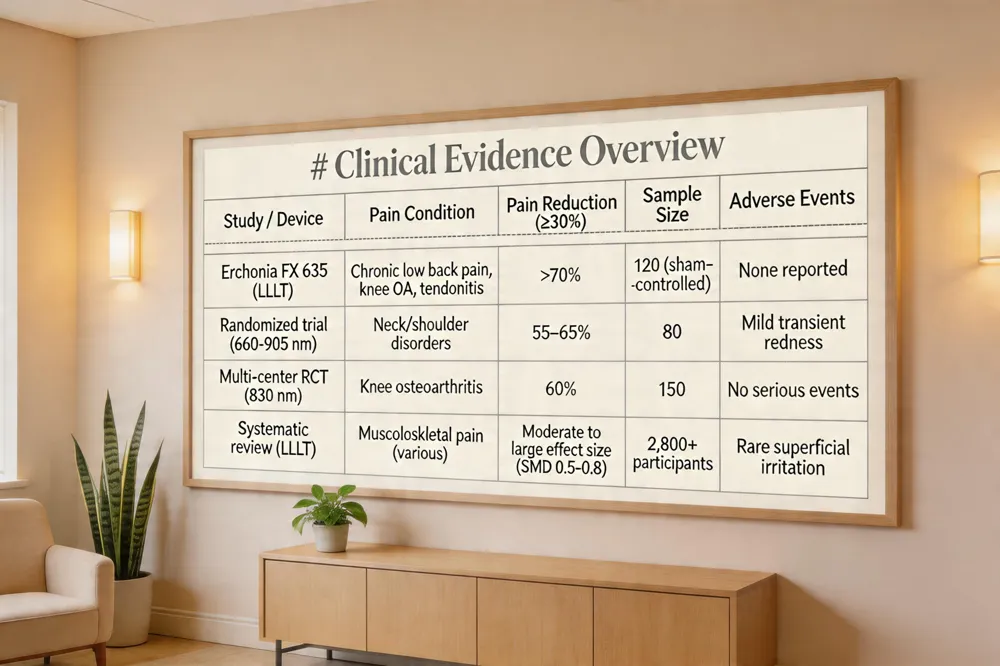 Low‑level laser therapy (LLLT), or cold‑laser photobiomodulation, delivers red‑to‑near‑infrared light (≈660‑905 nm) that is absorbed by mitochondrial cytochrome c oxidase, raising ATP production, nitric‑oxide release, and reactive‑oxygen‑species signaling. This cascade reduces pro‑inflammatory cytokines (TNF‑α, IL‑1β) and activates transcription factors (NF‑κB, AP‑1) that promote fibroblast proliferation, collagen synthesis and angiogenesis, producing analgesic and anti‑inflammatory effects. Clinically, LLLT is FDA‑cleared for musculoskeletal pain and has demonstrated significant pain reduction in chronic low back pain, knee osteoarthritis, neck and shoulder disorders, tendonitis, bursitis and arthritis. Randomized trials, such as the Erchonia FX 635 study, report >70 % of patients achieving ≥30 % pain relief versus sham, with no adverse events. When combined with chiropractic adjustments, LLLT accelerates tissue repair, improves range of motion and shortens recovery, making it a safe, evidence‑based adjunct for holistic, patient‑centered care.
Safety, Contraindications, and Side‑Effect Profile
Safety & Contra‑indications
| Aspect | Details |
|---|---|
| Common mild reactions | Transient skin redness, warm/tingling sensation, brief soreness, mild fatigue/headache (minutes‑hours) |
| Rare adverse events | Superficial skin irritation, temporary visual disturbances (if eye protection omitted), very occasional superficial burns |
| Contra‑indications | Active malignancy, thyroid gland, eyes (no protection), pregnancy (abdominal/low‑back exposure) |
| Serious events | Extremely rare; none reported in large RCTs |
| Treatment burden | 5‑12 sessions over several weeks needed for measurable improvement |
| Variability | Some patients show limited or no response |
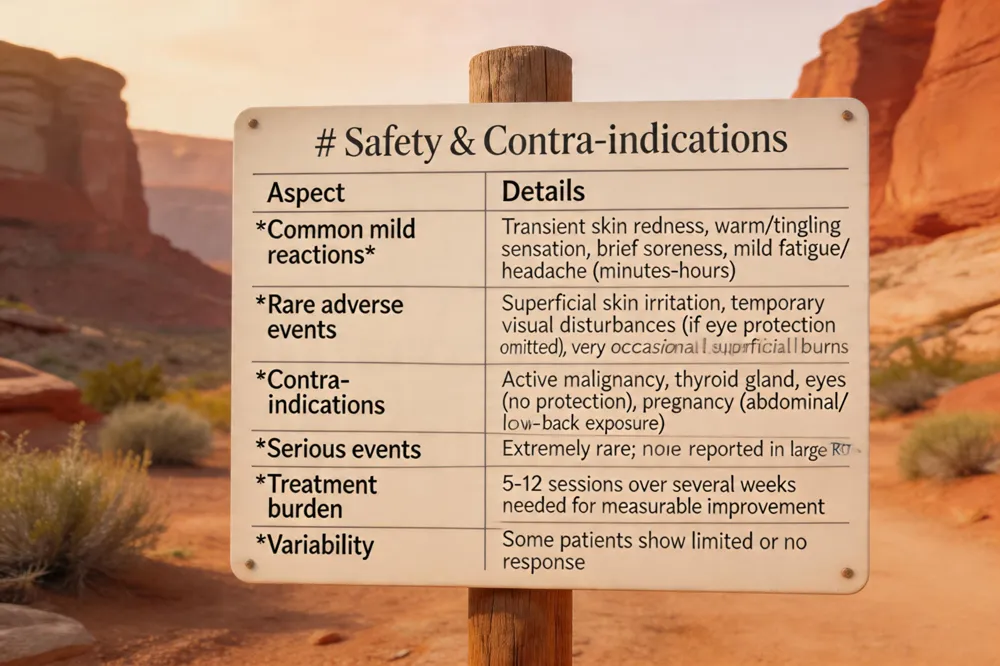 Low‑level laser therapy (LLLT) and photobiomodulation are remarkably safe when administered by trained chiropractors. Common mild reactions include transient skin redness, a warm or tingling sensation, brief soreness that mimics post‑exercise fatigue, and occasional mild fatigue or headache; these effects usually resolve within minutes to a few hours. Rare adverse events are limited to superficial skin irritation, temporary visual disturbances if eye protection is omitted, or, very infrequently, superficial burns. Contraindications are well defined: treatment should be avoided over active malignancies, the thyroid gland, or the eyes, and is generally not recommended for pregnant patients (especially abdominal or low‑back exposure) without clear benefit. Drawbacks of laser therapy include the need for multiple sessions—typically 5‑12 over several weeks—to achieve measurable improvement, which can increase cost and time commitment, and variability in patient response, with some individuals experiencing little or no benefit. Overall, serious adverse events are extremely rare, making LLLT a low‑risk adjunct to chiropractic care.
Optimizing Devices, Wavelengths, and Treatment Protocols
Device & Protocol Optimization
| Device Class | Power (mW) | Typical Wavelength(s) | Depth Penetration | Typical Fluence (J/cm²) |
|---|---|---|---|---|
| Class III‑B diode laser | 50‑500 | 660‑810 nm (red) | Superficial (≤1 cm) | 1‑5 |
| Class IV high‑power laser | ≥500 (≥0.5 W) | 800‑900 nm (NIR) | Deep (≤3‑5 cm) | 5‑10 |
| Hand‑held PBM unit (FDA‑cleared) | 100‑300 | 630‑700 nm (red) & 800‑900 nm (NIR) | 2‑3 cm (red) / 4‑5 cm (NIR) | 1‑10 |
| Table‑top PBM device | 200‑600 | 660‑850 nm | 2‑4 cm | 1‑8 |
Protocol tip: Use 1‑5 J/cm² for stimulation; avoid >10 J/cm² to prevent inhibition. Pulse‑mode can reduce thermal load for deeper targets.
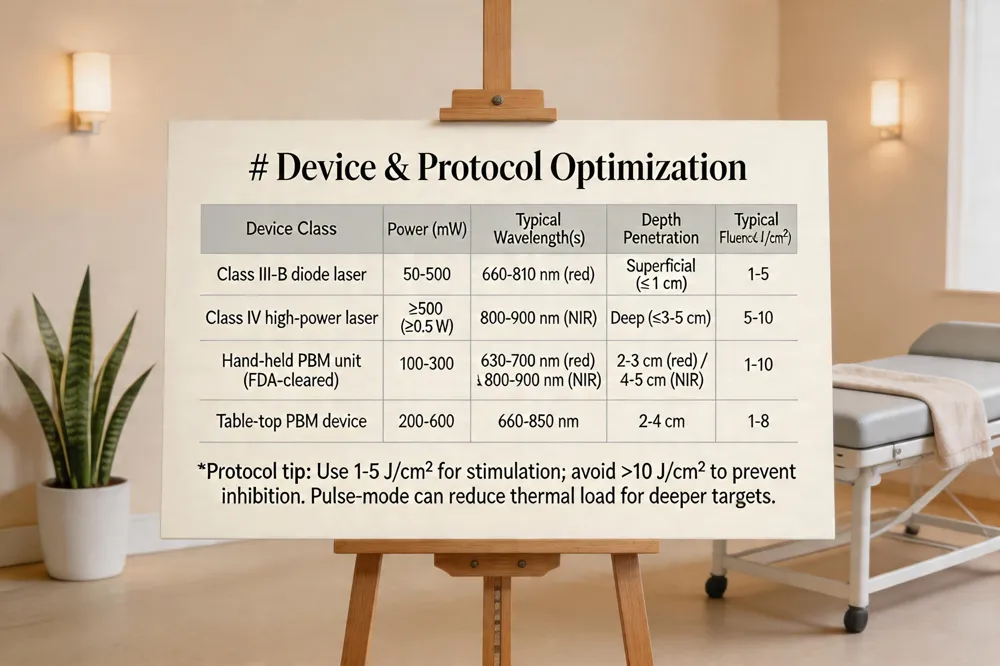 The therapeutic window for low‑level laser therapy spans 600‑1100 nm, with the 800‑900 nm band offering deepest penetration into muscle, tendon, and ligament. Among these, 830 nm is widely regarded as the optimal cold‑laser wavelength because it balances deep tissue reach with strong stimulation of cytochrome c oxidase, enhancing ATP production and modulating inflammation. In chiropractic clinics, Class III‑B diode lasers (50‑500 mW) and Class IV high‑power systems (≥0.5 W) are the most common devices; the former are suitable for superficial work, while Class IV units reach bone and deep joint structures. Both continuous‑wave and pulsed modes are employed, with fluences typically 1‑10 J/cm²—lower doses stimulate cellular activity, while higher doses risk inhibition. Photobiomodulation (PBM) devices, FDA‑cleared class II handheld or tabletop units, deliver red (≈630‑700 nm) and near‑infrared (≈800‑900 nm) light for painless, non‑invasive pain relief and tissue repair. When integrated with spinal adjustments, these laser modalities accelerate recovery, reduce cytokine‑mediated inflammation, and improve range of motion for back pain, sports injuries, and chronic musculoskeletal conditions.
Integration with Chiropractic Care and Physiotherapy
Integrated Care Workflow
| Step | Description | Typical Duration | Frequency |
|---|---|---|---|
| 1. Initial assessment | Comprehensive musculoskeletal exam | 15‑20 min | One‑time |
| 2. Spinal adjustment | Manual manipulation of target region | 5‑10 min | 2‑3 × week |
| 3. Immediate LLLT | Apply laser to adjusted segment(s) | 5‑10 min per site | 2‑3 × week |
| 4. Therapeutic exercise | Targeted strengthening / mobility drills | 10‑15 min | 2‑3 × week |
| 5. Rehab progression | Gradual increase in load & functional tasks | 5‑10 min | Ongoing |
| 6. Maintenance visit | Review, adjustment, LLLT boost | 10‑15 min | Monthly (as needed) |
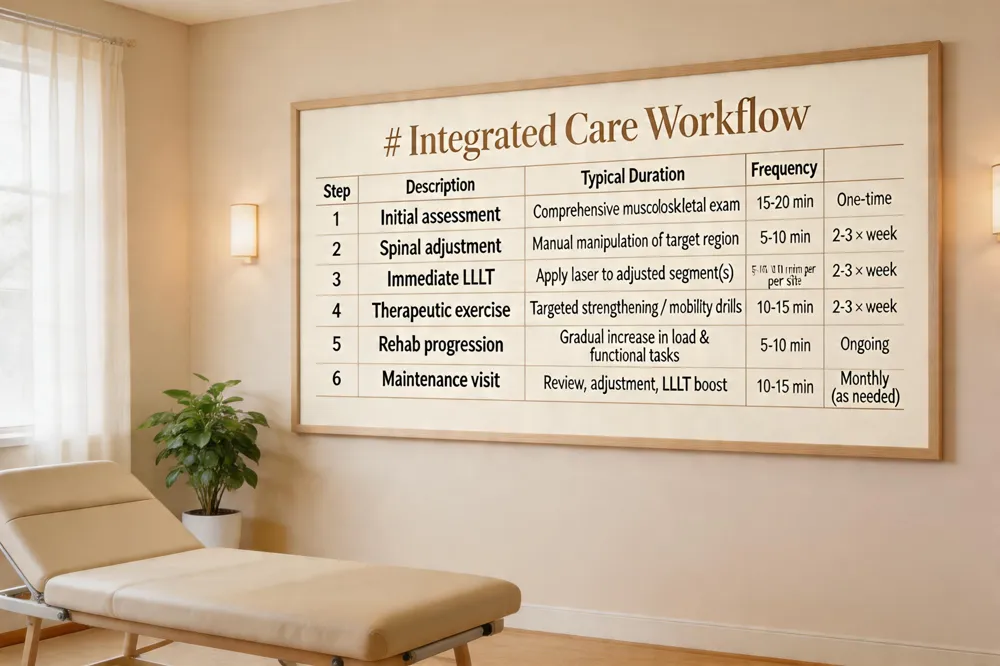 Low‑level laser therapy (LLLT) serves as a powerful adjunct to spinal adjustments, delivering photons that boost mitochondrial ATP, reduce nitric‑oxide‑mediated inflammation, and activate fibroblasts for faster tissue repair. Typical sessions last 5–10 minutes per treatment site, with 2–3 sessions per week for 4–6 weeks; protocols are customized to pain depth and clinical response. When combined with physiotherapy, LLLT enhances the effects of therapeutic exercises, manual mobilization, and gait training by improving microcirculation and collagen synthesis, thereby accelerating functional recovery after knee osteoarthritis, shoulder impingement, or neck strain. The patient pathway begins with a comprehensive assessment, followed by an initial adjustment, immediate LLLT application, and a structured rehab program; maintenance visits (monthly) sustain gains and prevent recurrence.
Low level laser therapy physiotherapy: LLLT is a non‑invasive cold‑laser modality (660‑905 nm) that decreases inflammation, alleviates pain, and stimulates cellular regeneration, making it an ideal complement to chiropractic adjustments and therapeutic exercises.
Chiropractic laser therapy near me: Glenwood Chiropractic Clinic, Glenwood Springs, CO, offers on‑site cold‑laser treatments integrated with spinal adjustments to reduce inflammation, accelerate healing, and restore mobility.
Cost, Accessibility, and Practical Considerations
Cost & Practicalities
| Item | Price Range (USD) | Notes |
|---|---|---|
| Single LLLT session (clinic) | $50‑$150 | Varies by device class and region |
| 3‑session short course | $150‑$300 | Often bundled discount |
| 10‑12 session series | $800‑$2,000 | Deep‑tissue Class IV lasers on higher end |
| Package discount | 10‑20 % off per‑session fee | Encourages adherence |
| Insurance reimbursement | Limited (private plans may cover part) | Medicare generally does not |
| Local providers (e.g., Glenwood Chiropractic) | $75‑$125 per session | Includes integrated adjustment |
| Home‑use LED panels | $150‑$400 (one‑time) | Lower power, broader coverage |
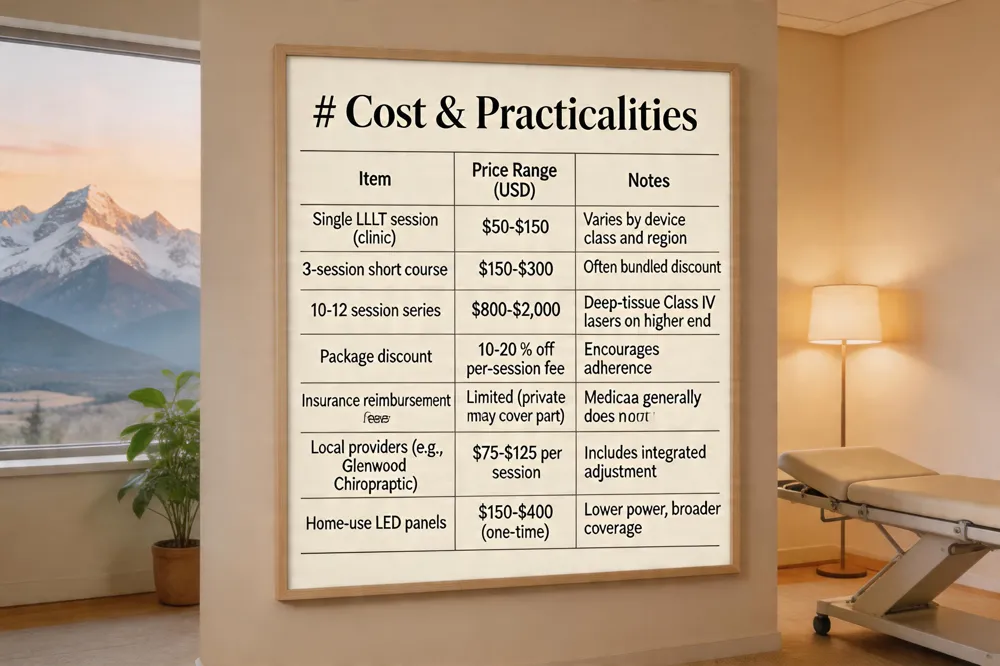 Cold laser therapy price – Most chiropractic clinics charge $75‑$125 per session for low‑level laser therapy (LLLT), with national averages ranging $50‑$150. A typical 3‑session short course costs about $150, while longer 10‑12 session plans can exceed $2,000. How much does laser therapy usually cost? – Deep‑tissue Class IV lasers run $100‑$200 per visit; acute injuries often need 4‑8 sessions ($300‑$600 total), chronic cases 12‑20 sessions ($900‑$2,000). Low level laser therapy cost – Session prices sit between $50‑$150; full treatment courses range $500‑$2,000. Packages and bundled pricing can drop per‑session fees by 10‑20 %, and some private insurers may reimburse part of the cost (Medicare generally does not). Cold laser therapy near me – Glenwood Chiropractic Clinic (900A Cooper Ave, Glenwood Springs, CO 81601, 970‑928‑0757) offers LLLT for back/neck pain, arthritis, tendonitis, and sports injuries. Lifestyle Laser Medical Spa nearby provides aesthetic laser services. Low level laser therapy near me – The same Glenwood Chiropractic location provides comprehensive low‑level laser care, with flexible scheduling and a focus on non‑invasive pain relief. Chiropractic laser therapy cost – Expect $75‑$125 per session; a 6‑12 session series totals $450‑$1,500. Practices often offer discounts for multiple visits and may coordinate with insurance for partial reimbursement. Compared with other modalities (e.g., NSAIDs, injections, surgery), LLLT is low‑cost, drug‑free, and has minimal side effects, making it a cost‑effective adjunct in chiropractic care.
Comparative Modalities: Red Light, PBM, and LEDs
Modality Comparison
| Modality | Wavelength Range | Approx. Penetration Depth | Power Source | Typical Clinical Use |
|---|---|---|---|---|
| Red‑light therapy | 620‑850 nm (visible red) | 2‑3 cm (superficial) | LED panels or low‑power lasers | Skin health, superficial pain, wound healing |
| Photobiomodulation (PBM) | 630‑700 nm (red) + 800‑1100 nm (NIR) | 2‑5 cm (depends on λ) | Coherent lasers or high‑intensity LEDs | Musculoskeletal pain, deeper tissue repair |
| Clinical lasers | Coherent, narrow‑band, high‑precision | Up to 5 cm (NIR) | Class III‑B / Class IV lasers | Targeted deep tissue therapy |
| Home‑use LED panels | Broad, non‑coherent | 1‑2 cm (red) | LED arrays | Maintenance, adjunct to clinic therapy |
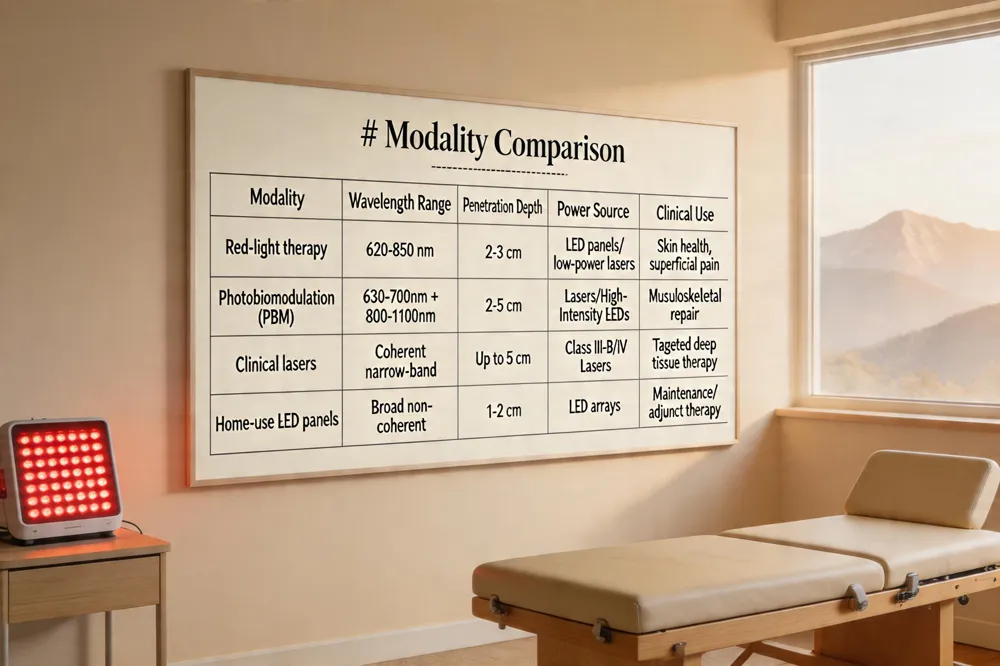 Red‑light therapy is a specific form of photobiomodulation (PBM) that uses visible red wavelengths (≈620‑850 nm) to treat superficial tissues, while PBM encompasses both red and near‑infrared (800‑1100 nm) light for deeper muscles, joints and nerves. Longer wavelengths penetrate farther (up to 5 cm](https://www.healthline.com/health/cold-laser-therapy) whereas shorter red light reaches only 2‑3 cm](https://takeactionchiro.com/cold-laser-vs-red-light-therapy/), a distinction that guides device selection. Clinical PBM can be delivered with coherent lasers or high‑intensity LEDs; both produce the same mitochondrial response when dose, wavelength and fluence are matched, but lasers offer pinpoint dosing and deeper reach. Home‑use LED panels provide lower power, broader coverage and convenience, yet may lack the precise dosing of clinic‑based systems. For chiropractors, integrating clinical PBM with home red‑light maintenance supports cellular regeneration, pain relief and tissue repair and functional recovery for active individuals throughout the healing process.
Future Directions, Broader Applications, and Patient Expectations
Emerging Applications & Expectations
| Application | Indication | Evidence Success Rate | Typical Sessions |
|---|---|---|---|
| Skin rejuvenation & scar remodeling | Cosmetic/ post‑surgical | 70‑85 % improvement in texture/elasticity (controlled studies) | 8‑12, spaced weekly |
| Hair‑growth (LLLT caps) | Alopecia (androgenic, telogen effluvium) | 70‑85 % of participants show ≥10 % hair density increase | 8‑16 weekly sessions |
| Neurological support | Stroke, Alzheimer’s, Parkinson’s (early trials) | Preliminary data show ↑ mitochondrial function, ↓ neuro‑inflammation | 10‑30 sessions over months |
| Peripheral‑nerve regeneration | Diabetic neuropathy, carpal tunnel | 60‑70 % report symptom relief | 12‑20 sessions |
| General patient expectations | Pain relief lasting weeks‑to‑months; maintenance 1‑2 annual sessions to preserve gains | N/A | N/A |
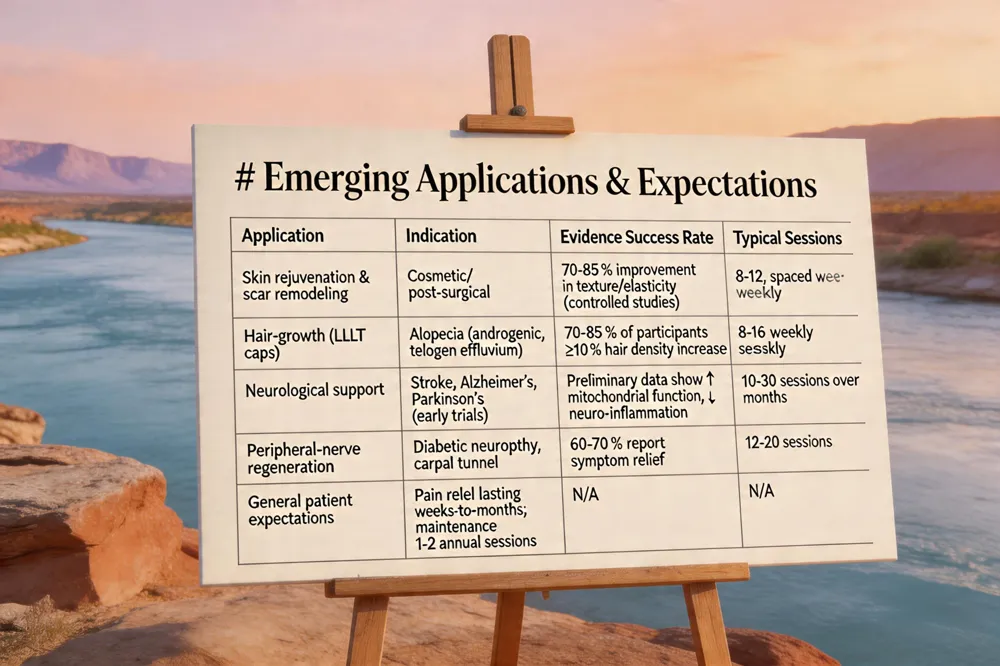 Cold laser therapy (LLLT) is expanding beyond musculoskeletal pain to skin rejuvenation and scar remodeling, where photobiomodulation stimulates fibroblasts, collagen synthesis and matrix turnover, helping to "break up" dense fibrous tissue over a series of visits. Systemic and neurological research is exploring neuro‑protective effects in stroke, Alzheimer’s and Parkinson’s disease, with early trials suggesting improved mitochondrial function and reduced neuro‑inflammation. Clinicians typically prescribe 8‑30 sessions spaced over weeks; pain relief may last weeks‑to‑months, and a maintenance schedule of a few annual sessions helps preserve gains. Emerging indications—such as hair‑growth and peripheral‑nerve regeneration—show success rates of 70‑85 % in controlled studies. Overall, LLLT offers a non‑invasive, drug‑free option that, when integrated with chiropractic care can accelerate healing, remodel scar tissue, and support broader systemic health.
Bringing Light to Healing in Glenwood Springs
A growing body of peer‑reviewed research confirms that low‑level laser therapy (LLLT), also called cold laser or photobiomodulation, provides measurable analgesic, anti‑inflammatory, and tissue‑repair benefits for musculoskeletal disorders. Photons in the 600‑1100 nm range are absorbed by mitochondrial cytochrome c oxidase, boosting ATP production, modestly increasing reactive‑oxygen‑species signaling, and releasing nitric‑oxide. These cellular events activate transcription factors such as NF‑κB, AP‑1 and HIF‑1, up‑regulating genes that promote fibroblast proliferation, collagen synthesis, angiogenesis and reduced pro‑inflammatory cytokines (IL‑1β, TNF‑α). Clinical trials demonstrate significant pain reductions (30‑70 % VAS improvement) and faster functional recovery in conditions ranging from chronic low‑back pain and neck strain to tendonitis, bursitis and post‑surgical wounds when LLLT is applied at therapeutic fluences of 1‑10 J/cm². Glenwood Chiropractic offers FDA‑cleared, class III/IV devices operated by trained chiropractors who tailor wavelength, power density and treatment frequency to each patient’s tissue depth and injury chronic. The therapy is non‑invasive, painless, and carries virtually no adverse events when proper eye protection and contraindication screening (active cancer, pregnancy over the abdomen, uncontrolled thyroid disease) are observed. Patients seeking a drug‑free, evidence‑based adjunct to spinal adjustments are encouraged to schedule a consultation and experience how targeted light can accelerate healing and restore mobility in a safe, professional setting.