A Holistic Look at Back Pain and Posture in Glenwood Springs
Low back pain affects roughly 80 % of adults at some point, and in Glenwood Springs the active outdoor lifestyle often amplifies the problem. Poor posture—forward head, slouched shoulders, or an arched lower back—places excess load on intervertebral discs and ligaments, accelerating wear and increasing pain. Restoring proper spinal alignment through chiropractic adjustments reduces nerve irritation, improves joint mobility, and re‑establishes the spine’s natural S‑shaped curves. These non‑invasive musculoskeletal therapies are drug‑free, low‑risk, and can be combined with ergonomic counseling, targeted stretching, and core‑strengthening exercises. By addressing alignment early, patients experience less pain, better posture, and a lower likelihood of chronic degeneration, making chiropractic care a cornerstone of holistic back‑health management in the valley and support for long‑term functional independence daily.
Understanding Chiropractic Adjustments and Their Safety
 Is chiropractic safe for lower back pain
Chiropractic adjustments are generally safe for lower‑back pain when performed by a licensed chiropractor. Large studies, such as a 2018 JAMA Network Open trial of 750 active‑duty personnel, reported only mild, short‑term side effects (e.g., temporary soreness) and no serious adverse events. Rare complications—herniated‑disc aggravation, nerve compression, or stroke—occur mainly in patients with severe osteoporosis, spinal cancer, or vascular disease. A thorough history, physical exam, and imaging when needed help identify these contraindications before treatment.
Is chiropractic safe for lower back pain
Chiropractic adjustments are generally safe for lower‑back pain when performed by a licensed chiropractor. Large studies, such as a 2018 JAMA Network Open trial of 750 active‑duty personnel, reported only mild, short‑term side effects (e.g., temporary soreness) and no serious adverse events. Rare complications—herniated‑disc aggravation, nerve compression, or stroke—occur mainly in patients with severe osteoporosis, spinal cancer, or vascular disease. A thorough history, physical exam, and imaging when needed help identify these contraindications before treatment.
Is chiropractic safe for back pain Across acute and chronic back pain, spinal manipulation provides non‑opioid pain relief with a low risk profile. Systematic reviews (e.g., Cochrane, The Spine Journal) show modest pain reductions and improved function, while serious events are <1% of treatments. Proper patient selection and technique are essential for safety.
Disadvantages of chiropractic Potential drawbacks include temporary soreness after adjustments, the need for multiple visits (which may strain insurance coverage), and the rare risk of serious events such as vertebral‑artery stroke. Effectiveness varies by condition, and outcomes depend on practitioner skill.
Chiropractic benefits and disadvantages Benefits: drug‑free pain relief, improved joint mobility, better posture, reduced medication use, and enhanced functional capacity. Disadvantages: temporary discomfort, cost of ongoing care, and the aforementioned rare risks.
What does a chiropractor do for lower back pain A chiropractor conducts a detailed history, physical exam, and possibly imaging, then applies a controlled, low‑force thrust (HVLA) to restore joint motion and reduce nerve irritation. Adjunct therapies—soft‑tissue work, targeted stretching, ergonomic counseling, and core‑strengthening exercises—support lasting relief and posture correction.
Chiropractor lower back pain sciatica For sciatica, adjustments aim to realign lumbar vertebrae and relieve pressure on the sciatic nerve, often combined with pelvic adjustments, soft‑tissue techniques, and, when indicated, spinal decompression therapy to reduce disc‑related compression and promote healing.
Home Care and Posture Strategies Complementing Adjustments
 A true lower‑back chiropractic adjustment must be performed by a licensed practitioner; at home you can safely use gentle mobility drills such as seated twists, cat‑cow, pelvic tilts and bridges to mimic the stretch of an adjustment without high‑velocity thrusts.
To correct sitting posture, keep feet flat, knees at 90°, hips back against the chair, lumbar support a cushion, shoulders relaxed and elbows close to the body, and head neutral with a slight chin tuck. Adjust desk height so thighs are parallel to the floor and take a brief stretch or walk every 30‑45 minutes.
Permanent posture improvement requires an ergonomic environment, daily core‑glute‑upper‑back strengthening (planks, bridges, rows), chest and hip‑flexor stretching, mindful checks throughout the day, and periodic chiropractic adjustments to reinforce alignment.
For a hollow‑back (hyperlordosis), practice a neutral spine, stretch hip flexors, calves and erector spinae, and strengthen the posterior chain with glute bridges, dead‑bug drills and planks. Frequent movement breaks prevent prolonged anterior pelvic tilt.
Posture correctors give short‑term proprioceptive cues and can help minor slouching, but lasting change depends on strengthening, stretching and ergonomic habits; over‑reliance may weaken muscles.
A free PDF of posture‑correction exercises (chin tucks, shoulder rolls, wall angels, stretches) is available at https://www.glenwoodchiro.com/posture-exercises.pdf.
Managing Pain Before and After Adjustments
 After a chiropractic adjustment, patients should follow a clear after‑care plan to optimize recovery. Hydration is essential—drink 8–10 glasses of water in the first day to support joint lubrication and help the lymphatic system clear metabolic by‑products such as lactic acid and carbon‑dioxide, which are released when circulation improves. For mild soreness, apply a cold pack for 15‑20 minutes several times daily during the first 24‑48 hours, then transition to gentle heat to relax tight muscles. Light activity—short walks, easy stretching, and any prescribed posture or core‑strengthening exercises—promotes circulation and prevents stiffness, while heavy lifting or prolonged sitting should be avoided initially. Common side effects include transient soreness, fatigue, or a brief headache lasting up to three days; these typically resolve with the above measures. Warning signs that require prompt contact with the chiropractor include sharp pain that worsens, numbness, tingling, fever, or any neurological changes. By staying hydrated, managing inflammation, and listening to the body’s signals, patients can safely support the adjustment and reduce the risk of complications.
Choosing Between Chiropractic and Physical Therapy
 When deciding between chiropractic care and physical therapy for lower‑back pain, consider the distinct strengths of each modality. Chiropractors focus on spinal alignment, using X‑ray‑guided assessments and high‑velocity, low‑amplitude adjustments that can quickly relieve pain and restore joint mobility (Cleveland Clinic, Trailhead Chiropractic). Physical therapists design personalized exercise programs, employ manual therapy, and use modalities to rebuild strength, flexibility, and functional movement over time (Harvard Health, HSS). For acute pain linked to a misaligned vertebra, an initial chiropractic adjustment may provide rapid relief, while chronic or post‑injury cases often benefit from a PT‑driven rehabilitation plan. Many clinicians combine both approaches, integrating spinal manipulation with therapeutic exercises for synergistic, lasting outcomes. Osteopathic Manipulative Therapy (OMT) offers a broader medical scope—diagnostics, prescriptions, preventive care—while chiropractic care specializes in musculoskeletal manipulation; neither is universally superior, and patient goals should guide the choice.
Local Glenwood Springs Chiropractic Resources
 Glenwood Springs offers several evidence‑based chiropractic clinics focused on non‑invasive musculoskeletal care. Trailhead Chiropractic (51241 HWY 6, Suite 8B) provides neurologically‑based spinal adjustments, soft‑wave therapy, and treatment for back pain, headaches, sciatica, and whiplash; it’s open Mon‑Thu with evening hours and can be reached at (970) 456‑4562. Backcountry Chiropractic (2425 Grand Ave Ste 105) led by Dr. Blake McDonald, DC, offers spinal manipulation, therapeutic modalities, and sports‑injury care; it accepts major insurers (Aetna, Cigna, BCBS, Anthem) and offers free parking, telehealth, and flexible scheduling. Other practitioners, such as Anna Bernstein Chiropractic (900A Ave), combine gentle adjustments with nutrition, acupuncture, and cold‑laser therapy. All clinics emphasize personalized exams, ergonomic counseling, and home‑exercise programs to improve posture and reduce pain. Appointments are typically booked by phone, online, or via mobile apps, with insurance verification handled on‑site for patient convenience.
Addressing Misconceptions and Risks
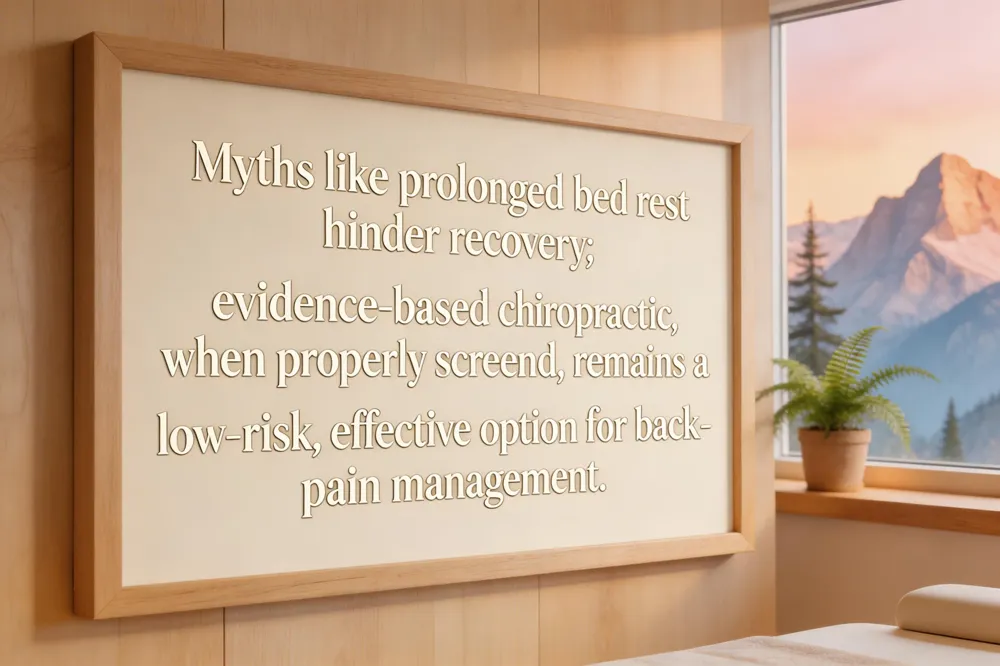 Back‑pain management often falls prey to old myths and unproven shortcuts. The single worst thing you can do for back pain is to stay in bed and avoid movement; prolonged rest weakens lumbar muscles, reduces spinal stability and actually prolongs recovery. Instead, gentle activity, proper ergonomics and professional guidance are essential. A darker side of musculoskeletal therapy is the rapid adoption of techniques lacking solid scientific backing, which can dilute the credibility of the field and expose patients to ineffective or unsafe interventions. Evidence‑based practice—rooted in thorough history, physical exam, and when needed imaging—helps clinicians select safe, proven treatments. Chiropractic care is generally safe for lower‑back pain when delivered by a licensed practitioner. Most patients report only mild, transient soreness or fatigue. Serious adverse events such as herniated‑disc worsening, nerve compression, or stroke are rare and usually linked to pre‑existing risk factors. Proper screening and individualized care plans keep chiropractic a low‑risk, effective option for pain relief and functional improvement.
Putting It All Together
Chiropractic adjustments realign vertebrae, lessen nerve irritation, and restore joint mobility, producing rapid pain relief for low‑back, neck, and headache symptoms while improving posture. Regular care reduces muscular tension, supports a neutral spine, and lowers the risk of chronic disc strain, helping Glenwood Springs residents stay active in the mountains. If you experience persistent ache, stiffness, or reduced range of motion, schedule a comprehensive evaluation with a licensed chiropractor in Glenwood Springs today. Pair each visit with daily habits—ergonomic workstation setup, short movement breaks, core‑strengthening stretches, and mindful posture checks—to sustain the benefits and prevent future flare‑ups. Together, professional adjustments and home self‑care create lasting spinal health and a higher quality of life for your long‑term wellbeing and optimal performance.