Introduction
For patients with chronic musculoskeletal pain, a well‑functioning immune system is essential because inflammation and immune dysregulation can amplify nociceptive signaling, delay tissue repair, and increase the risk of infection after injury. Acupuncture offers a unique dual mechanism: it activates somatosensory fibers that trigger endogenous opioid release for analgesia, while simultaneously engaging neuro‑immune pathways—such as the vagal‑adrenal reflex, cholinergic anti‑inflammatory circuit, and macrophage polarization—to rebalance cytokine profiles and enhance innate defenses. This integration is especially relevant to the non‑invasive, patient‑centered musculoskeletal care model practiced in Glenwood Springs, where clinicians combine spinal adjustments, therapeutic exercise, and complementary modalities. By reducing pain, modulating stress‑related cortisol, and supporting immune surveillance, acupuncture complements chiropractic strategies, promotes faster functional recovery, and aligns with a holistic approach that treats the body as an interconnected system rather than isolated symptoms.
Neuro‑Immune Pathways: From Needle to Nerve
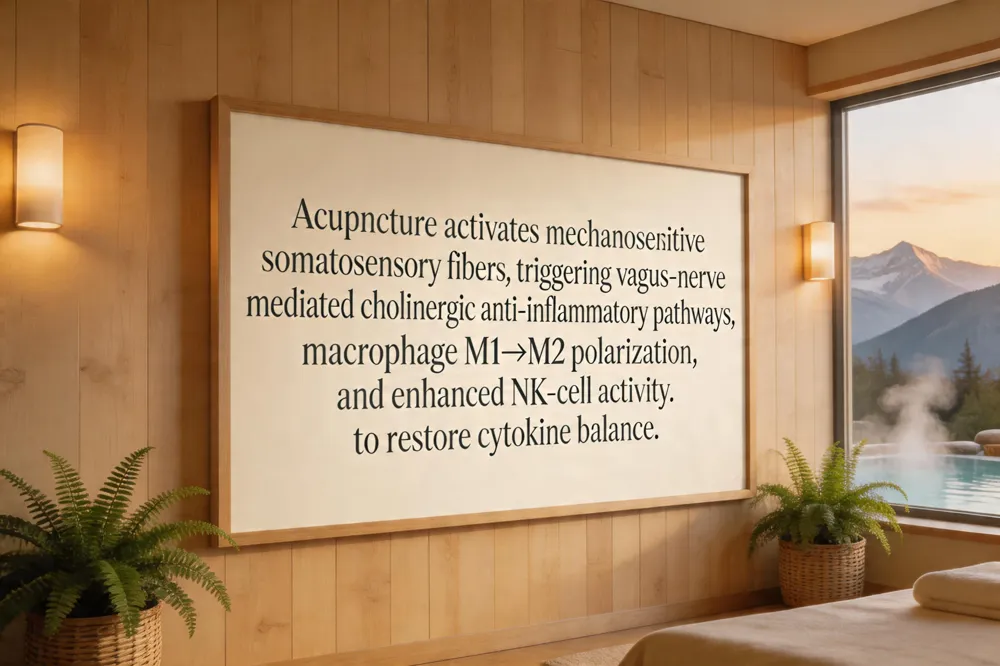 Acupuncture begins with precise stimulation of specific acupoints, such as ST36, LI4, or GV14. Needle insertion mechanically deforms connective tissue and activates mechanosensitive somatosensory fibers (A‑δ and C‑fibers) that fire afferent signals to the dorsal root ganglia and spinal cord. These signals ascend to brainstem nuclei, the hypothalamus, and the periaqueductal gray, engaging autonomic centers that orchestrate systemic responses. Through this neuro‑immune interface, acupuncture triggers the cholinergic anti‑inflammatory pathway (CAIP) by vagus‑nerve activation, causing acetylcholine to bind α7‑nicotinic receptors on macrophages and suppress NF‑κB‑driven cytokine release (IL‑1β, TNF‑α). Simultaneously, low‑intensity electro‑acupuncture at ST36 activates a vagal‑adrenal reflex, releasing adrenal dopamine that further dampens inflammation. The same neural circuits modulate macrophage polarization, shifting cells from a pro‑inflammatory M1 to an anti‑inflammatory M2 phenotype, and enhance natural‑killer cell activity via increased IL‑2 and IFN‑γ production in the spleen. In sum, the somatosensory‑to‑CNS cascade initiated by needle stimulation rapidly engages neuro‑immune pathways that restore cytokine balance, reduce tissue inflammation, and support tissue repair—all without pharmacologic side‑effects.
Mast Cells and Local Mediators
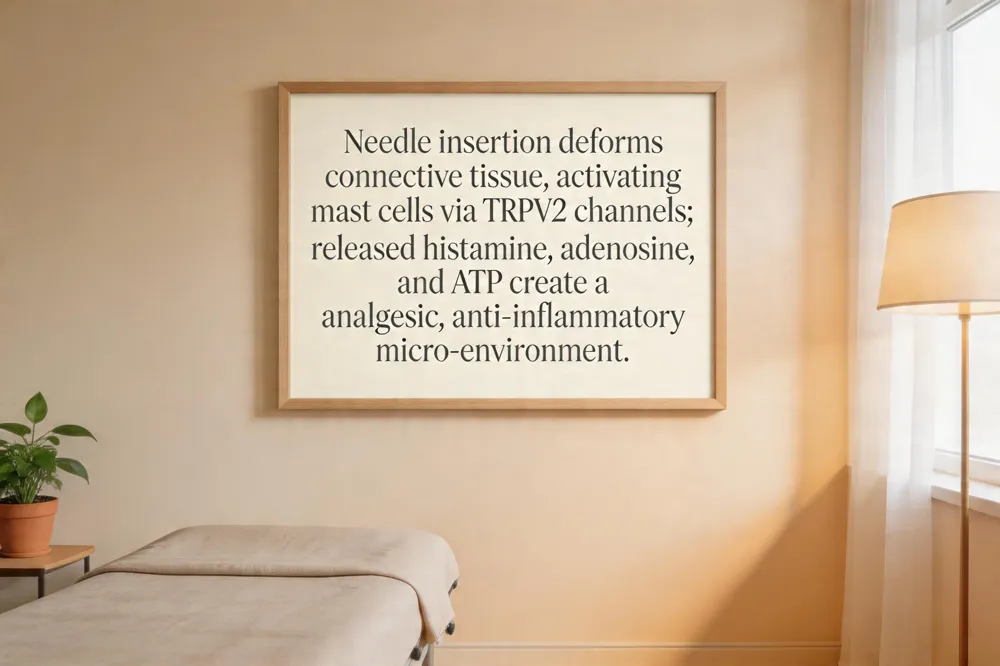 Acupoints are surrounded by a high density of mast cells, which serve as the first responders to needle stimulation. When an acupuncture needle pierces the skin, mechanical deformation activates TRPV2 channels on these mast cells, triggering degranulation and the release of histamine, adenosine, and ATP. Histamine promotes local vasodilation and recruits additional immune cells, while adenosine binds A1 receptors on sensory neurons to produce potent analgesia. ATP acts as a signaling molecule that further modulates nociceptive pathways and dampens excessive inflammation. Together, these mediators create a micro‑environment that alleviates pain and curtails the inflammatory cascade, laying the groundwork for the systemic immune‑modulatory effects observed in clinical and pre‑clinical studies.
Macrophage Polarization and Cytokine Balance
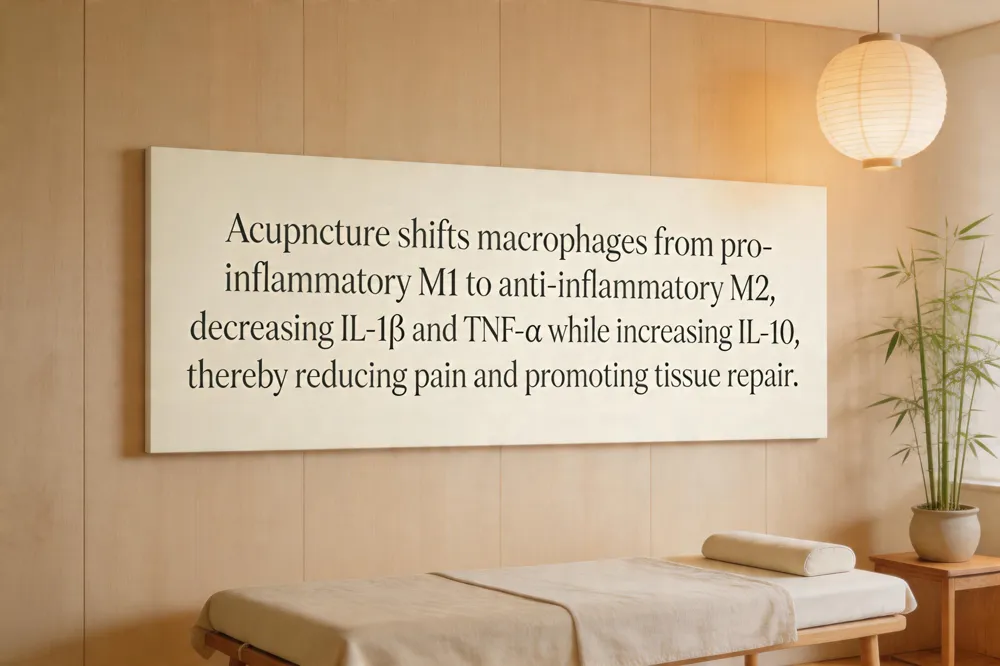 Acupuncture’s ability to re‑program macrophages is a cornerstone of its immunomodulatory effect on musculoskeletal pain. Stimulation of key acupoints such as ST36 activates somatosensory fibers that relay signals to the central nervous system, which in turn engages neuro‑immune pathways (Wang et al., 2023). These signals promote a phenotypic shift of resident macrophages from the classically activated, pro‑inflammatory M1 state to the alternatively activated, anti‑inflammatory M2 state (Zhang et al., 2023). The M2 transition is characterized by a marked decline in cytokines that drive pain and tissue damage—IL‑1β and TNF‑α—while simultaneously enhancing the production of the reparative cytokine IL‑10 (Zhang et al., 2023). This cytokine re‑balancing dampens nociceptive sensitization, curtails edema, and creates a microenvironment conducive to extracellular‑matrix remodeling and angiogenesis, thereby accelerating tissue repair (Wang et al., 2023). Clinically, patients receiving a standard course of six to twelve acupuncture sessions for chronic low‑back or osteo‑arthritic pain report reduced pain scores and improved functional mobility, outcomes that align with the underlying shift toward M2‑mediated resolution of inflammation (American College of Physicians, 2022). By integrating this mechanism into a broader non‑pharmacologic care plan, chiropractors can enhance analgesia while supporting the body’s innate healing processes.
Natural Killer Cells, Vagal‑Adrenal Reflex, and Systemic Immunity
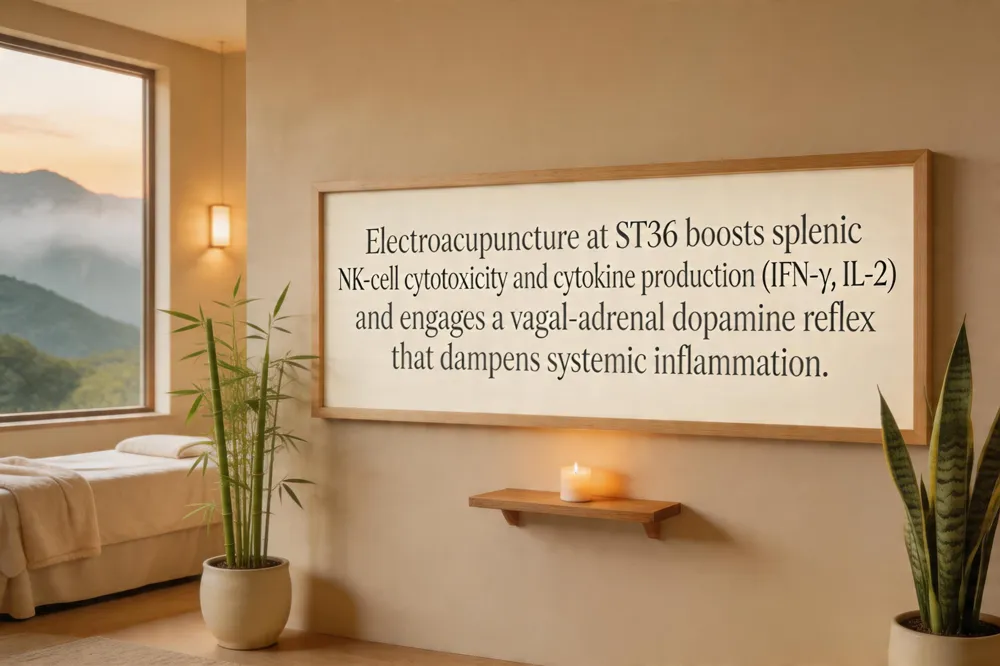 Electroacupuncture (EA) at the ST36 (Zusanli) point has been shown to enhance innate immunity by markedly increasing natural‑killer (NK) cell cytotoxic activity in the spleen. In rodent models, EA‑ST36 raised splenic NK‑cell numbers and elevated interferon‑γ and interleukin‑2, producing a stronger antiviral and anti‑tumor response (Yu et al., 2023). The same stimulation also activates the cholinergic anti‑inflammatory pathway (CAIP). Acetylcholine released from vagal efferents binds α7‑nicotinic acetylcholine receptors on macrophages, suppressing NF‑κB signaling and lowering pro‑inflammatory cytokines such as IL‑1β and TNF‑α (Song et al., 2023). A complementary mechanism involves a low‑intensity EA at ST36 that triggers a vagal‑adrenal reflex: vagal activation prompts the adrenal medulla to release dopamine system which circulates systemically and dampens excessive inflammation, improving survival in septic animal models (Torres‑Rosas et al., 2023). Together, these neuro‑immune circuits illustrate how targeted acupuncture can modulate NK‑cell function, curb cytokine storms, and provide systemic anti‑inflammatory protection—principles that align with holistic, non‑invasive chiropractic care for patients with chronic pain, sports injuries, and immune‑related challenges.
Balancing Adaptive Immunity: T‑Cell Subsets and the Gut‑Brain Axis
 Acupuncture exerts a nuanced influence on adaptive immunity by reshaping T‑cell subsets and supporting gut‑brain communication. Stimulation of acupoints such as ST36, LI4, and GV14 has been shown to enhance Th1 and regulatory T‑cell (Treg) activity while suppressing Th2 and Th17 responses, thereby correcting the Th1/Th2 and Th17/Treg imbalances that underlie asthma, inflammatory bowel disease, and other chronic inflammatory conditions (Zhao et al., 2023; Wang et al., 2023). Concurrently, acupuncture preserves the CD4⁺/CD8⁺ T‑cell ratio during physiological stress or infection, sustaining cytotoxic CD8⁺ function and overall immune homeostasis (NIH consensus, 1997; recent systematic reviews). Beyond cellular shifts, acupuncture modulates the brain‑gut axis: somatosensory activation triggers autonomic reflexes that improve intestinal barrier integrity, up‑regulate tight‑junction proteins (e.g., ZO‑1), and favorably alter microbiota composition, including increased Faecalibacterium prausnitzii and Roseburia spp. (Sun et al., 2023; Zhao et al., 2023). These coordinated neuro‑immune‑microbiome effects underpin acupuncture’s capacity to reduce systemic inflammation, promote tissue repair, and support resilience against infection, making it a valuable adjunct in holistic musculoskeletal and immune‑focused care.
Safety, Accessibility, and Integrating Acupuncture with Chiropractic Care
 Insurance coverage for acupuncture has expanded in recent years; many U.S. insurers now reimburse a standard course of six to twelve sessions over three months, each lasting 10‑30 minutes with four to ten ultra‑fine needles. This reimbursement model aligns with clinical guidelines that recommend acupuncture as a first‑line option for chronic low back pain and other musculoskeletal complaints.
At Glenwood Springs, integrating acupuncture with chiropractic adjustments yields synergistic benefits. Chiropractic care restores spinal biomechanics, while acupuncture activates somatosensory fibers, releases endogenous opioids, and modulates neuro‑immune pathways—enhancing NK‑cell activity, shifting macrophage polarization toward the anti‑inflammatory M2 phenotype, and engaging the vagal‑adrenal anti‑inflammatory reflex. The combined approach amplifies pain reduction, improves tissue healing, and supports immune homeostasis, offering patients a holistic, patient‑centered pathway to restored mobility and functional health.
Conclusion
Acupuncture’s evidence‑based mechanisms simultaneously enhance immune resilience and alleviate pain. By stimulating somatosensory fibers, it activates neuro‑immune pathways such as the cholinergic anti‑inflammatory axis and the vagal‑adrenal reflex, shifting macrophages toward an anti‑inflammatory M2 phenotype, boosting NK‑cell activity, and balancing Th1/Th2/Treg responses. These effects, combined with the release of endogenous opioids, serotonin, and adenosine, reduce inflammatory cytokines (IL‑1β, IL‑6, TNF‑α) while promoting analgesia. Glenwood Springs chiropractic patients can seamlessly integrate acupuncture into a non‑invasive care plan: schedule weekly sessions targeting points like ST36, LI4, and GV14 alongside spinal adjustments, physical therapy, and lifestyle counseling. This multimodal approach supports tissue repair, optimizes immune function, and enhances functional mobility without pharmaceuticals. Experience the dual benefits—pain relief and immune support—by booking a consult today and discover how acupuncture can complement your chiropractic journey.