Introduction
Acupuncture offers runners a scientifically supported, drug‑free tool that directly addresses the physiological stresses of training. By stimulating specific points such as ST‑36, GB‑34, SP‑6 and LI‑4, needle insertion activates the nervous system, improves micro‑circulation, and triggers endorphin release, which together reduce delayed‑onset muscle soreness, accelerate repair of tendons and muscle fibers, and lower inflammation. Meta‑analyses of randomized trials show significant reductions in CK levels and improved isometric force 72 hours after exercise, confirming faster recovery. In a holistic model, the Glenwood Springs chiropractic clinic integrates acupuncture with spinal adjustments, soft‑tissue work and personalized movement programs. This multimodal approach treats the obvious pain sites while also correcting underlying biomechanical imbalances, supporting optimal biomechanics, preventing overuse injuries, and enhancing overall performance. Patients benefit from a coordinated, patient‑centered plan that combines the strengths of chiropractic and acupuncture for lasting musculoskeletal health and overall well‑being and longevity in everyday routines for runners.
Key Acupuncture Points Every Runner Should Know
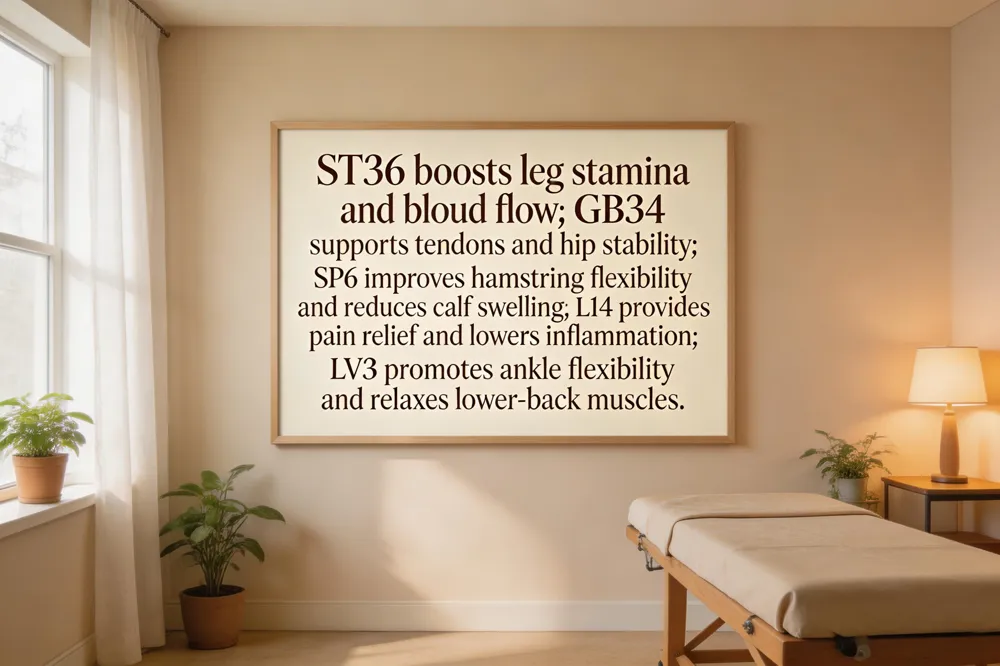 Acupuncture gives runners a boost to circulation, inflammation control, and tissue repair. Key points:
- ST36 (Zusanli) – four finger‑widths below the kneecap; raises leg stamina, blood flow, and cuts fatigue.
- GB34 (Yanglingquan) – just below the knee; supports tendon health, hip stability, and helps prevent IT‑band and hamstring strains.
- SP6 (Sanyinjiao) – three finger‑widths above the inner ankle; improves hamstring flexibility, pelvic balance, and reduces calf swelling.
- LI4 (Hegu) – between thumb and index finger; provides pain relief, lowers inflammation.
- LV3 (Taichong) – foot between first and second metatarsals; promotes ankle flexibility, relaxes lower‑back muscles.
Is acupuncture good for runners? Yes. Stimulating these points increases oxygen and nutrient delivery, releases endorphins, and modulates cytokines, leading to recovery less DOMS. Our Springs clinic works with acupuncturists to add these treatments to chiropractic care.
Acupuncture points for anxiety – Yin Tang, PC6, HT7, Du‑20, Ren‑17, GB21, and SP6 calm nervous system, improve sleep, lower stress hormones, complementing spinal alignment.
Acupuncture in Sports Medicine
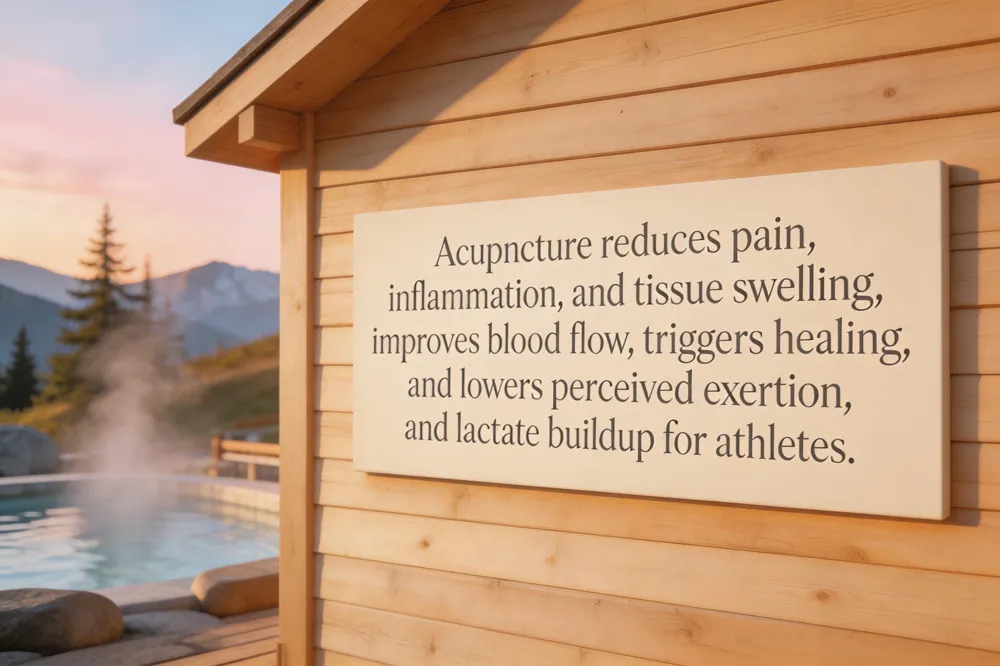 Acupuncture is a non‑invasive, drug‑free modality that athletes use to manage pain, reduce inflammation, and accelerate tissue healing after intense training or injury. By stimulating motor points, myofascial trigger points, and specific meridians, techniques such as dry‑needling, electro‑acupuncture, and motor‑point acupuncture improve local blood flow, release endorphins, and modulate inflammatory cytokines. Systematic reviews and case series report short‑term pain relief and faster functional recovery for runners with hamstring strains, IT‑band syndrome, plantar fasciitis, and low back pain. In a sports‑medicine setting, acupuncture is typically combined with chiropractic adjustments, physiotherapy, and structured stretching to address both biomechanical and neuro‑physiological factors, resulting in reduced downtime and enhanced performance. Evidence shows that pre‑exercise acupuncture can lower perceived exertion and lactate buildup, while post‑exercise needling diminishes delayed‑onset muscle soreness. For Glenwood Springs athletes, integrating acupuncture with chiropractic care offers a holistic, evidence‑based pathway to maintain mobility, prevent re‑injury, and sustain peak performance.
Chiropractic Adjustments and Complementary Therapies

Should athletes get chiropractic adjustments?
Yes. Chiropractic adjustments restore proper joint alignment and spinal balance, which optimizes biomechanics and reduces pain. By normalizing nerve input, the nervous system functions more efficiently, accelerating recovery from sports‑related injuries and lowering the risk of future setbacks. Regular, individualized adjustments improve flexibility, balance, and coordination—key factors for peak performance and injury prevention. Glenwood Chiropractic designs sport‑specific protocols that integrate seamlessly with training cycles, offering a non‑invasive, evidence‑based pathway to sustained athletic health.
Dry needling vs acupuncture
Dry needling inserts thin, sterile needles directly into myofascial trigger points to release tension and restore motion, focusing on musculoskeletal pain. Acupuncture places needles along traditional meridians to balance Qi, address systemic inflammation, and promote endogenous opioid release. Dry needling is typically brief (seconds to a few minutes) and performed by physical therapists, while acupuncture needles are retained for 15‑30 minutes by licensed acupuncturists. Both are safe when administered by qualified clinicians; dry needling excels at rapid knot resolution, whereas acupuncture offers broader holistic benefits such as stress reduction, improved sleep, and enhanced immune function.
Safety, Contraindications, and Forbidden Points
 Acupuncture is a low‑risk, non‑invasive modality, and large‑scale trials report only mild bruising or transient soreness as adverse events. In Colorado, practitioners must hold an L.Ac. license, complete at least 2,000 training hours training and be registered with the state health board, ensuring competence in sports‑related care. Pregnant clients must avoid five traditional pressure points—Large Intestine 4 (LI4, between thumb and index finger), Spleen 6 (SP6, inner lower leg four finger‑widths above the ankle), Urinary Bladder 60 (BL60, behind the outer ankle), Gallbladder 21 (GB21, top of the shoulder), and Conception Vessel 3 (CV3, lower abdomen above the pubic bone)—as stimulation can provoke uterine activity. For safe self‑care, athletes should apply gentle pressure to points such as ST‑36, LI‑4, and SP‑6 only after consulting a licensed acupuncturist, avoid open wounds or infections, and limit sessions to once or twice weekly during heavy training cycles. Always seek professional guidance before integrating acupuncture or acupressure into a recovery plan.
Practical Acupressure for Headaches and Recovery
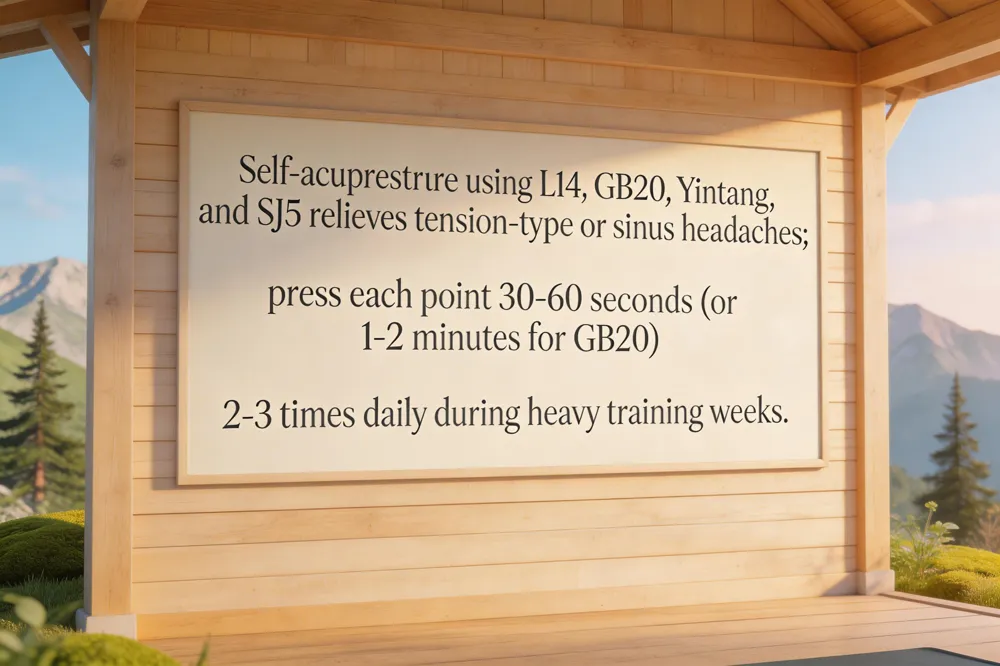 Runners often experience tension‑type or sinus headaches from prolonged training, dehydration, or poor posture. Key acupressure points that relieve these symptoms include Large Intestine 4 (LI‑4) on the hand, Gallbladder 20 (GB‑20) at the base of the skull, Yintang between the eyebrows and Jiao 5 (SJ‑5) on the forearm. To perform self‑acupressure, locate LI‑4 in the fleshy depression between the thumb and index finger and depress firmly for 30–60 seconds on each hand; press GB‑20 in the twin dimples on either side of the neck for one to two minutes; massage Yintang gently for a minute; and apply circular pressure on SJ‑5 four finger‑widths above the wrist crease. Sessions lasting 1‑3 minutes per point can be repeated 2‑3 times daily during heavy training weeks. When combined with chiropractic adjustments—especially spinal alignment and soft‑tissue work—acupressure enhances circulation, reduces muscular tension, and supports faster recovery, ultimately improving running performance and reducing headache frequency.
Conclusion
Acupuncture offers runners a scientifically supported toolbox for injury prevention and faster recovery. By stimulating specific points, it improves circulation, delivers oxygen and nutrients to fatigued tissues, releases endorphins and anti‑inflammatory cytokines, and reduces delayed‑onset muscle soreness—effects documented in multiple RCTs and systematic reviews. These mechanisms translate into tangible benefits: decreased muscle tension, enhanced flexibility, quicker repair of strains, shin splints, plantar fasciitis, Achilles tendonitis, and lower‑back pain, as well as improved endurance and mental focus.
When acupuncture is integrated with routine chiropractic adjustments, the combined approach addresses both neural and biomechanical contributors to pain, optimizes joint alignment, and promotes holistic musculoskeletal health. Coordinated care ensures that underlying imbalances are corrected while acute symptoms are managed, leading to smoother training cycles and reduced risk of overuse injuries.
Runners seeking safe, drug‑free recovery should consult a licensed acupuncturist experienced with athletes and consider a collaborative plan with their chiropractor. Evidence‑based, non‑invasive modalities such as these empower athletes to train smarter, recover faster, and achieve peak performance.