Welcome to Your First Chiropractic Experience
Preparing for your first visit sets the tone for successful care. Wearing loose, comfortable clothing, arriving early to complete paperwork, and bringing a concise symptom log, medication list, and any recent imaging help the chiropractor create an accurate diagnosis and personalized plan. Hydration, a light snack, and a brief walk can improve tissue pliability, making adjustments more effective. At the same time, set realistic expectations: the initial exam may last 45‑60 minutes, the first adjustment often feels like a brief pressure or popping sensation, and mild soreness is normal. Healing is a collaborative process—consistent attendance, open communication, and adherence to home‑care recommendations are essential for lasting relief and improved mobility.
Before You Walk In: Essential Prep
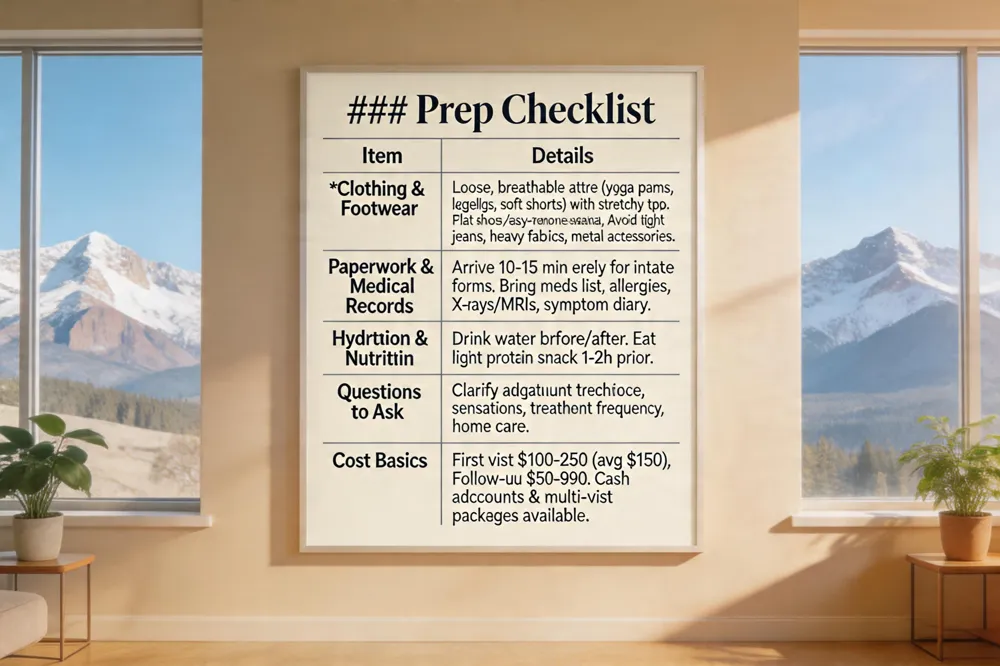
Prep Checklist
| Item | Details |
|---|---|
| Clothing & Footwear | Loose, breathable attire (yoga pants, leggings, soft shorts) with a stretchy top. Flat, supportive shoes or easy‑to‑remove sneakers; optional grip‑enhanced socks. Avoid tight jeans, heavy fabrics, metal accessories. |
| Paperwork & Medical Records | Arrive 10‑15 min early for intake forms. Bring list of current meds, allergies, recent imaging (X‑rays, MRIs), and a brief symptom diary. |
| Hydration & Nutrition | Drink plenty of water before & after the session. Eat a light, protein‑rich snack 1–2 h prior. |
| Questions to Ask | Clarify adjustment technique, expected sensations, treatment frequency, home‑care recommendations. |
| Cost Basics | First visit $100‑$250 (avg $150). Follow‑up $50‑$90. Cash discounts & multi‑visit packages often available. |
 Preparing for your first chiropractic visit in Glenwood Springs helps you get the most out of the appointment.
Clothing and footwear – Wear loose, breathable attire such as yoga pants, leggings, or soft shorts with a stretchy top. Avoid tight jeans, heavy fabrics, or metal accessories that could restrict motion. Slip on flat, supportive shoes or easy‑to‑remove sneakers; bring grip‑enhanced socks if you like.
Paperwork and medical records – Arrive 10‑15 minutes early to complete intake forms. Bring a list of current medications, allergies, recent imaging (X‑rays, MRIs), and a brief symptom diary. This gives the chiropractor a clear picture of your health history.
Hydration and nutrition – Drink plenty of water before and after the session; proper hydration keeps spinal discs pliable and reduces post‑adjustment soreness. A light, protein‑rich snack 1–2 hours beforehand helps maintain energy without feeling overly full.
Questions to ask the chiropractor – Use the initial consultation to clarify the adjustment technique, expected sensations, treatment frequency, and home‑care recommendations.
Cost basics – Without insurance a first visit typically runs $100‑$250 (average $150). Follow‑up adjustments are $50‑$90. Many clinics offer cash discounts or multi‑visit packages to lower the per‑visit price.
The Initial Consultation: What Happens Inside
Consultation Flow
| Step | What Happens |
|---|---|
| Health Questionnaire | Captures symptom history, medical background, meds, lifestyle factors. |
| Physical Exam | Posture analysis, ROM testing, muscle tone/strength checks, orthopedic/neurological tests. |
| Imaging (if needed) | X‑rays for bone structure; MRI reserved for soft‑tissue concerns. |
| Diagnosis & Treatment Plan | Based on history, exam, imaging; outlines adjustment frequency, supportive therapies, home‑care. |
| Adjustment (optional) | Gentle adjustment performed if a clear, treatable restriction is identified; otherwise diagnostic only. |
| Patient Education | Explains expected sensations, possible mild soreness, next‑step goals. |
 During the first chiropractic appointment you will first complete a health questionnaire that captures your symptom history, medical background, medications, and lifestyle factors. The chiropractor then conducts a focused physical exam that includes a posture analysis, range‑of‑motion testing, muscle tone and strength checks, and orthopedic/neurological tests to locate joint restrictions. Imaging—typically X‑rays and only when indicated by recent trauma, suspected deformity, or red‑flag symptoms—may be ordered to visualize bone structures; MRI is reserved for soft‑tissue concerns. Based on the history, exam findings, and any imaging, the chiropractor diagnoses the underlying issue and creates a personalized treatment plan outlining adjustment frequency, supportive therapies, and home‑care recommendations. Many clinicians will perform a gentle adjustment during this visit if a clear, treatable restriction is identified; otherwise, the first session may remain diagnostic with the adjustment scheduled for the next appointment. Throughout, the practitioner explains expected sensations, possible mild post‑adjustment soreness, and next‑step goals, ensuring you know what to expect and how to maximize results.
During the First Adjustment: Sensations and Safety
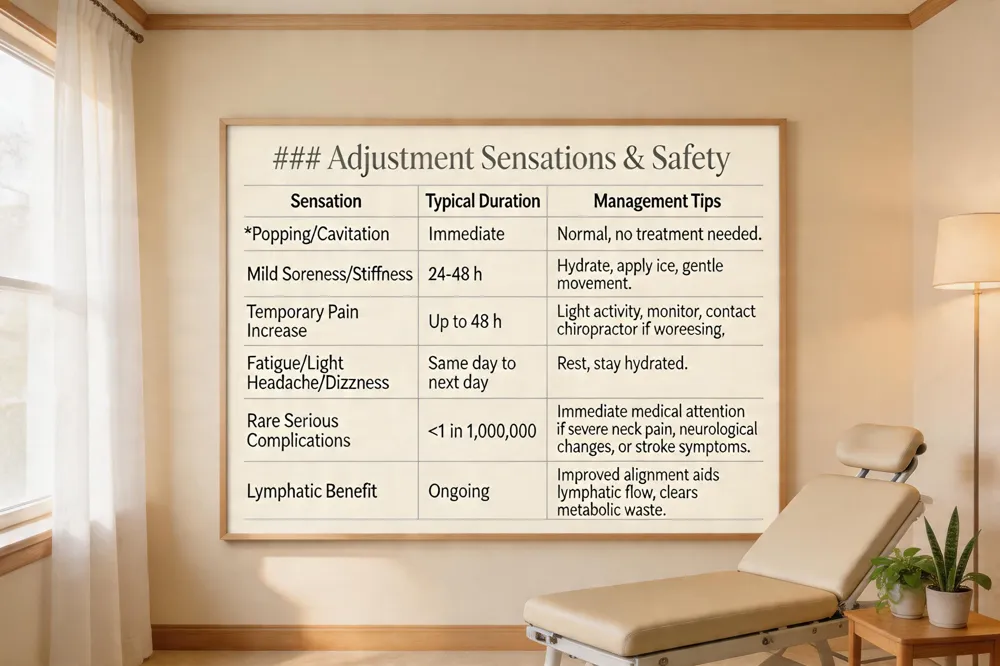
Adjustment Sensations & Safety
| Sensation | Typical Duration | Management Tips |
|---|---|---|
| Popping/Cavitation | Immediate | Normal, no treatment needed. |
| Mild Soreness/Stiffness | 24‑48 h | Hydrate, apply ice, gentle movement. |
| Temporary Pain Increase | Up to 48 h | Light activity, monitor; contact chiropractor if worsening. |
| Fatigue/Light Headache/Dizziness | Same day to next day | Rest, stay hydrated. |
| Rare Serious Complications | <1 in 1,000,000 | Immediate medical attention if severe neck pain, neurological changes, or stroke symptoms. |
| Lymphatic Benefit | Ongoing | Improved alignment aids lymphatic flow, clears metabolic waste. |
 Chiropractors use a controlled, quick thrust—often a Diversified or Activator technique—to adjust a joint; the resulting “popping” is simply cavitation, the release of gas bubbles, and is normal. Most patients notice mild, short‑term effects such as soreness, stiffness, a temporary increase in pain, fatigue, light headaches, or brief dizziness—much like post‑workout muscle fatigue—typically resolving within 24‑48 hours. Staying hydrated, applying ice, and avoiding strenuous activity for a day or two can ease these sensations. In rare instances—occurring in less than one in a million sessions—adjustments may aggravate a herniated disc, cause nerve compression, or, especially with neck manipulations, trigger a stroke; these serious complications require immediate medical attention. The body does not create new toxins after an adjustment; instead, improved alignment enhances lymphatic flow, helping clear metabolic waste such as lactic acid and carbon‑dioxide. If pain worsens, lasts longer than a few days, or feels unusual, contact your chiropractor promptly.
Post‑Visit Care: Boosting Recovery
Recovery Pillars & Tips
| Pillar | Action | Why It Helps |
|---|---|---|
| Hydration | Drink plenty of water post‑adjustment | Keeps intervertebral discs supple, supports healing. |
| Rest | Light activity for 24‑48 h; avoid heavy lifting | Allows tissues to recover, reduces inflammation. |
| Nutrition | Anti‑inflammatory foods (omega‑3, fruits, veg) | Supports tissue repair, reduces oxidative stress. |
| Therapeutic Exercises | Stretches & strengthening prescribed by chiropractor | Reinforces alignment, improves ROM, reduces soreness. |
| Lymphatic Drainage | Gentle massage or inversion (if certified) | Decreases swelling, promotes fluid movement. |
| Three T’s | Thoughts (stress management), Trauma (body mechanics), Toxins (clean diet) | Holistic approach to long‑term musculoskeletal health. |
 After a chiropractic adjustment, optimal recovery hinges on three pillars: hydration, rest, and nutrition. Drinking plenty of water keeps intervertebral discs supple and aids the body’s natural healing processes, while a balanced diet rich in anti‑inflammatory foods supports tissue repair. Complementary therapeutic exercises and stretches prescribed by your chiropractor reinforce joint alignment, improve range of motion, and reduce post‑adjustment soreness. Many clinics also offer lymphatic drainage—gentle massage or inversion techniques that move fluid through superficial lymph nodes, decreasing swelling and inflammation; ask your provider if they are certified in this service. Addressing the three T’s—thoughts, trauma, and toxins—is essential for long‑term health: stress‑management techniques calm the nervous system, proper body mechanics prevent recurrent micro‑trauma, and an anti‑toxic diet limits harmful chemicals. Research indicates that regular adjustments can lower cortisol levels, further reducing stress‑related tension. Together, these strategies accelerate healing, preserve spinal health, and promote lasting well‑being.
Financial Considerations and Value
Cost Overview
n
| Component | Typical Cost (Glenwood Springs) |
|---|---|
| First Comprehensive Exam | $100‑$250 (average $150) |
| Follow‑up Adjustment | $50‑$90 |
| Cash‑Payment Discount | Often 5‑15 % off list price |
| Multi‑Visit Packages | 5‑visit or 10‑visit bundles: 15‑25 % lower per‑visit rate |
| Insurance Coverage | $50‑$90 per visit (copays/deductibles apply) |
| Quick Answers | • No‑insurance visit: $70‑$120 (first visit $100‑$250).<br>• Average first visit: $150.<br>• Follow‑up: $50‑$90. |
 Understanding the cost of chiropractic care helps you make informed decisions about value and long‑term health.
Insurance coverage vs cash payment – Most plans Colorado Colorado cover a portion of the per‑visit fee, typically $50‑$90 for follow‑up adjustments, but you will still be responsible for copays or deductibles. Paying out‑of‑pocket often yields a lower net cost when clinics offer cash‑payment discounts.
Multi‑visit package discounts – Many Glenwood Springs practices bundle sessions (e.g., 5‑visit or 10‑visit packages) at a reduced per‑visit rate, sometimes lowering the price by 15‑25 % compared with paying each visit individually.
Cost of ongoing maintenance care – After the initial treatment phase, maintenance appointments usually range from $50 to $90 and can be scheduled monthly or quarterly to prevent pain recurrence.
Quick answers
- Chiropractor visit cost without insurance? $70‑$120 per session; first comprehensive exam $100‑$250.
- Chiropractor first visit cost? $100‑$250, averaging about $150 in Glenwood Springs.
- Chiropractor appointment cost? Follow‑up visits $50‑$90; initial visit $100‑$250.
Choosing cash paying or using insurance, and leveraging multi‑visit discounts can make high‑quality, evidence‑based chiropractic care affordable while supporting long‑term musculoskeletal health.
Putting It All Together for a Successful First Visit
Preparing for your first chiropractic visit starts with loose, comfortable clothing, a complete medical history, and a symptom diary that notes pain intensity, triggers, and daily activities. Hydration and a light snack keep tissues supple and energy steady. After the adjustment, gentle stretches, adequate water intake, and short walks reduce soreness and reinforce alignment. Consistently attending scheduled appointments and following the home‑care plan—posture reminders, ergonomic tweaks, and prescribed exercises—accelerates healing. Track progress in a journal, communicate any new discomfort promptly, and schedule regular follow‑ups. These habits build a foundation for long‑term musculoskeletal health and sustained pain relief.